
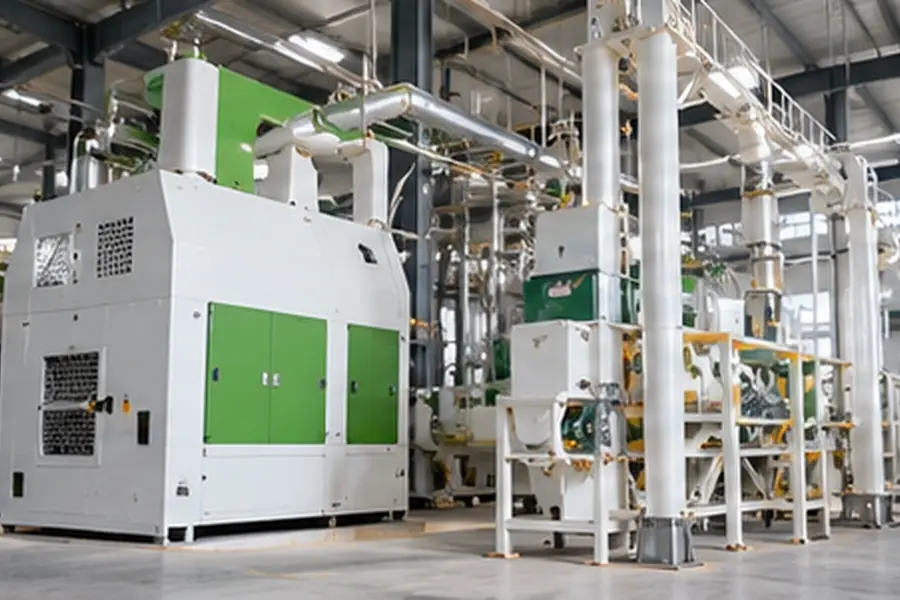
A high-performing seed conditioning plant is an interconnected material-handling and separation ecosystem rather than an assortment of standalone machines bolted to a floor. Depending on raw harvest contaminants and final commercial specifications, the flow route progresses systematically from intake pit receiving and pre-cleaning through dimensional screen grading, indented cylinder length separation, specific gravity upgrading, optical color sorting, seed treatment, and automated weighing.
Mass-Balance Modeling and Surge Bin Buffering Across Process Stages
Every processing stage must be sized around a unified mass-flow balance that accounts for waste extraction percentages, middlings recirculation loops, and seasonal peak intake surges. Because precision downstream units like gravity separators and optical sorters require rock-steady feed rates, placing properly sized surge hoppers, level probes, and modulated vibratory feeders between machines prevents upstream fluctuations from starving or flooding sensitive decks.
Structural Footprint, Gentle Conveying, and Plant Utility Integration
Before finalizing equipment layout drawings, document clear building eave height, floor slab load capacities, maintenance catwalk clearances, three-phase electrical distribution, dry compressed air piping, and centralized baghouse dust aspiration routing. Selecting low-speed belt-and-bucket elevators, lined spouting with cushioned dead-boxes, and self-cleaning conveyors preserves seed coat integrity and eliminates varietal cross-contamination pockets across the facility.
Designing for Rapid Crop Changeovers, Future Expansion, and Turnkey Handover
Forward-looking plant layouts incorporate three-way diverter valves, bypass spouting, screen storage racks, and floor space around each separator so operators can by-pass unnecessary stages or clean out equipment rapidly between seed lots. Establishing a clear engineering responsibility matrix covering mechanical erection, aspiration ductwork, PLC interlock programming, and load-tested commissioning eliminates interface gaps between building contractors and machinery suppliers.
Frequently Asked Questions About Seed Processing Line Planning
How do engineers prevent bottlenecks when linking multiple cleaning and sorting machines?
Engineers calculate net hourly mass flow after subtracting reject fractions at each separator, include recirculation allowances for gravity tables and optical sorter re-sort passes, and install buffer bins with variable-speed feeders ahead of rate-sensitive units.
What conveying equipment minimizes mechanical damage to fragile planting seeds?
Low-velocity centrifugal or continuous-discharge bucket elevators with polymeric buckets, gentle flat-belt or slider-bed conveyors, and abrasion-lined gravity spouts pitched at optimal angles protect germination vigor in pulses and oilseeds.
How much building height is needed to minimize the number of bucket elevators?
Multi-story tower layouts use gravity spouting to feed stacked machines from a single high elevator leg, whereas single-story industrial halls use shorter individual elevators with intermediate surge hoppers to fit under standard roof trusses.
Why should dust aspiration ductwork be engineered alongside the machine layout?
Balancing air velocity and static pressure across all cleaner, gravity table, and elevator pickup hoods requires short, straight duct runs and properly sized fan and cyclone placement so dust neither settles in horizontal pipes nor pulls good seed from machines.
Partner With Our Plant Engineering Team on Your Line Layout
Provide your target crops, hourly intake and conditioning capacities, building dimensions, and desired automation level so we can develop a preliminary process flow diagram and 3D equipment arrangement.
Contact ↗