
Air Screen Cleaner & Seed Cleaner Guide
Learn how air screen cleaners and seed cleaners remove impurities, how to choose screens and airflow, and what to check before specifying capacity.
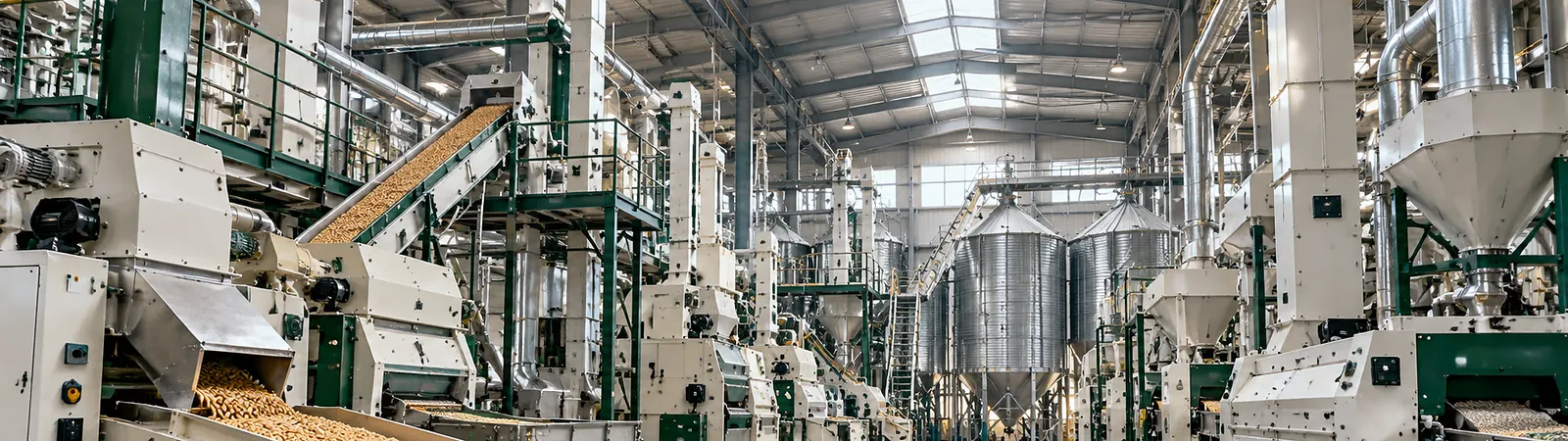
Air Screen Cleaner / Seed Cleaner
What it does
An air screen cleaner combines aspiration and screening to separate incoming seed or grain by aerodynamic behaviour, size and sometimes shape. It is commonly used to remove dust, chaff, straw, light impurities and oversized or undersized material before more selective stages. The exact result depends on crop characteristics and machine configuration.
Start with the incoming crop, moisture range, impurity load and required output quality. Screen openings and screen area affect size separation; airflow settings influence light-material removal. Ask for capacity estimates based on your crop and cleaning target, since a figure measured on one crop may not transfer directly to another.
Selection checklist
- Crop and variety, plus typical moisture range
- Incoming impurity profile and required cleanliness
- Target throughput and number of operating hours
- Screen deck configuration, changeover and maintenance access
- Dust extraction, conveying and downstream equipment requirements
Frequently Asked Questions
What does an air screen cleaner remove?
It separates light impurities and particles by size using controlled airflow and screen openings.
How do I choose the right screen sizes?
Base the screen combination on the crop dimensions, the impurity profile and the cleanliness target; confirm it with a representative sample.
How is capacity determined?
Capacity depends on crop, moisture, impurity load, screen area and the required cleaning quality.
Why is airflow adjustment important?
Too little air leaves light material in the product; too much air can carry away good seed.
Can one setup clean different crops?
Often, but screen decks and air settings usually need to be adjusted for each crop.
Should the incoming material be sampled?
Yes. A representative sample helps identify impurities and validate screen and airflow settings.
Does moisture affect cleaning performance?
Yes. Moisture can change flow, adhesion and separation behaviour, so it should be stated when sizing equipment.
When is aspiration or dust collection needed?
It is commonly needed when light dust and chaff must be captured and the working area kept cleaner.
How often should screens be checked?
Inspect for blockage, wear and damage during routine maintenance and whenever output quality changes.
What should I include in a quotation request?
Provide crop and variety, moisture range, impurity sample, target cleanliness, throughput and operating hours.
How to specify the right machine
Define the crop, incoming condition, target output, throughput and available utilities before selecting equipment. A clear technical brief makes proposals easier to compare on an equivalent basis.
Discuss your project ↗