Raw Material Intake and Lot Sampling
Harvested lots enter through drive-over or hopper intake pits where representative samples are drawn to measure moisture content, bulk density, and foreign matter before setting machine parameters.

Engineer a synchronized turnkey processing plant tailored to your botanical commodity, hourly throughput targets, purity specifications, building geometry, and site utilities.
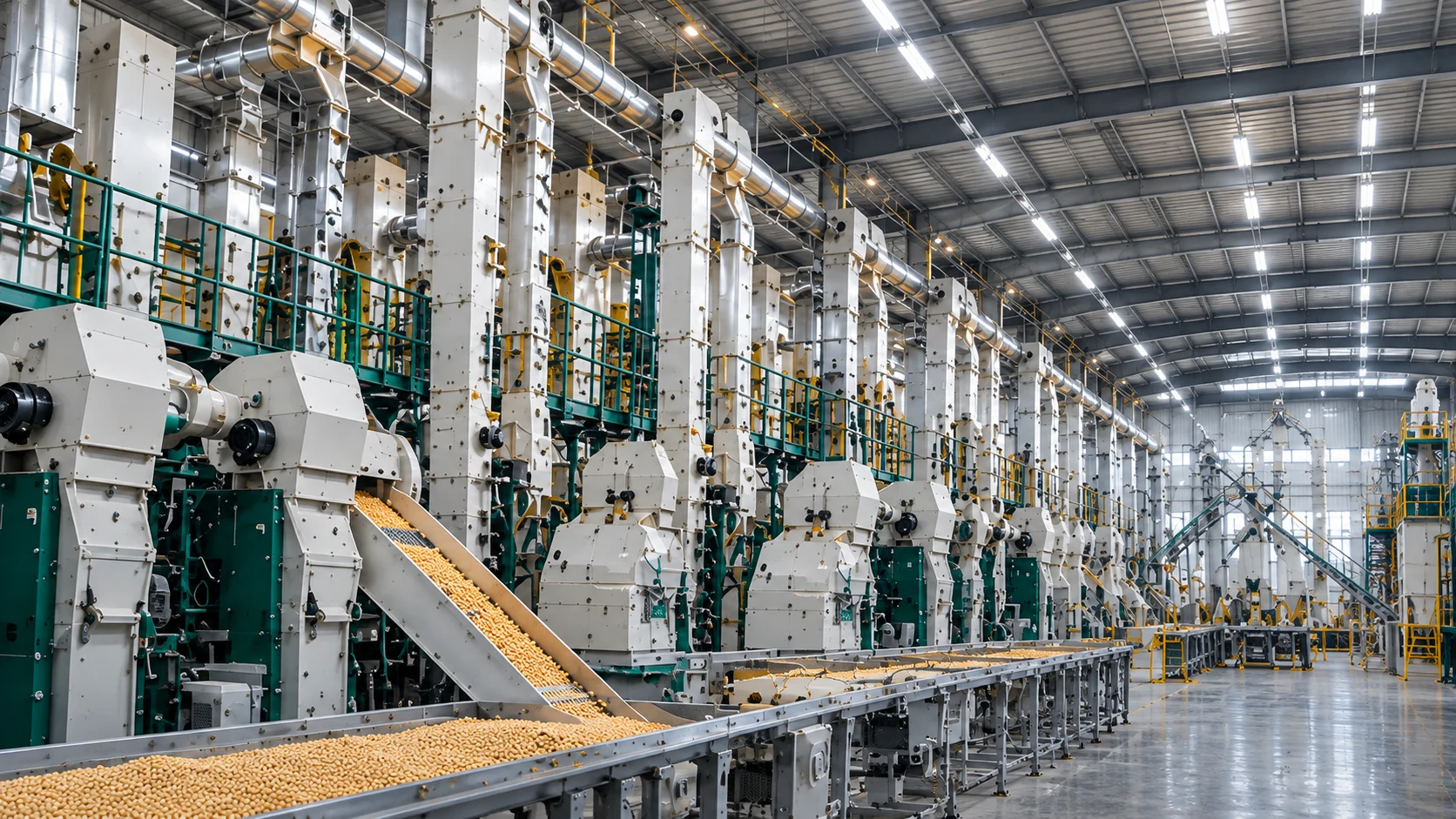
Each mechanical stage is selected and sized around raw incoming harvest conditions and final market grade tolerances; flowsheets include only the unit operations justified by the crop.
Harvested lots enter through drive-over or hopper intake pits where representative samples are drawn to measure moisture content, bulk density, and foreign matter before setting machine parameters.
Coarse straw, pods, cob pieces, soil clods, and airborne dust are stripped out via high-capacity rotary or reciprocating screens and aspiration channels to protect silos and downstream cleaners.
Pressure destoners, magnetic separators, indented cylinders, and dry gravity tables isolate mineral stones, tramp metal, broken grains, and low-density kernels that match the width of sound seed.
Multi-deck screen graders and rotary cylinders partition the cleaned stream into uniform width or thickness fractions according to planting calibration or commercial food market standards.
Multi-spectrum optical cameras inspect individual kernels in flight and trigger pneumatic ejectors to remove discolored, spotted, insect-damaged, or foreign seeds that escaped mechanical separation.
Conditioned seed or grain fractions are routed via low-impact elevators into square or cylindrical buffer bins designed with smooth walls, aeration options, and clean discharge gates to prevent mixing.
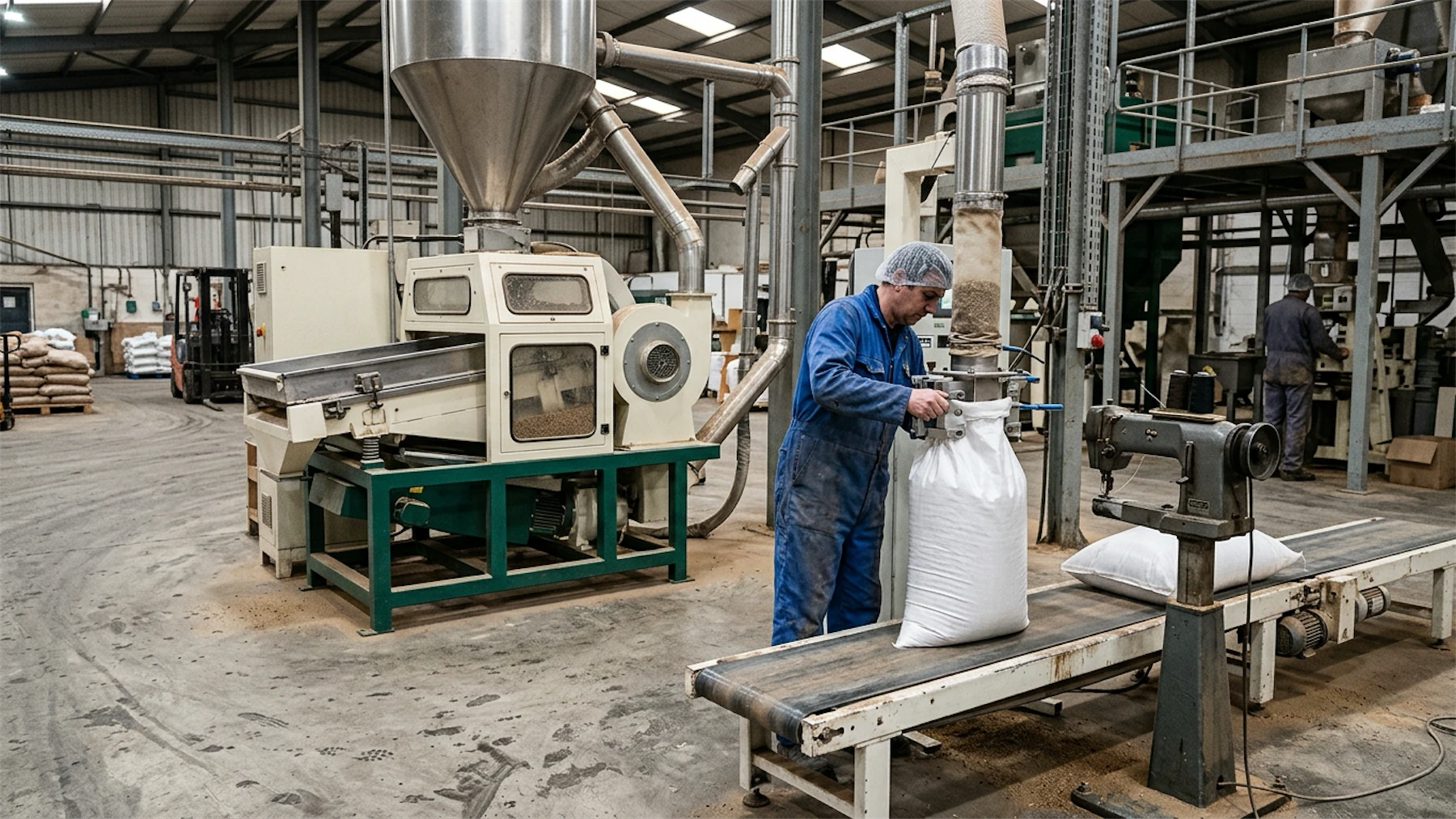
Finished lots pass through electronic net-weighing scales into open-mouth sacks, valve bags, or FIBC bulk bags, followed by stitching or heat sealing, batch labeling, and palletizing.
Review representative multi-stage plant concepts illustrating how intake, cleaning, density separation, grading, and packaging modules are combined for specific commodities and capacities.
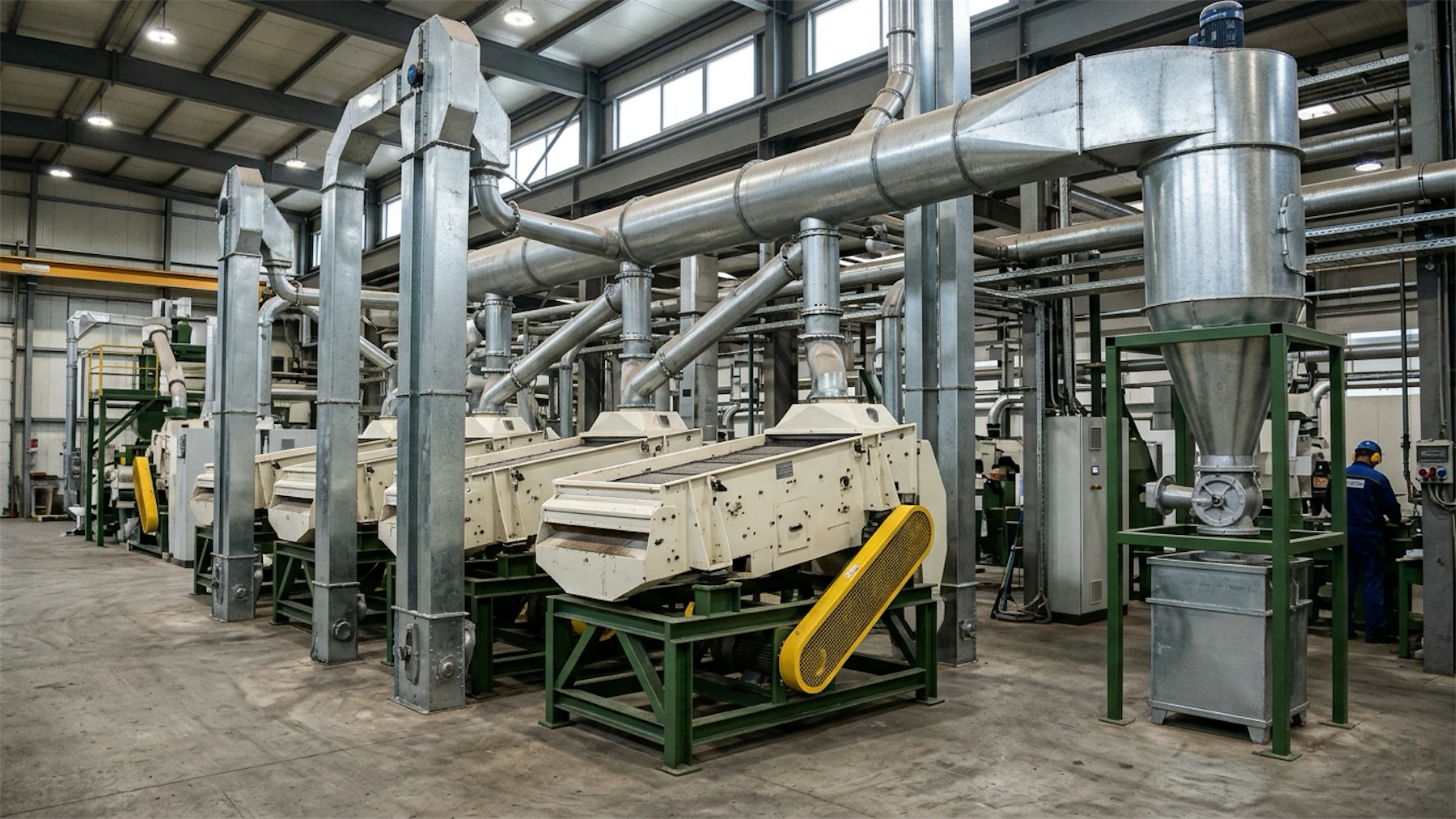
Preliminary planning capacity: 10–20 t/h · Integrated oilseed and confectionery sunflower cleaning, aspiration, width grading, and optional gravity separation flowsheet.
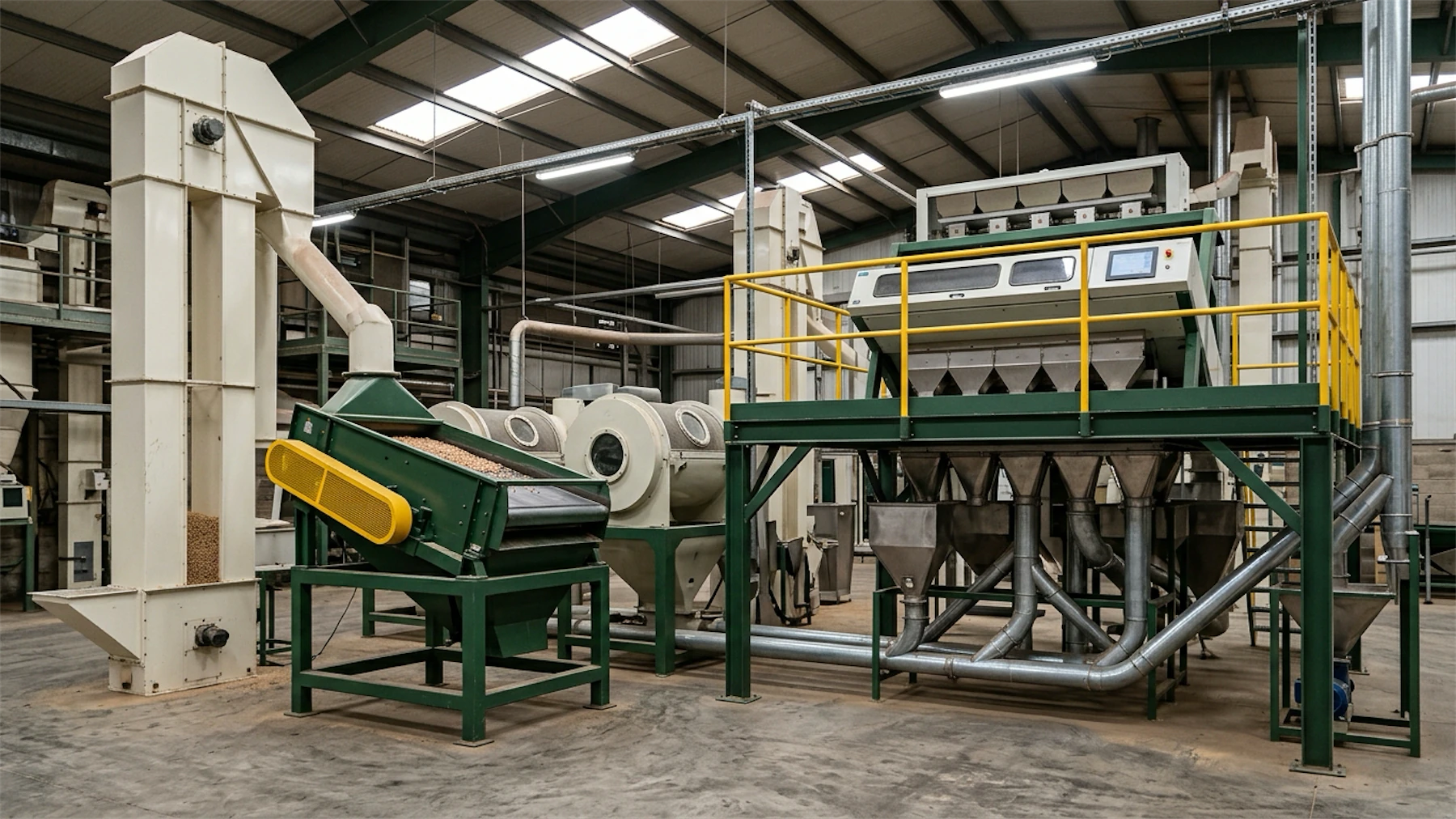
Preliminary planning capacity: 5–15 t/h · Gentle low-drop pulse conditioning line combining destoning, precision millimeter calibration, gravity upgrading, and optical sorting.
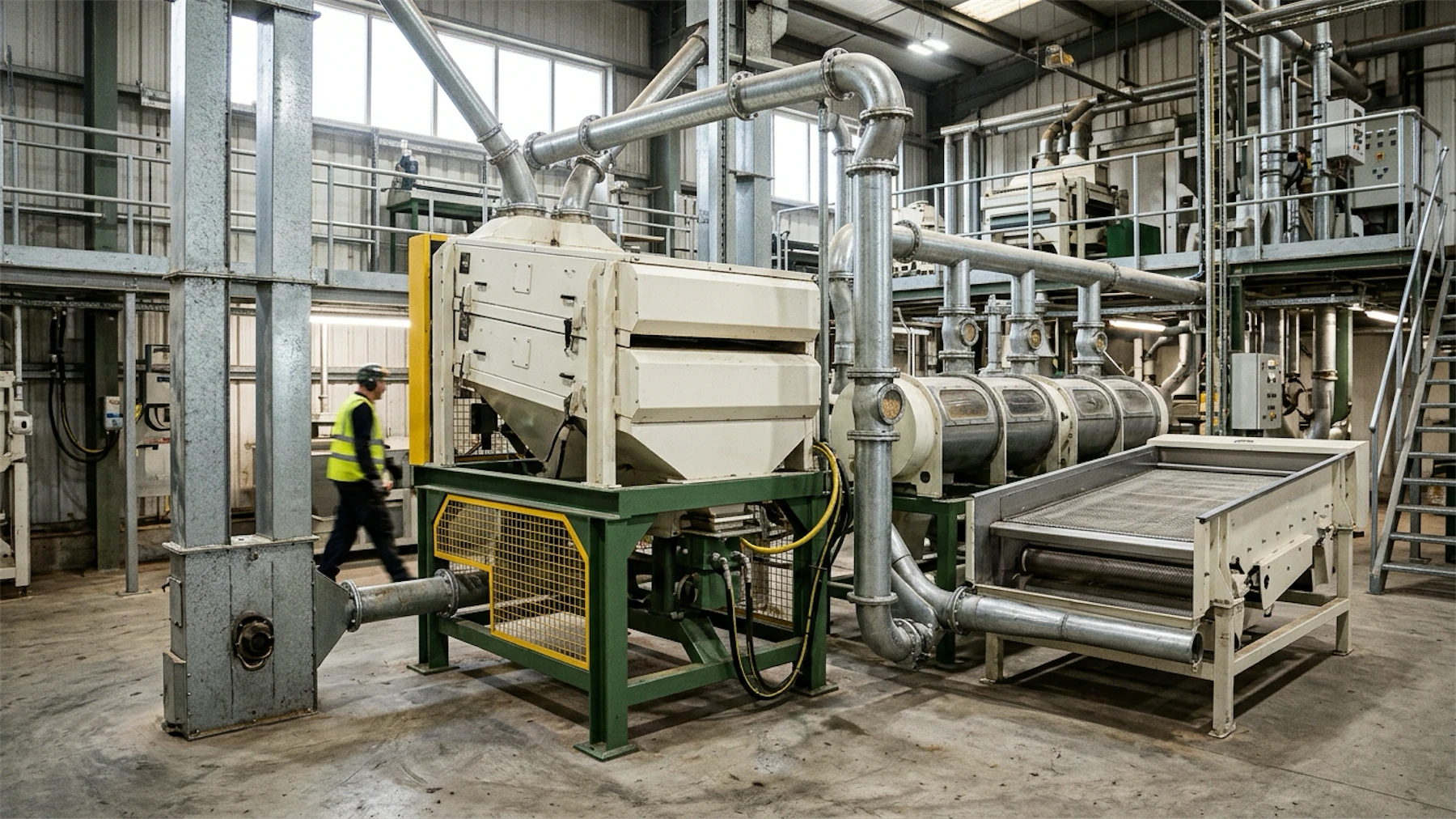
Preliminary planning capacity: 20–40 t/h · High-capacity cereal grain intake scalping, parallel air-screen fine cleaning, indent length grading, and bulk load-out plant.
Preliminary planning capacity: 2–8 t/h · Precision fine-aperture screening, multi-stage aspiration, destoning, gravity separation, and automated bagging line for spice seeds.