
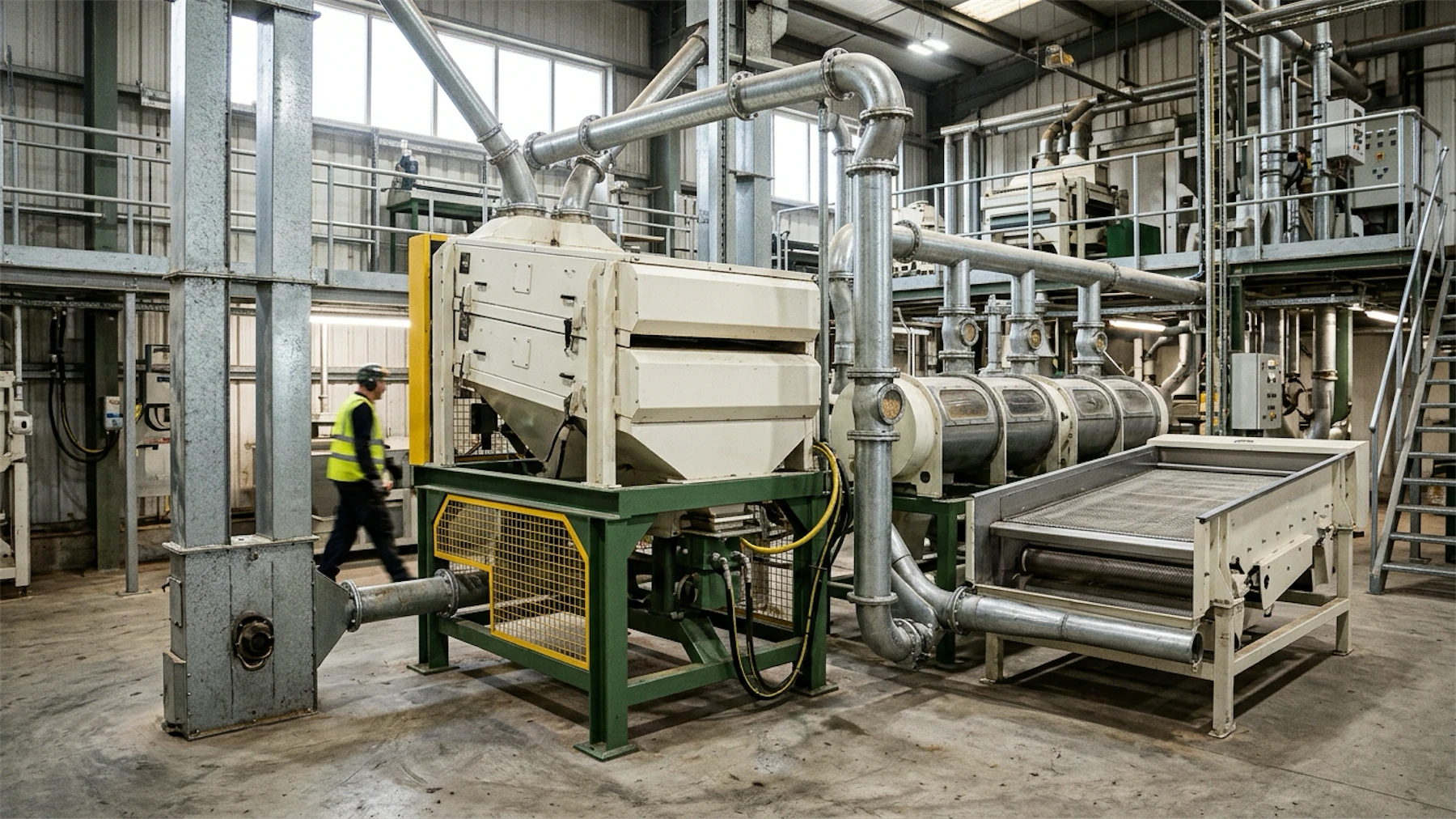
Grain Cleaning Project
Share your cereal grain varieties, hourly receiving targets, and dockage reduction goals to begin engineering a tailored commercial cleaning installation.
Commercial Grain Cleaning Project Scope
This commercial grain cleaning project integrates high-capacity receiving, coarse scalping, aerodynamic aspiration, precision screen separation, and optional optical defect sorting into a cohesive plant flow. Final machine dimensions and net hourly throughput are established after analyzing representative harvest samples and site structural constraints.
Primary Process Equipment Evaluated for This Project
Consult Our Engineers on Your Grain Cleaning Project
Send us your grain intake specifications, target hourly capacity, and warehouse or silo layout so we can develop a practical equipment arrangement together.
Request a quote ↗Process Flow Concept for Commercial Grain Cleaning
Engineering a reliable grain cleaning flow starts with matching mechanical and aerodynamic separation stages to the incoming dockage profile and commercial buyer tolerances. Depending on whether the facility targets intervention storage, export loading, or flour milling intake, the sequence combines scalping, aspiration, screening, and density or optical sorting verified via sample runs.
Commercial grain workflows focus on high-throughput intake scalping, dust and chaff aspiration, multi-deck screen cleaning, and optional kernel calibration.
Technical Scope & Plant Layout Checkpoints
- Auditing dump-pit receiving rates, moisture levels, and coarse field trash in incoming cereal grain deliveries
- Configuring intake scalpers, closed-circuit aspirators, and multi-deck screen cleaners around sample test results and purity targets
- Aligning bucket elevator capacities, gravity spouting angles, and service catwalks for uninterrupted seasonal operation
Engineering Planning Notes for Grain Facilities
Before finalizing equipment drawings, plant owners should specify cereal types, harvest moisture ranges, foreign-matter composition, maximum allowable dockage, daily operating hours, peak harvest intake, available building headroom, electrical supply, dust filtration standards, and silo or bulk-loadout interfaces. Establishing these criteria upfront prevents under-sized spouting and superfluous machine stages.
Published capacity ranges represent preliminary design references rather than unconditional throughput guarantees. Actual tons per hour processed in the field depend on grain test weight, straw and weed-seed load, screen aperture selection, and aspiration tuning, which must be confirmed against a signed specification and sample test.
Design a Grain Cleaning Line Around Your Throughput Targets
Forward your grain types, seasonal tonnage targets, and purity benchmarks to open a focused engineering discussion with our project team.
Grain Cleaning Project FAQs
What technical inputs are required to scope a grain cleaning project?
Engineers need the list of grains handled, required hourly intake and fine-cleaning rates, incoming impurity percentages, target export or milling quality, building dimensions, and details of any upstream or downstream handling gear.
Are preliminary hourly throughput figures contractually fixed?
No; initial throughput figures serve only as planning benchmarks until actual grain samples, moisture levels, screen perforations, and required purity grades are tested and locked into the project contract.
Can this cleaning system retrofit into an existing grain terminal?
In most terminals, yes—our team evaluates existing chain conveyors, bucket legs, buffer bins, and PLC panels to verify structural clearances, spouting angles, and interlock compatibility before integration.