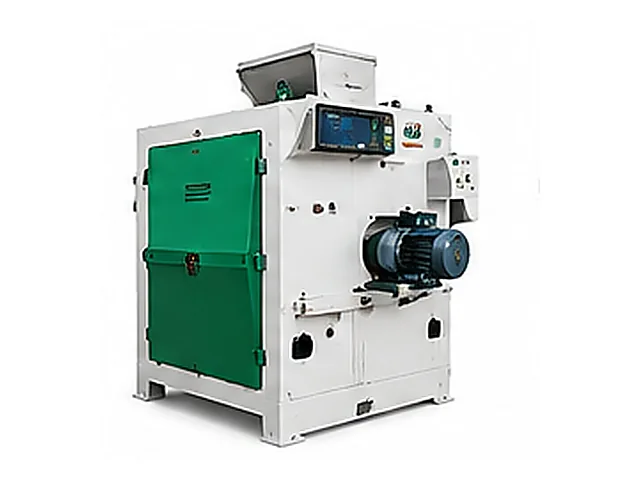
Overview
Depending on the duty within the 2–35 t/h capacity range, the Magnetic Separator directs incoming grain or seed over high-intensity permanent neodymium magnetic plates, rotary drums, or magnetic conditioning rollers. In bulk tramp-metal duties, ferrous hardware—such as bolts, combine knife sections, wire bits, and screen splinters—is pulled out of the flowing stream and held in recessed magnetic traps or discharged continuously by a rotating drum shell. In specialized small-seed cleaning for alfalfa seeds, rough-coated weed seeds like dodder or cracked kernels mixed with trace moisture and iron powder adhere to the magnetic drum and separate cleanly from smooth, sound seeds.
Technical specifications
The capacity and power ranges indicated in the table may vary depending on the crop type to be processed, initial foreign matter rate, moisture level, and machine configuration. Exact performance and actual measurement values are finalized following the engineering design and process detailing of the plant to be installed.
Key considerations
- Confirm the crop, variety and incoming condition for Magnetic Separator.
- Do not assume a standard setting for the “Magnetic Separator” unit; test the metal-contamination risk, cleaning access and product path on the intended material and document the accepted result in the technical offer.
- Use a product trial to define where the “Magnetic Separator” unit fits; record the metal-contamination risk, cleaning access and product path and the output expected by the following stage.
- The line drawing for the “Magnetic Separator” unit should identify product transfer, service space and interfaces with upstream and downstream equipment; document the metal-contamination risk, cleaning access and product path with the tested operating arrangement.
Typical applications
Across 2–35 t/h processing lines, the Magnetic Separator fulfills two distinct roles: bulk tramp-iron protection on wheat, maize / corn, and soybean intake or milling lines, and high-precision magnetic finishing on sesame and alfalfa seeds. For alfalfa seeds and clover, magnetic drum separation removes rough-coated parasitic dodder seeds and earth particles that cannot be separated by screens, indent cylinders, or gravity tables.