
Seed Grader & Seed Grading Machine Guide
Understand seed grading machines, screen selection, size fractions, capacity and how grading fits into a complete seed processing line.
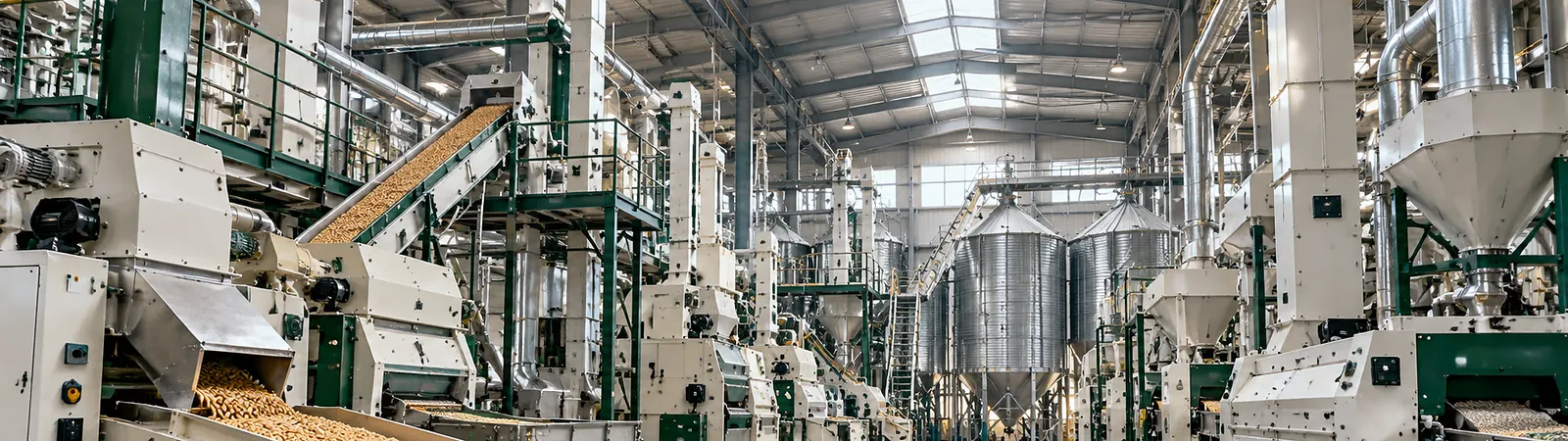
Seed Grader / Seed Grading Machine
What grading means
A seed grader or seed grading machine separates a cleaned product into defined size fractions. It may use one or more screen decks and can help create more uniform batches for seed preparation, packaging or further processing. Grading is not identical to cleaning: the primary objective is to classify the product itself rather than remove every kind of impurity.
Choose screen openings around the actual crop dimensions and the desired fractions. Confirm how many grades can be produced in one pass, how screen changes are handled, and what throughput is expected for the specific product. A sound specification should describe both output fractions and acceptable carry-over between grades.
Selection checklist
- Crop dimensions and required grade sizes
- Number of fractions and screen decks
- Capacity for the actual crop and moisture
- Screen replacement, cleaning and service access
- How graded outputs connect to storage or packing
Frequently Asked Questions
What does a seed grader classify?
It separates seed into size fractions using selected screen openings or grading settings.
When is size grading useful?
It is useful when uniform seed size is needed for planting, processing, packaging or a consistent downstream operation.
How are screen sizes selected?
Use the actual size distribution of the crop and the required number of fractions; confirm with a sample test.
How many size fractions can be produced?
The number depends on machine configuration, screen decks and the target specification.
Does grading replace cleaning?
No. Grading sorts by size; cleaning and density separation may still be needed to remove other impurities.
How does moisture affect grading?
High or variable moisture can reduce free flow and cause blinding, so the expected moisture range matters.
Can one machine grade several crops?
Usually with suitable screen changes and adjustments, subject to crop properties and machine limits.
How do I check grading accuracy?
Measure the size distribution and purity of each outlet using representative samples.
What capacity should I specify?
Specify the required feed rate together with the crop, moisture and acceptable grading quality.
What information is needed for a quotation?
Share crop variety, sample, target size fractions, capacity, moisture and any downstream requirements.
How to specify the right machine
Define the crop, incoming condition, target output, throughput and available utilities before selecting equipment. A clear technical brief makes proposals easier to compare on an equivalent basis.
Discuss your project ↗