
Seed Milling: Processes, Equipment & Selection
Explore seed milling objectives, mill types, particle-size targets, dust control and the technical details needed to specify a milling process.
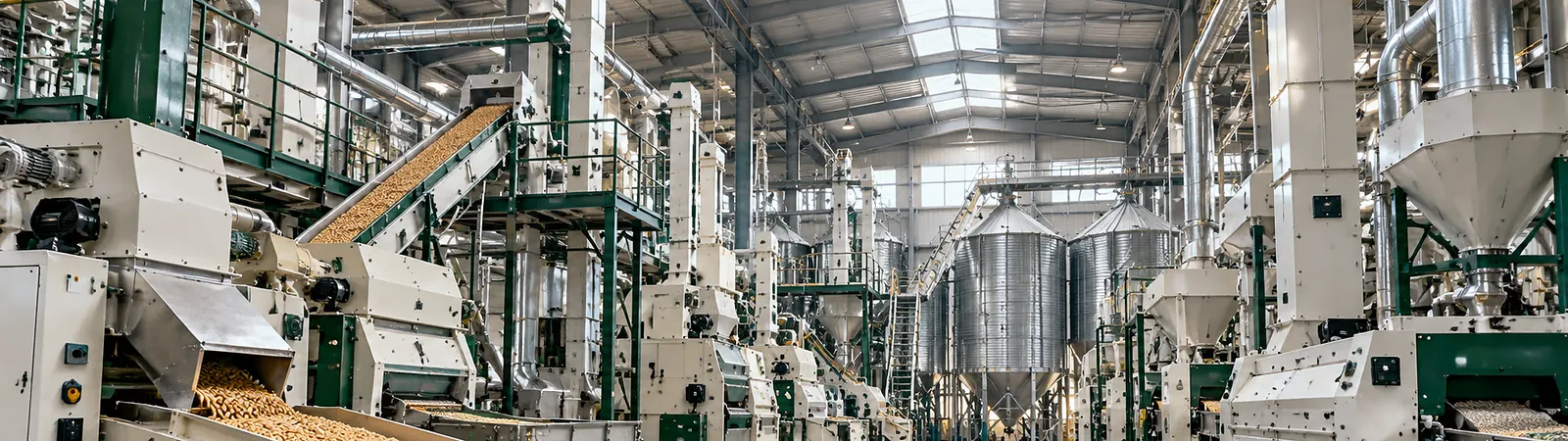
Seed Milling
Define the milling objective first
Seed milling can mean cracking, grinding or reducing seed material to a specified particle-size range. The suitable machine depends on the crop, its oil and moisture content, the intended end use and whether the process must preserve particular functional properties. Milling should be specified around the product result—not only around motor power.
Describe the desired particle-size distribution, hourly throughput and whether the material needs one or several passes. Also consider heat generation, wear parts, dust extraction, cleaning between products and downstream handling. A test with the real material can help confirm settings and expected output.
Selection checklist
- Crop composition and intended end use
- Target particle size and acceptable variation
- Required throughput and operating pattern
- Dust control, temperature and wear considerations
- Cleaning, maintenance and downstream transfer
Frequently Asked Questions
What should be defined before selecting a seed mill?
Define the crop, target particle size, required throughput and intended use of the milled product.
How does target fineness affect selection?
Finer products may require different mill types, screens, recirculation or more energy per tonne.
Why test the crop first?
Oil content, hardness, moisture and fibre affect milling behaviour, temperature and achievable particle size.
Can one mill process every seed?
Not without limits. Different crops may require different settings, tools or mill designs.
How is milling capacity estimated?
Capacity depends on crop properties, target fineness, feed rate and the acceptable temperature rise.
How can heat during milling be controlled?
Choose suitable equipment and operating settings, and consider cooling where the crop is heat-sensitive.
Is dust collection required?
It is often needed to control airborne dust, maintain housekeeping and support safe operation.
How is particle size checked?
Use a sieve analysis or another agreed particle-size method on representative product samples.
What maintenance should be planned?
Inspect wear parts, screens and bearings according to the manufacturer schedule and the abrasiveness of the crop.
What should a quotation request include?
Include crop sample, target particle-size range, capacity, moisture, operating hours and dust-control needs.
How to specify the right machine
Define the crop, incoming condition, target output, throughput and available utilities before selecting equipment. A clear technical brief makes proposals easier to compare on an equivalent basis.
Discuss your project ↗