Overview
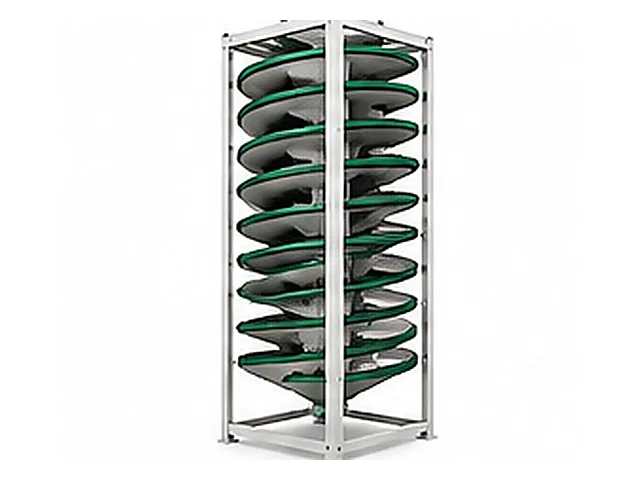
Seed enters an overhead feed hopper and flows through a metered orifice onto the top of multiple inner spiral flights wound around a vertical central column. As the mixture slides downward along the helical incline, round seeds—such as soybeans, peas, vetch, or mustard—gain rotational speed rapidly until centrifugal force carries them over the outer edge of the inner spirals into a larger concentric outer housing flight. Flat, shriveled, split, or non-round seeds slide much more slowly, remain confined within the inner spiral channels all the way to the base, and exit through a separate bottom spout.
Technical Specifications
The capacity and power ranges indicated in the table may vary depending on the crop type to be processed, initial foreign matter rate, moisture level, and machine configuration. Exact performance and actual measurement values are finalized following the engineering design and process detailing of the plant to be installed.
Selection and integration
Selecting a Seed Spiral Separator depends on a clear difference in rolling behavior between the round fraction and the flat or broken fraction. Because each helical flight handles a modest, tightly metered flow rate, higher plant capacities are achieved by grouping multiple spiral columns in parallel beneath a common distribution header.
Key points to specify
- Confirm the crop, variety and incoming condition for Seed Spiral Separator.
- Define the target output and the acceptance criteria for the spiral separation stage.
- Use a product trial to define where the “Seed Spiral Separator” unit fits; record required outlet fractions, incoming mixture and the physical difference used and the output expected by the following stage.
- Show the infeed, discharge, required connections and cleaning or service access for the “Seed Spiral Separator” unit on the layout, then confirm handoff with adjacent stages; state how required outlet fractions, incoming mixture and the physical difference used inform the selected setup.