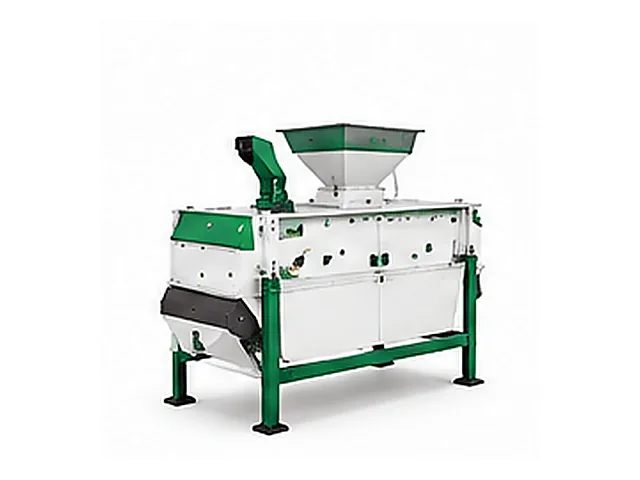
Overview
Clean grain metered into the central eye of the upper stone in the Stone Mill Machine is drawn outward along precision-dressed radial furrows toward the outer grinding lands where the gap between the two horizontal or vertical millstones narrows progressively. As kernels travel from the coarse crushing zone near the center to the fine shearing skirt at the periphery, endosperm, bran, and germ are milled homogeneously together and swept out into a peripheral flour housing.
Technical Specifications
The capacity and power ranges indicated in the table may vary depending on the crop type to be processed, initial foreign matter rate, moisture level, and machine configuration. Exact performance and actual measurement values are finalized following the engineering design and process detailing of the plant to be installed.
Selection and integration
Selecting a Stone Mill Machine centers on millstone diameter, stone mineral composition, furrow dressing pattern, and the target granulation and temperature ceiling of the finished flour. Pilot milling trials on customer wheat, rye, spelt, buckwheat, or corn establish the exact runner-stone speed, feed rate, and micrometric gap setting required to achieve the desired whole-meal or bolted flour texture.
Key points to specify
- Confirm the crop, variety and incoming condition for Stone Mill Machine.
- Define the target output and the acceptance criteria for the milling stage.
- For the “Stone Mill Machine” unit, check the operating choices against these factors: target particle size, product sensitivity, feed characteristics and dust handling.
- Show the infeed, discharge, transfer points and service clearances for the “Stone Mill Machine” unit on the plant layout; ensure target particle size, product sensitivity, feed characteristics and dust handling appear in the technical acceptance note.