
Grain Receiving, Conveying & Silo Integration
A bulk handling and storage integration project coordinating drive-over truck intake pits, heavy-duty bucket elevators, drag conveyors, and steel silo complexes around continuous grain flow.
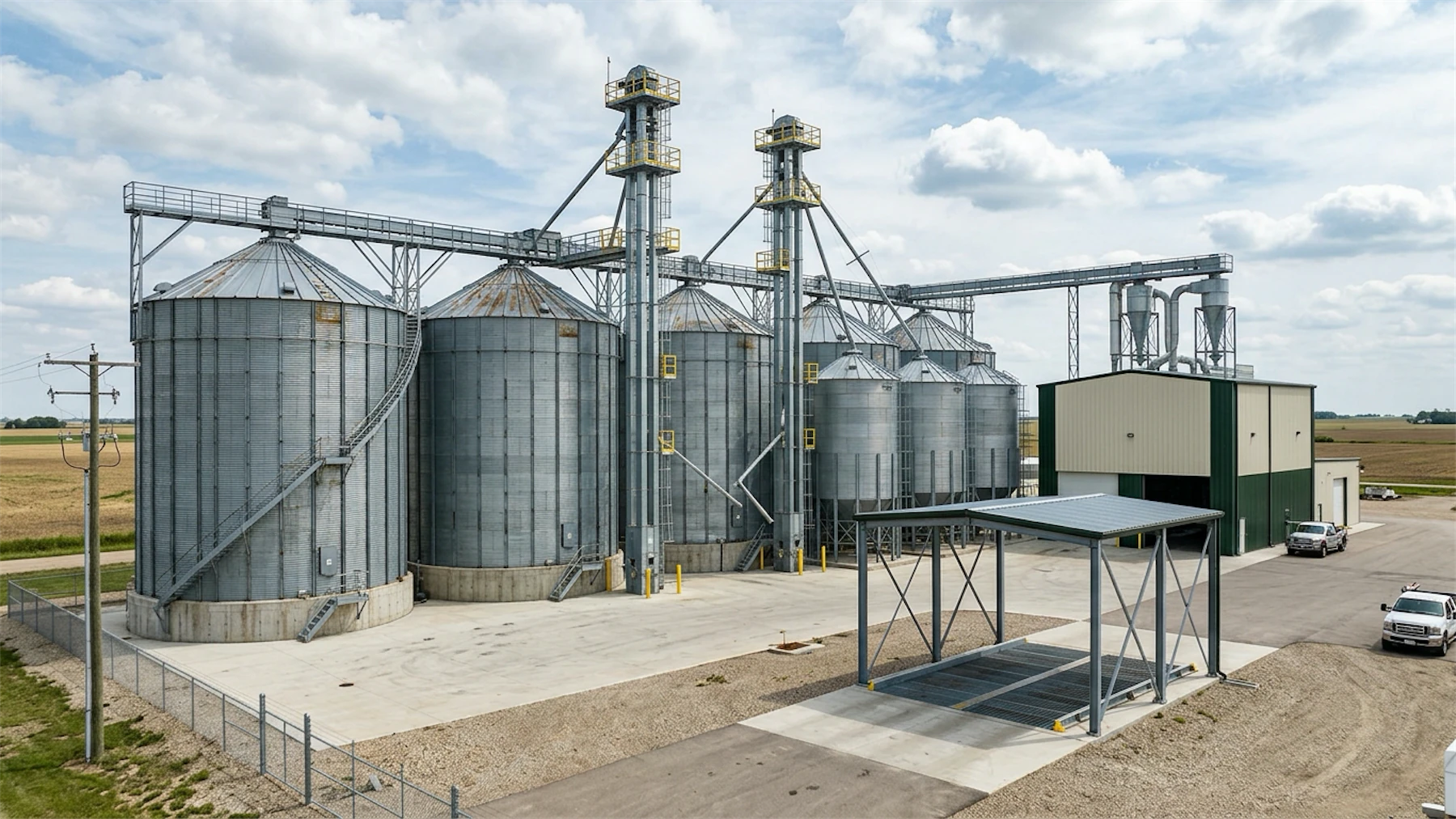
Bulk Grain Intake, Conveying & Silo Integration Overview
Efficient grain terminal operation depends on synchronizing truck dump-pit discharge rates with vertical bucket elevators, horizontal chain or belt conveyors, pre-cleaning scalpers, and flat-bottom or hopper silos. Our project engineering aligns mechanical conveying speeds, dust aspiration points, and automated diverter valves to prevent vehicle queues during peak harvest intake.
Handling & Storage Integration Engineering Checkpoints
- Analyzing bulk density, angle of repose, moisture content, and abrasive trash in incoming truck or railcar grain loads
- Sizing intake chain conveyors, pre-cleaning scalpers, bucket legs, and overhead silo loading drags for peak hourly receiving
- Verifying elevator boot pit depth, overhead catwalk spans, motorized two-way valve positions, and safe maintenance access
Review Your Grain Intake & Silo Layout With Our Team
Provide your peak hourly truck-receiving target, storage bin layout, and civil site plan so we can engineer a synchronized conveying and silo integration concept.
Send project enquiry ↗Material Flow Concept for Intake & Silo Complexes
A well-engineered bulk intake and storage network routes grain smoothly from drive-over receiving grates through scalping and aspiration into designated storage bins or processing lines without cross-contamination or choke points. Depending on site geometry, the layout combines pit drag conveyors, high-capacity bucket elevators, rotary distributors, and reclaim conveyors tailored to your civil footprint.
Bulk cereal handling layouts integrate drive-over intake pits, high-capacity pre-cleaning, dust control, vertical elevation, and multi-bin silo distribution.
Mechanical & Civil Interface Scope to Review
- Evaluating truck turnaround schedules, dump-pit hopper geometry, and dust hood capture velocities at bulk grain intake
- Matching intake pre-cleaners, vertical bucket elevators, overhead drag conveyors, and reclaim sweeps to silo fill/discharge rates
- Checking structural tower loads, gravity spout drop angles, wear-resistant liners, and catwalk inspection platforms across the complex
Terminal Layout & Civil Planning Considerations
Before civil foundation work and mechanical fabrication begin, define the grain species handled, bulk density range, water-table constraints on pit depth, hourly receiving vs. processing capacities, total storage volume, silo eave and peak heights, power transformer limits, ATEX dust-zoning requirements, and truck or rail loadout interfaces. Resolving these parameters early avoids costly pit modifications and undersized reclaim legs.
Rated conveying capacities on this project page represent preliminary planning ranges based on dry, free-flowing wheat at standard bulk density. Wet maize, oilseeds, or trash-laden harvest loads alter volumetric fill factors and flow angles, so final conveyor cross-sections and motor kilowatts must be confirmed against actual material specifications.
Engineer a High-Efficiency Grain Receiving & Silo Network
Send us your site plot plan, target truck intake tonnage, and storage bin capacities to start laying out your conveying and silo system.
Grain Receiving & Silo Integration FAQs
What governs the preliminary hourly rating of an intake and silo line?
Peak harvest truck arrival rates, grain bulk density, moisture content, and whether pre-cleaning runs inline during bin filling determine the required cross-section and drive power of intake pits, elevators, and conveyors.
Which bulk commodities can this receiving and conveying system handle?
The mechanical handling network is configured for free-flowing cereals, pulses, and oilseeds—including wheat, maize, barley, soybeans, sunflower, and canola—with belt speeds, bucket spacing, and wear liners matched to each crop.
What site information is required to design a silo integration layout?
Share a scaled site drawing, civil pit depth limits, existing or planned silo diameters and heights, required intake and reclaim t/h rates, crop list, and electrical utility specifications.
Does a conveyor's nominal t/h rating remain identical across all crops?
No; mechanical conveyors move volume rather than mass, so switching from heavy wheat to lighter sunflower or oats reduces mass throughput proportionally and requires capacity verification during design.
Can new elevators and conveyors connect to existing storage bins?
Yes; we survey existing bin roof ring loads, central fill openings, reclaim tunnels, and PLC level sensors to engineer custom transition spouts, support towers, and automated interlocks.