
Oilseed Pre-Cleaning & Aspiration Line
A front-end oilseed conditioning project engineered to strip fibrous stalks, seed pods, fine soil, and oil-laden dust from canola, soybeans, and sunflower prior to drying, silo storage, or crushing.
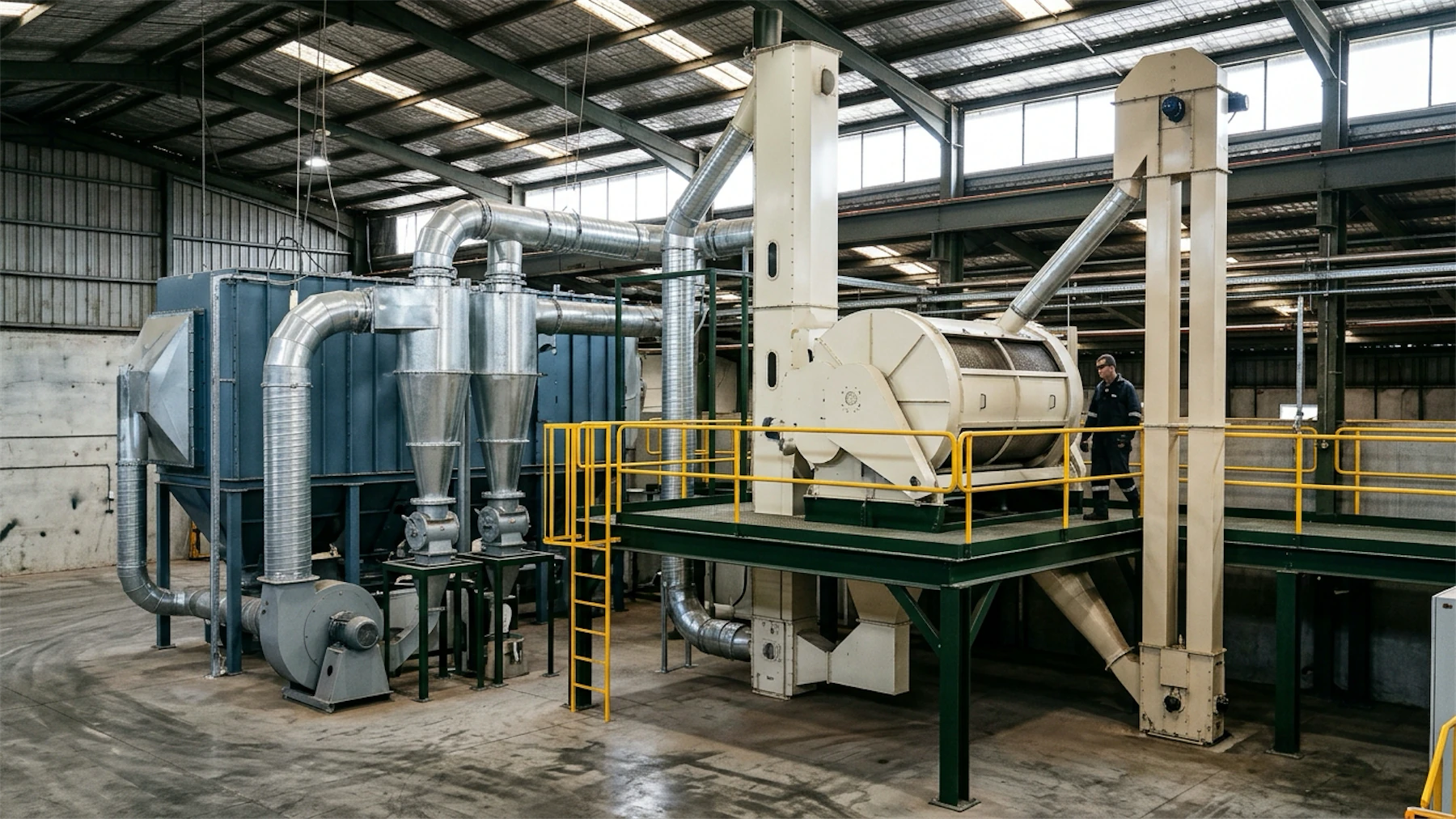
Oilseed Pre-Cleaning & Aspiration Line Overview
Freshly harvested oilseeds—such as rapeseed/canola, soybeans, and oil-type sunflower—frequently arrive with green stems, shattered pods, sclerotia bodies, and combustible fine dust that threaten dryer safety and silo aeration. This front-end pre-cleaning and aspiration project removes coarse trash and light fractions at high hourly rates to protect downstream storage, drying, and extraction equipment.
Equipment Selection Factors for Oilseed Pre-Cleaning
- Testing raw canola, soybean, or sunflower intake samples for moisture, green trash, pod fragments, and oil-residue fouling tendency
- Selecting rotary drum scalpers, high-volume air-screen pre-cleaners, and multi-stage aspiration chambers matched to wet harvest flow rates
- Checking self-cleaning screen ball trays, anti-blinding brush mechanisms, non-plugging chute angles, and baghouse filter air-to-cloth ratios
Discuss Your Oilseed Intake & Pre-Cleaning Requirements
Share your oilseed crops, peak harvest receiving tonnage, moisture range, and dryer or silo layout so we can configure a reliable front-end pre-cleaning flow.
Send project enquiry ↗Process Flow Concept for Oilseed Scalping & Aspiration
Because high-moisture oilseeds and sticky pod residues can rapidly blind fine perforations, an oilseed pre-cleaning flow prioritizes coarse scalping and aggressive aerodynamic aspiration ahead of precision screening. A typical arrangement links intake surge control, drum or flat-deck scalping, dual-aspiration air channels, and dust cyclone/baghouse collection, verified against actual harvest trash loads.
Oilseed front-end lines focus on high-capacity intake scalping, stalk and pod removal, intensive air aspiration, and safe conveying to dryers or silos.
Engineering Scope & Operational Checkpoints
- Evaluating harvest moisture peaks, green stem loads, and bulk density differences between small canola seeds and bulky sunflower or soybeans
- Configuring scalping drums, air-screen pre-cleaners, and aspiration legs to lower foreign matter before thermal drying or bin storage
- Coordinating gentle drag or belt conveyors, explosion-vented dust collectors, and service platforms for rapid screen cleaning
Pre-Engineering Notes for Oilseed Conditioning Lines
Before specifying oilseed pre-cleaning machinery, document the exact oilseed species, harvest moisture extremes, green-trash and soil percentages, target dockage ceiling entering dryers or silos, daily receiving hours, building headroom, electrical supply, dust hazard classification, and downstream dryer or silo connections. Defining these operating boundaries early prevents screen blinding and dryer fire hazards.
Any hourly tonnage range cited on this page serves as an initial planning reference rather than a fixed throughput guarantee. Wet sunflower with heavy head fragments flows very differently from dry soybeans or tiny canola seeds, so final machine sizing must be validated through sample analysis and a formal engineering specification.
Plan an Oilseed Pre-Cleaning Line Around Your Intake Volume
Send us your oilseed varieties, required receiving throughput, and downstream drying or storage goals to start a technical configuration review.
Frequently Asked Questions on Oilseed Pre-Cleaning
What determines the hourly rating of an oilseed pre-cleaning line?
Incoming trash percentage, seed moisture content, bulk density (especially between light sunflower and dense soybeans), and the required dockage reduction before drying or storage govern pre-cleaner and aspirator sizing.
Which oilseed crops can be handled on the same pre-cleaning line?
With quick-change screen perforations and variable-frequency fan drives, a single line can pre-clean canola/rapeseed, soybeans, sunflower seeds, flaxseed/linseed, safflower, and camelina across different harvest windows.
What project details are needed to size an oilseed pre-cleaner?
Provide the oilseed list, peak hourly receiving rate, typical harvest moisture and impurity breakdown, target output cleanliness, available building height, and upstream/downstream conveyor interfaces.
Is the nominal pre-cleaning throughput identical for canola and sunflower?
No; sunflower has roughly half the bulk density of soybeans or canola and carries bulky stalk fragments, requiring careful volumetric and screen-area verification for each crop.
Can an oilseed pre-cleaning module be installed ahead of existing grain dryers?
Yes; retrofitting a scalper and aspirator ahead of existing wet bins or tower dryers is common once elevator elevations, surge hoppers, dust ductwork, and interlocks are verified.