
Sesame Cleaning & Destoning Plant
A reference flow for controlled removal of fine impurities, stones and light fractions from small seeds.
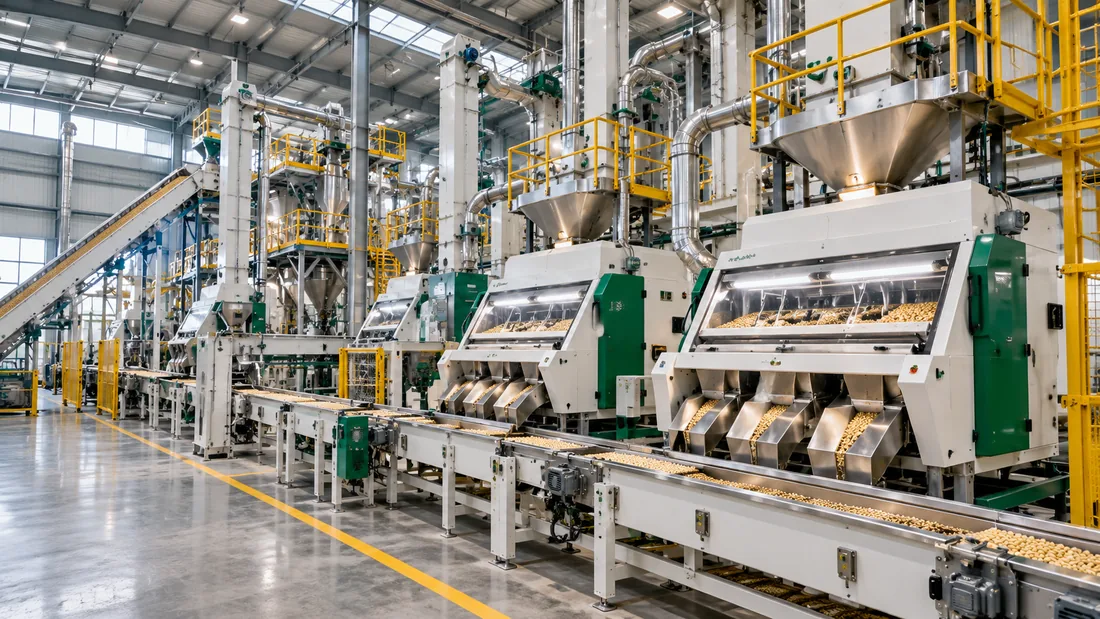
Project overview
A reference flow for controlled removal of fine impurities, stones and light fractions from small seeds. A seed processing plant is planned around the crop, throughput and required quality for cleaning, grading, separation, conveying and packing grains, pulses, oilseeds and spice seeds.
Equipment to consider
- Review of the product sample and incoming material conditions
- Selection of process stages for the target capacity and output quality
- Check of equipment capacity, transfer points and maintenance access
Let’s review your project
Share your crop, target throughput and site conditions so the suitable equipment and process flow can be reviewed together.
Send project enquiry ↗Project-specific process concept
A practical process flow is selected around the crop, incoming material condition and required output quality. A typical concept may combine receiving, pre-cleaning, aspiration, screening, density or size separation, conveying and packing. Not every step is required for every crop; the final sequence should be confirmed after a representative sample test.
Sesame: separation of stones, fine impurities and light fractions from small seeds.
Scope to review
- Assessing intake conditions for sesame
- Selecting separation of stones, fine impurities and light fractions from small seeds according to the sample and target quality
- Checking equipment capacities, transfer points and maintenance access together
Planning note
Before equipment is specified, define the crop and variety, moisture range, impurity profile, target purity and grading requirements, operating hours, seasonal throughput, available floor height, power supply, dust-control needs and downstream storage or packaging interface. These inputs help avoid undersized equipment and unnecessary process stages.
The capacity shown on this page is an initial planning range, not a guaranteed production rate. Actual throughput depends on crop properties, incoming impurity load, target quality, screen configuration and operating conditions. Confirm the design using a representative product sample and a documented process specification.
Plan a line around your crop and target quality
Send the crop type, desired throughput and process goals to start a practical equipment discussion.
Project planning FAQs
Preliminary planning capacity
The sample, foreign-material profile, target quality and hourly throughput guide the selection of pre-cleaning, screening, aspiration, density separation and conveying stages.
Crop to be processed
A seed processing plant is planned around the crop, throughput and required quality for cleaning, grading, separation, conveying and packing grains, pulses, oilseeds and spice seeds.
What information is needed for a project assessment?
Share the crop, required hourly capacity, current product condition, target quality, available site dimensions and any existing equipment. A representative sample and impurity analysis make the concept more reliable.
Is the listed capacity guaranteed?
No. It is a preliminary planning reference. Final capacity should be verified against the actual crop sample, process stages and required output quality.
Can the line be integrated with existing equipment?
Potentially. Existing conveyors, elevators, cleaners, silos and packing equipment should be reviewed for capacity, elevation, interfaces, controls and safety before integration is confirmed.