Overview
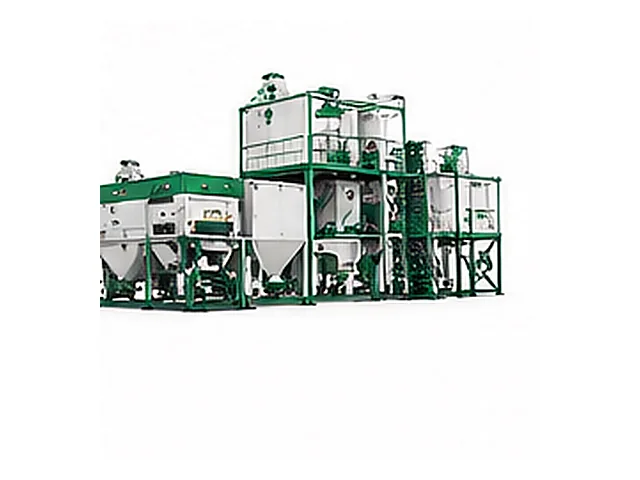
Rather than assembling isolated standalone machines that bottleneck or damage seed at transfer points, a Complete Seed Processing Line is engineered from a unified process flow diagram and mass balance. Raw field-run material enters through a dust-aspirated receiving pit and scalping pre-cleaner before moving via low-speed bucket elevators into intermediate surge silos. From there, product progresses sequentially through fine screen-and-air cleaning, indented cylinder length grading, destoning, specific-gravity separation, optical color sorting, chemical coating, and automated weighing and bagging.
Technical specifications
The capacity and power ranges indicated in the table may vary depending on the crop type to be processed, initial foreign matter rate, moisture level, and machine configuration. Exact performance and actual measurement values are finalized following the engineering design and process detailing of the plant to be installed.
Key considerations
- Confirm the crop, variety and incoming condition for Complete Seed Processing Line.
- The fit of the “Complete Seed Processing Line” unit should be checked on a representative sample, with control signals, the included equipment, process sequence and site connections matched to the planned line duty.
- Use a product trial to define where the “Complete Seed Processing Line” unit fits; record control signals, the included equipment, process sequence and site connections and the output expected by the following stage.
- Show the infeed, discharge, transfer points and service clearances for the “Complete Seed Processing Line” unit on the plant layout; compare control signals, the included equipment, process sequence and site connections with the planned line duty.
Typical applications
Agricultural enterprises deploy a Complete Seed Processing Line for cereal seed multiplication (wheat, barley, paddy rice, maize), pulse and legume conditioning (lentils, chickpeas, peas, dry beans, soybeans), oilseeds (sunflower, sesame, rapeseed), and fine forage or spice crops. Bypass spouting and motorized diverter valves allow operators to route each crop only through the specific cleaning, grading, or treatment machines required for that lot.