Home›Machines›Plant Automation
Plant Automation
MACHINERY CATALOGUE

Plant Automation

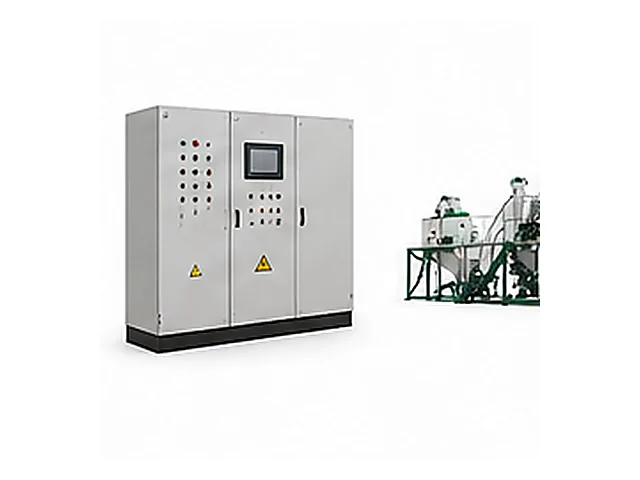
Plant Automation unifies electrical power distribution, PLC process interlocking, variable-speed drive regulation, and SCADA visualization across an entire seed conditioning or grain processing facility. Instead of operating cleaners, elevators, aspirators, and scales from disconnected local pushbuttons, operators manage recipes, material routing, and alarm diagnostics from a central human-machine interface.

Machines ↗

Overview

A comprehensive Plant Automation package encompasses the main motor control center (MCC), industrial programmable logic controllers (PLCs), variable-frequency drives (VFDs), field sensor networks, and graphic HMI/SCADA operator stations. The control logic enforces reverse-flow cascade startup—starting dust filters, discharge conveyors, and downstream separators first before enabling upstream cleaners and intake feeders—so chutes and elevators never choke on startup. During normal running or scheduled shutdown, automated delayed purge timers empty transport legs in sequence, while real-time current monitoring and bin-level interlocks halt upstream feeds instantly if a downstream fault occurs.

Technical Specifications

Technical ParameterPLA-25PLA-50PLA-100PLA-150
Pre-Cleaning & Intake Line Capacity20 – 30 t/h40 – 50 t/h60 – 75 t/h80 – 100 t/h
Silo Transfer & Conveying Capacity10 – 25 t/h30 – 50 t/h60 – 100 t/h110 – 150 t/h
Fine Seed Conditioning Capacity5 – 8 t/h10 – 12 t/h15 – 18 t/h20 – 25 t/h
Bagging & Packaging Output150 – 240 bags/hour250 – 360 bags/hour380 – 480 bags/hour500 – 600 bags/hour
Unit Equipment Drive Power Range1.5 – 4.0 kW2.2 – 7.5 kW3.0 – 11.0 kW4.0 – 18.5 kW

The capacity and power ranges indicated in the table may vary depending on the crop type to be processed, initial foreign matter rate, moisture level, and machine configuration. Exact performance and actual measurement values are finalized following the engineering design and process detailing of the plant to be installed.

Selection and integration

Specifying Plant Automation early in project engineering ensures that every motor starter, VFD, pneumatic solenoid, and level sensor across the cleaning, grading, storage, and packing islands communicates seamlessly. Centralized recipe management cuts changeover times between crops and eliminates human errors when setting diverter valves or aspiration fan speeds.

Key points to specify

  • Confirm the crop, variety and incoming condition for Plant Automation.
  • Use a product sample to set the acceptance target for the “Plant Automation” unit; factors to review: process sequence, the included equipment, site connections and control signals.
  • Document the intended result for the “Plant Automation” unit against actual feed and line conditions; review: process sequence, the included equipment, site connections and control signals.
  • Place the “Plant Automation” unit in the line drawing with its handoff elevations and cleaning access; use process sequence, the included equipment, site connections and control signals to define the sample review.

GUIDE · TECHNICAL SELECTION

What is this machine used for?

Engineered for modern seed multiplication and grain conditioning plants, Plant Automation coordinates equipment sequencing, route selection, drive speeds, and safety interlocks from receiving pit to final bagging. Real-time SCADA mimics give supervisors complete visibility of bin levels, motor currents, throughput rates, and batch traceability across the facility.

01

The role in the process

In a multi-stage processing line, uncoordinated manual switching of elevators, cleaners, and two-way valves frequently leads to plugged spouts, overflowing bins, or seed variety cross-mixing. Plant Automation locks out invalid flow paths by verifying limit-switch feedback on every motorized diverter valve and slide gate before allowing material feed to begin.

Integrating variable-frequency drives into the PLC network lets operators adjust bucket-elevator belt speed, air-screen eccentric frequency, aspiration fan suction, and gravity-table deck speed directly from stored crop recipes. When switching from heavy cereal grains to delicate pulses or light grass seeds, recalling a validated digital recipe reconfigures drive parameters across the line in seconds.

02

Material and application suitability

Different seed lots require distinct process routing—for instance, bypassing the de-awner or destoner on clean lots, or routing high-value vegetable seeds through secondary indent grading and optical sorting. Graphical route-selection matrices on the SCADA screen highlight the active material path in color and confirm that all auxiliary dust-extraction dampers along that route are open.

In facilities handling certified seed varieties, automated cleanout sequences cycle conveyor drives, pulse filter bags, and actuate cleanout gates for a programmed duration while logging operator sign-off. Historical data logging records intake weights, cleaning reject percentages, chemical treater dosage totals, and bagging counts against each production lot number.

03

Selection checklist

To scope a Plant Automation system, compile the complete motor list (kilowatt ratings and fixed vs. VFD control), pneumatic valve and motorized gate count, bin-level sensor locations, and third-party machine communication protocols. Define whether control will reside in a central air-conditioned control room, distributed floor panels, or both.

Define PLC I/O capacity, motor control center architecture, and interlock logic across all intake, cleaning, and packaging sections. Include automated sequence startup, bin level interlocks, and alarm diagnostics to prevent choke-ups during unattended shifts. Factory acceptance simulation and wet commissioning validate every recipe interlock and emergency stop circuit. Cleanout doors simplify variety changeovers.

Integration into a processing line

Plant layout and interface planning

Electrical room placement and cable-tray routing should minimize power-cable runs to high-kilowatt aspiration fans and bucket elevators while keeping low-voltage sensor and communication wiring segregated from VFD motor leads. Local maintenance isolator switches mounted adjacent to every motor allow technicians to lock out individual machines safely during mechanical service.

The SCADA graphical interface mirrors the physical layout of the plant, displaying live animations of elevator rotation, zero-speed belt sensors, silo high/low levels, and scale throughput rates. Color-coded diagnostic banners pinpoint the exact tripped overload, open inspection door, or blocked chute sensor so operators resolve stops immediately.

Factors that affect operating performance

Automated closed-loop feed control links the intake or surge-bin vibratory feeder to the load current or weighing signal of downstream cleaners and gravity tables. Maintaining a steady, non-pulsing mass flow across screen decks and air channels maximizes separation sharpness without constant manual gate tweaking.

Process quality and line integration

Remote support connectivity allows automation engineers to inspect PLC logic, calibrate VFD parameters, and deploy software updates over a secure encrypted connection during commissioning and seasonal campaigns. Comprehensive electrical schematics, PLC tag tables, and operator manuals are supplied with every control cabinet.

Frequently asked questions

How does Plant Automation prevent elevator and chute blockages during line stops?

The PLC uses reverse-order cascade interlocking coupled with zero-speed shaft monitors on elevators and conveyors. If any downstream machine trips or a bin high-level probe activates, the controller immediately halts upstream feeding while allowing downstream transport equipment to run until clear.

Can existing standalone machines—such as optical sorters or bagging scales—connect to the central SCADA system?

Yes, modern optical sorters, seed treaters, hopper scales, and packaging controllers exchange status, alarm, and weight data via industrial Ethernet, Profinet, or Modbus interfaces. For older legacy machines without network ports, hardwired dry-contact relays and analog current loops integrate their run/fault status into the main PLC.

What is included in digital crop recipe management?

Each crop recipe stores the selected diverter-valve routing path, VFD frequency setpoints for feeders, fans, and eccentric drives, purge timer durations, and alarm thresholds. Selecting a recipe on the HMI automatically positions motorized gates and sets drive speeds across the line, ensuring repeatable processing quality across shifts.

REQUEST A TECHNICAL REVIEW

Plant Automation

Share your plant motor schedule, process flow diagram, and reporting requirements so our automation engineers can design a bespoke PLC, MCC, and SCADA Plant Automation package for your facility.