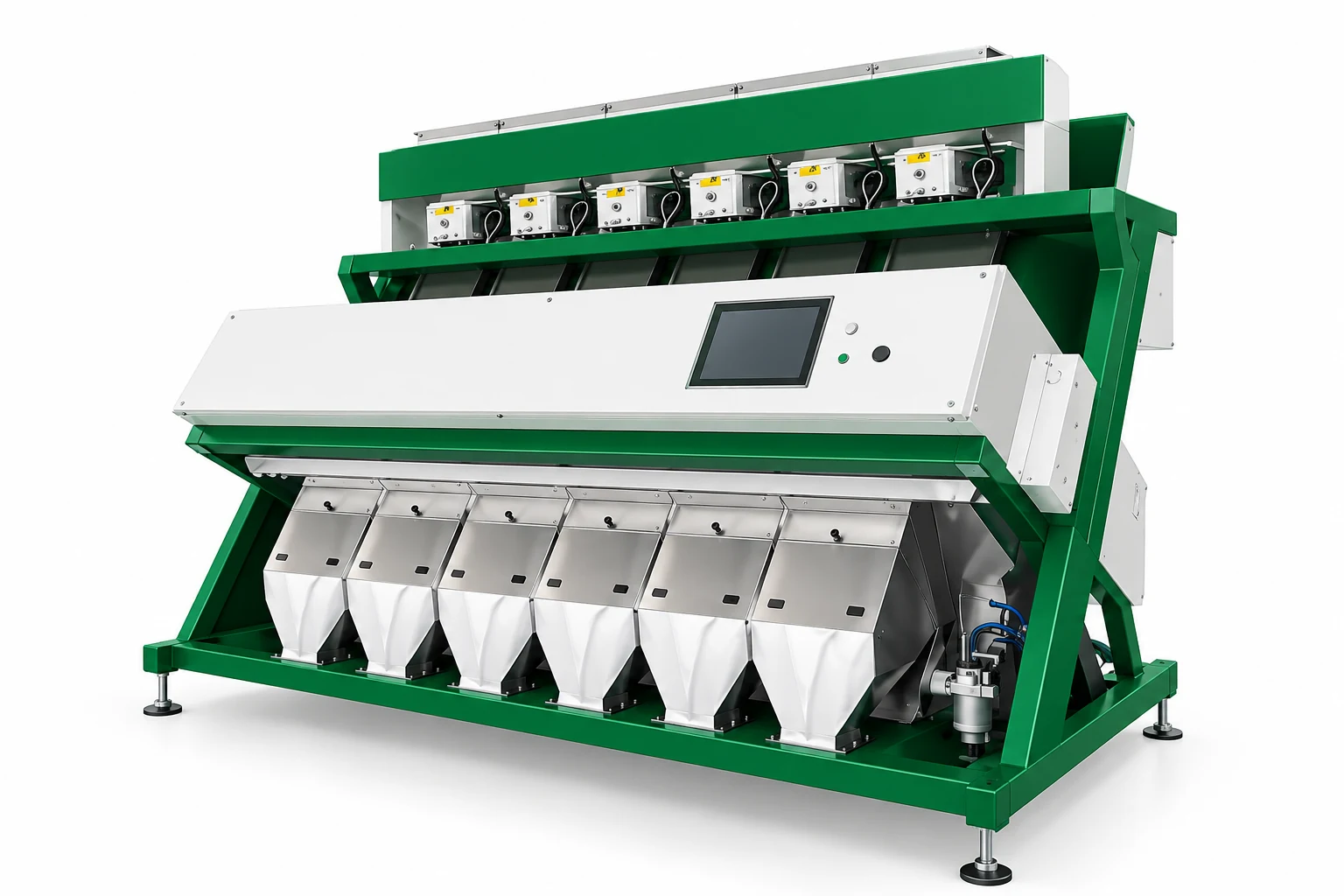
 Optical Sorting & Inspection
Optical Color Sorter
Multi-channel optoelectronic sorting unit combining high-resolution cameras and fast pneumatic valves to eject off-color defects from clean seed lots.
1–20 t/h↗

High-resolution multispectral cameras, chromatic LED/NIR lighting, and high-speed pneumatic ejectors inspect individual kernels in flight to remove discolored defects, foreign seeds, sclerotia, and non-grain contaminants at final polishing.

Compare multi-chute optical sorting configurations below to specify camera spectrum, chute count, and re-sort logic for your final seed or food-grade grain cleaning stage.
Optical Sorting & InspectionMulti-channel optoelectronic sorting unit combining high-resolution cameras and fast pneumatic valves to eject off-color defects from clean seed lots.
 Optical Sorting & Inspection
Dedicated agricultural color sorter engineered to reject stained kernels, fusarium damage, ergot bodies, and foreign seeds from cereals and pulses.
Visible-spectrum RGB/trichromatic cameras detect subtle shade, spot, and chalkiness variations, while optional near-infrared (NIR) or InGaAs wavelengths distinguish foreign materials such as stones, glass, twigs, and hulls of identical visible color.
Airborne dust coats optical viewing windows and scatters illumination, while straw, clusters, and heavy dockage overload pneumatic ejectors, consume compressed air, and increase good-seed splash into the reject chute.
Each compressed-air blast ejects a defective kernel along with several adjacent sound seeds; routing primary rejects to a secondary or tertiary sorting chute recovers the sound kernels and concentrates true defects.
Optical sorters require a dedicated, pulsation-free supply of clean, oil-free, dry compressed air at stable pressure, vibration-isolated floor mounting, dust extraction connections, and regulated electrical power.
Higher contamination percentages trigger more frequent ejector firing and require lower chute feed density so kernels fall in a separated single layer without overlapping in the camera inspection zone.