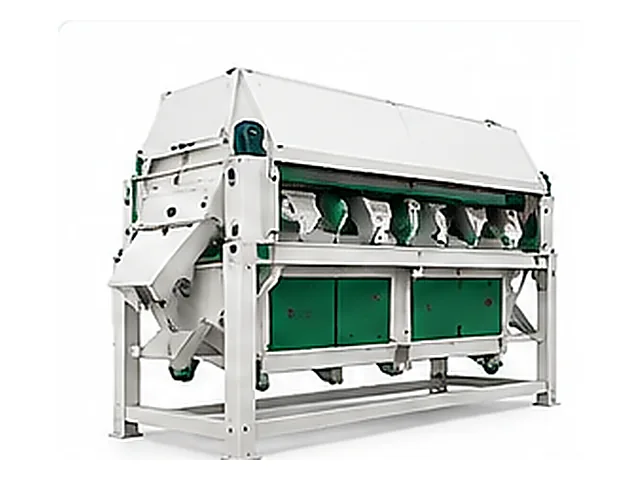
 Cleaning & Pre-Cleaning
Pre-Cleaner
Extracts coarse chickpea pod remnants, dry stem trash, fine harvest dust, and oversized clay clods at 5–40 t/h before primary silo storage or fine conditioning.
5–40 t/h↗

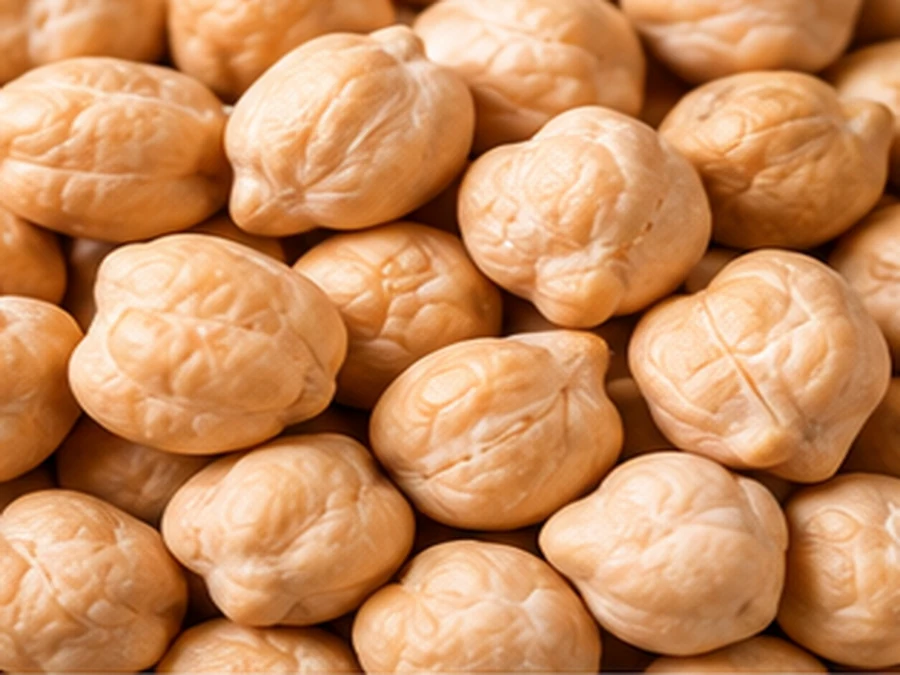
Industrial chickpea processing plants—conditioning large ram-headed Kabuli varieties for whole export grading or smaller angular Desi types for dhal splitting and besan milling—must address severe field contamination and delicate seed morphology. Because the prominent protruding beak (radicle tip) of the Kabuli chickpea is highly vulnerable to mechanical chipping and seed-coat peeling, line engineering combines low-impact conveying with heavy-duty soil and stone extraction. Integrating high-capacity air-screen cleaners, pressurized destoners, indented cylinders, specific-gravity tables, multi-deck millimeter caliber sizers, and trichromatic optical sorters guarantees uniform 7 mm, 8 mm, 9 mm, and 10 mm+ export grades free of bruchid damage and Ascochyta blight.
Engineering a high-efficiency chickpea line requires removing dense harvest stones and soil clods early while preserving the fragile Kabuli beak across multi-stage screen sizing and optical sorting.
Every machine stage in a commercial chickpea facility is configured to handle high bulk density, abrasive field dirt, and strict export count-per-ounce and millimeter caliber tolerances.
Cleaning & Pre-CleaningExtracts coarse chickpea pod remnants, dry stem trash, fine harvest dust, and oversized clay clods at 5–40 t/h before primary silo storage or fine conditioning.
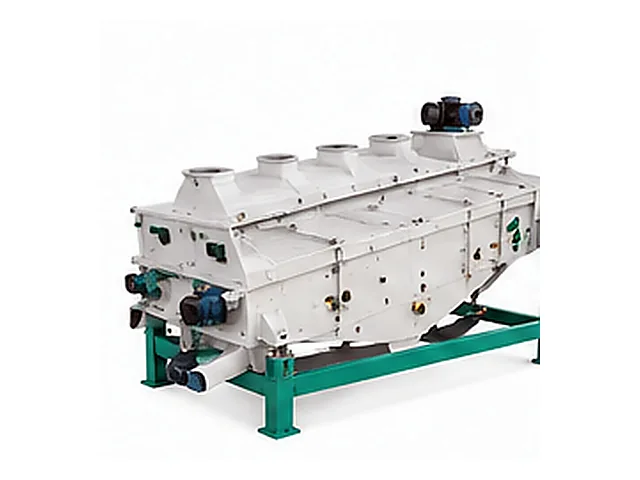 Cleaning & Pre-Cleaning
Separates undersized shriveled seeds, split cotyledons, and light husk debris at 3–30 t/h using dual aspiration chambers and heavy-duty ball-cleaned sieve decks.
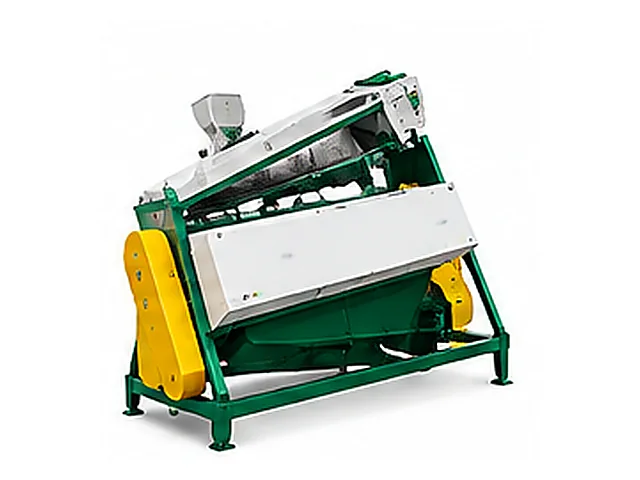 Separation
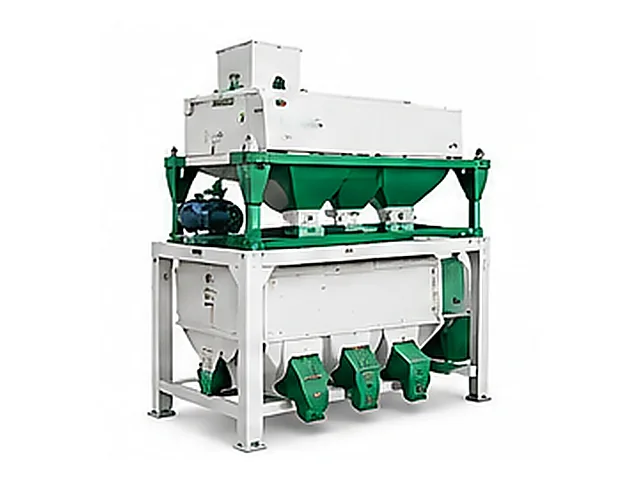 Separation
Isolates bruchid-hollowed (Callosobruchus) kernels, frost-damaged light seeds, and unhulled pods from sound dense chickpeas at 1–20 t/h on an air-fluidized deck.
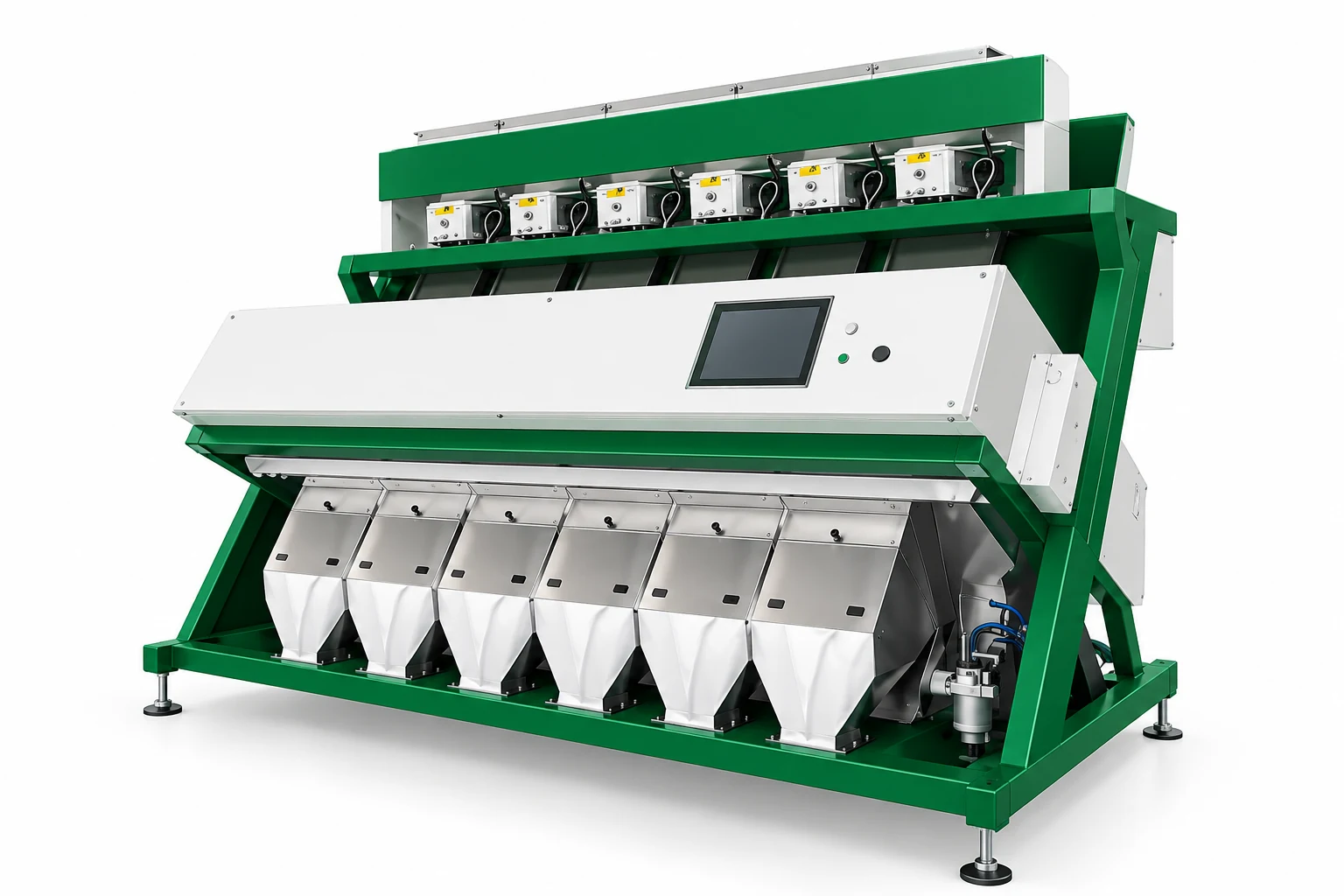 Optical Sorting
Ejects Ascochyta-blighted dark kernels, green immature seeds, stained seed coats, and calcified soil balls at 1–20 t/h using RGB and InGaAs SWIR optical cameras.
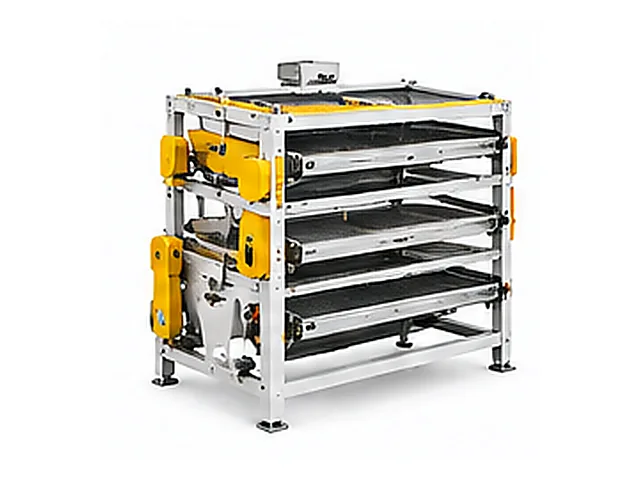 Grading & Sizing
Classifies cleaned Kabuli chickpeas into exact commercial millimeter calibers (7 mm, 8 mm, 9 mm, 10 mm, 11 mm+) at 2–30 t/h across multi-deck round-hole screens.
Commercial value in international Kabuli chickpea trade is governed directly by millimeter caliber uniformity (40/42, 42/44, 44/46, and 58/60 counts per ounce), seed-coat color brightness, and zero tolerance for mineral stones or insect-bored seeds. Because chickpeas grow on low-stature plants harvested close to stony, dry clay soils, raw intake lots frequently contain 3% to 8% soil clods and pebbles alongside split cotyledons. A purpose-built chickpea processing plant sequences pre-cleaning, fine air-screen separation, vibro-destoning, indented cylinder broken-removal, specific-gravity grading, and precision multi-deck calibration ahead of optical sorting to maximize premium large-caliber yield.
Unlike smooth spherical peas, the irregular ram-head contour of a chickpea traps dust in its creases and allows split cotyledons or stones to bridge across standard flat sieves. Following primary aspiration, oblong-slot screens and rotating indented cylinders lift out broken halves and short weed seeds, while pressurized destoners and gravity separators strip out stones and lightweight bruchid-tunnelled seeds that appear intact from the outside.
High-accuracy chickpea calibration requires long-stroke horizontal screen graders equipped with precision-punched round-hole plates (typically 7.0, 8.0, 8.5, 9.0, 9.5, and 10.0 mm) and rubber ball de-blinding trays that prevent wedged beaks from plugging apertures. Throughout the plant, slow-speed bucket elevators with polymeric buckets and polyurethane-lined spouts prevent beak breakage and seed-coat loosening.
Kabuli export contracts strictly cap green immature kernels, brown frost-damaged seeds, and dark necrotic lesions caused by Ascochyta rabiei. High-resolution RGB optical sorters detect subtle beige-to-yellow shade deviations and black pinpoint insect sting marks, while InGaAs SWIR sensors identify limestone pebbles and sun-baked clay balls whose surface color matches creamy Kabuli seed coats.
Screen blinding is one of the primary capacity bottlenecks in industrial chickpea grading because the conical beak of the Kabuli seed easily wedges into circular screen perforations. Specifying heavy-duty seed graders with optimized eccentric throw, tuned oscillation frequency, and resilient food-grade rubber bouncing balls beneath every screen deck ensures continuous self-cleaning and prevents 8 mm seeds from riding over into the 9 mm export bin.
Line architecture differs substantially between whole-seed Kabuli export plants and Desi chickpea dhal mills. Kabuli lines emphasize gentle brush polishing and parallel caliber storage silos so different millimeter grades can be blended or packed independently, whereas Desi dhal lines integrate conditioning tempering bins, emery-roller dehullers, husk aspirators, and vertical splitting cones to produce clean chana dhal.
When comparing equipment proposals for a chickpea conditioning facility, insist on performance guarantees anchored to your specific regional cultivar and contaminant profile. Quotations must define net hourly capacity at 99.9% purity, caliber sizing accuracy (maximum undersize/oversize crossover percentage per deck), mechanical beak-breakage limits (under 0.5%), and electrical plus aspiration dust-collection ratings.
Commissioning acceptance trials should measure both final caliber purity and the mass balance of usable chickpeas lost in destoner, gravity table, and optical sorter reject streams. Configuring a secondary recovery pass on the optical color sorter and a middlings return loop on the gravity separator ensures that dense whole chickpeas are not sacrificed when ejecting stones and bruchid-damaged seeds.
Plant layout for multi-caliber chickpea grading should incorporate dedicated surge hoppers above the gravity separator and optical sorter alongside parallel holding bins for each millimeter size fraction. Minimizing intermediate screw conveyors and using cushioned gravity spouts preserve seed-coat integrity and allow seamless switching between 25 kg retail sacks and bulk container loading.
The protruding beak (radicle tip) of a dry Kabuli chickpea is highly brittle, especially when seed moisture drops below 11%. Preventing beak chipping requires limiting bucket elevator belt speeds to under 1.3 m/s, using rounded polymeric buckets, lining all chute impact zones with abrasion-resistant polyurethane pads, and avoiding high-friction screw augers across the cleaning and sizing circuit.
Accurate millimeter calibration is achieved on multi-deck horizontal screen graders fitted with precision round-hole perforated plates arranged from largest to smallest (e.g., 10.0 mm, 9.0 mm, 8.0 mm, 7.0 mm) combined with an oblong-slot bottom sieve (e.g., 4.5x20 mm) to drop out splits. High-rebound rubber ball trays beneath each deck continuously dislodge seeds wedged by their beaks, maintaining open screen area.
A vibro-destoner is engineered with a steep deck angle and high air velocity to extract small, high-density stones and metallic particles that represent less than 2–5% of the feed. The specific-gravity separator operates downstream with a larger fluidized deck area to stratify the main chickpea stream by subtle density differences, removing bruchid-bored hollow seeds, frost-shriveled kernels, and light soil clods.
Sun-baked calcareous clay balls and pale limestone pebbles often reflect visible RGB light identically to beige Kabuli chickpeas, allowing them to pass standard trichromatic cameras. Equipping the optical sorter with Short-Wave Infrared (InGaAs SWIR) sensors enables material-composition detection based on water-of-hydration and mineral absorption bands, ejecting same-color stones and mud balls with pinpoint accuracy.
Before silo storage or export bagging, graded chickpeas must be stabilized at 12.0% to 13.5% moisture content, with zero live or dead bruchid beetles (Callosobruchus maculatus), zero stones, and less than 0.5% split or broken kernels. Each millimeter caliber lot should be stored in segregated, fumigation-capable bins equipped with cushioned let-down ladders to prevent size segregation and impact damage.