Overview
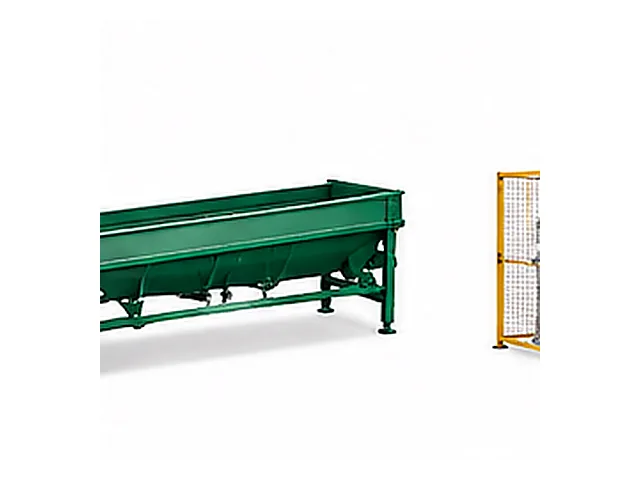
Unlike open belts that carry a shallow layer on rollers, an en-masse chain unit pulls a deep bed of grain along a flat, wear-lined bottom deck using closely spaced polymer or steel paddles. Internal shear between grain layers propels the entire bed at chain velocity with minimal tumbling, while the upper return strand rides on guide rails or rollers above the material zone. Curved return buckets or wiper flights attached to the chain sweep the tail turnaround housing continuously, preventing dead-zone accumulation at the end of a run.
Technical Specifications
The capacity and power ranges indicated in the table may vary depending on the crop type to be processed, initial foreign matter rate, moisture level, and machine configuration. Exact performance and actual measurement values are finalized following the engineering design and process detailing of the plant to be installed.
Selection and integration
Engineering a Chain Conveyor requires matching trough width, chain pitch, linear chain velocity, and flight profile to the bulk density and abrasiveness of the grain stream. Where a single conveyor must receive from several silos or discharge into a row of bins, intermediate rack-and-pinion or pneumatic slide gates are sequenced with the head outlet overflow switch.
Key points to specify
- Confirm the crop, variety and incoming condition for Chain Conveyor.
- Define the target output and the acceptance criteria for the chain conveying stage.
- Use a product trial to define where the “Chain Conveyor” unit fits; record the route, inlet/discharge alignment, transfer elevations and product fragility and the output expected by the following stage.
- The line drawing for the “Chain Conveyor” unit should identify product transfer, service space and interfaces with upstream and downstream equipment; confirm the route, inlet/discharge alignment, transfer elevations and product fragility in a representative trial.