Home›Machines›Continuous Seed Treater Machine
Continuous Seed Treater Machine
MACHINERY CATALOGUE

Continuous Seed Treater Machine

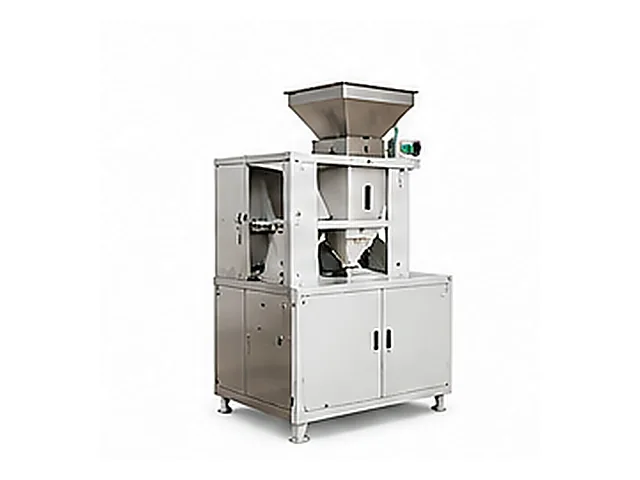
The Continuous Seed Treater Machine delivers uninterrupted inline chemical dressing and biological liquid application for high-capacity cereal, pulse, and oilseed conditioning plants. By linking an inlet seed-flow meter in closed loop with precision peristaltic or diaphragm dosing pumps, the unit maintains exact active-ingredient coverage across long commercial runs.

Machines ↗

Overview

Incoming cleaned seed flows through a mass-sensing or volumetric metering assembly at the top of the Continuous Seed Treater Machine before forming a hollow falling curtain around a high-speed rotary atomizer cup. After primary misting, the seed stream enters an inclined stainless-steel mixing cylinder or soft-flighted auger that redistributes the liquid film uniformly from kernel to kernel prior to discharge.

Technical Specifications

Technical ParameterCST-05CST-10CST-15CST-25
Processing Capacity3 – 6 t/h7 – 12 t/h13 – 18 t/h19 – 25 t/h
Dosing Accuracy / Liquid Application98.0% – 99.0% homogeneous coating98.5% – 99.2% homogeneous coating99.0% – 99.5% homogeneous coating99.2% – 99.5% homogeneous coating
Total Motor Power2.2 kW4.0 kW7.5 kW11.0 kW
Peristaltic Pump Liquid Dosing Range15 – 180 L/h30 – 360 L/h50 – 540 L/h80 – 750 L/h
Coating / Mixing Drum Diameter600 mm750 mm900 mm1,100 mm

The capacity and power ranges indicated in the table may vary depending on the crop type to be processed, initial foreign matter rate, moisture level, and machine configuration. Exact performance and actual measurement values are finalized following the engineering design and process detailing of the plant to be installed.

Selection and integration

Selecting a Continuous Seed Treater Machine centers on maximum and minimum hourly seed tonnage, slurry application rate per ton, number of simultaneous liquid streams, and secondary mixing residence time. Maintaining a steady, choke-fed seed supply into the primary misting zone is essential so the atomizer spray never hits bare housing walls.

Key points to specify

  • Confirm the crop, variety and incoming condition for Continuous Seed Treater Machine.
  • Document the intended result for the “Continuous Seed Treater Machine” unit against actual feed and line conditions; review: the following process, treatment objective, feed arrangement and seed condition.
  • For the “Continuous Seed Treater Machine” unit, check the operating choices against these factors: the following process, treatment objective, feed arrangement and seed condition.
  • Show the infeed, discharge, transfer points and service clearances for the “Continuous Seed Treater Machine” unit on the plant layout; compare the following process, treatment objective, feed arrangement and seed condition with the planned line duty.

GUIDE · TECHNICAL SELECTION

What is this machine used for?

A Continuous Seed Treater Machine proportions liquid fungicides, insecticides, micronutrients, and polymers onto a moving stream of seed with real-time flow tracking. Its two-stage architecture—high-speed centrifugal atomization followed by gentle mechanical tumbling or auger rolling—achieves streak-free seed coverage at commercial line speeds.

01

The role in the process

Installed at the final stage of a continuous cereal or soybean processing line immediately ahead of automated bagging or bulk truck load-out, the Continuous Seed Treater Machine operates at the full throughput of the upstream cleaning plant. Continuous inline operation eliminates the cycle pauses and surge-bin footprint required by discrete batch coaters.

As upstream feed rates fluctuate slightly, the inlet weigh-cone or rotary metering wheel signals the PLC to modulate pump speed instantaneously, holding the millilitres-per-kilogram dosage constant. If seed flow drops below the minimum threshold or a chemical tank runs low, an automatic interlock pauses treatment before untreated seed can pass downstream.

02

Material and application suitability

Wheat, barley, oats, rye, soybeans, peas, maize, and delinted cottonseed respond exceptionally well to continuous two-stage dressing when free dust and broken hulls have been removed upstream. Soft elastomeric or polished stainless mixing elements in the secondary chamber roll the kernels gently so fragile soybean hilums and cereal embryos remain unbruised.

Slurry rheology, ambient temperature, and seed surface porosity influence how quickly the atomized droplets spread and dry during secondary tumbling. Calibration runs using inline catch-ports and visual dye coverage checks establish the optimal atomizer RPM and mixing-flight angle for each crop. Cleanout doors simplify variety changeovers.

03

Selection checklist

Before specifying the unit, define your minimum and peak hourly tonnage, the number of independent liquid slurries or micro-dosed additives to be injected without pre-mixing, and cleanout frequency between varieties. Confirm that the upstream surge bin can sustain uninterrupted choke flow for at least several minutes of operation.

Match liquid dosing pump range, atomizer disc speed, and mixing chamber retention time to the chemical recipe and seed fragility. Check chemical tank agitation, exhaust ventilation connections, and gentle discharge transfer into downstream bagging bins. Specify self-cleaning lining materials, peristaltic calibration cylinders, and washout drains for safe batch changeovers.

Integration into a processing line

Plant layout and interface planning

Mount the Continuous Seed Treater Machine directly beneath a dedicated level-controlled surge hopper so the seed inlet always receives a head of de-aerated, steady product. Position the mobile or fixed chemical pump stand on a bunded floor area adjacent to the operator HMI panel for effortless calibration and drum changes.

Discharge treated seeds through a steep, smooth transition chute straight into the bagging bin or a self-cleaning belt conveyor to avoid wet chemical build-up on transfer walls. Connect the misting hood vent to an aspiration fan that prevents aerosol escape while keeping chemical mist inside the seed curtain.

Factors that affect operating performance

Dust adhering to poorly cleaned seed absorbs liquid protectant before it can coat the pericarp and builds up caked rings inside the secondary mixing chamber. Running the seed through a high-efficiency air-screen cleaner or brush polisher upstream dramatically improves coating brilliance and reduces chemical consumption.

Process quality and line integration

Continuous flowmeter feedback and totalizer logs give plant managers complete documentation of chemical usage versus treated seed tonnage for every production shift. Quick-drain manifolds and hinged trough bottoms let operators flush hoses and wipe the mixing chamber cleanly between different seed treatment formulations.

Frequently asked questions

How does a continuous seed treater keep the chemical dosage accurate if seed flow varies?

An inlet mass-flow sensor or calibrated volumetric metering wheel continuously measures the incoming seed stream and sends a real-time signal to the PLC. The controller adjusts peristaltic or diaphragm pump speed proportionally and monitors inline liquid flowmeters so the target dose per ton stays locked in.

Why are two stages—atomization and secondary mixing—used inside the machine?

The spinning atomizer cup breaks the liquid slurry into a fine radial mist that coats the falling seed curtain during primary contact, while the secondary mixing cylinder or soft auger tumbles kernels against one another. This seed-to-seed rubbing redistributes micro-droplets into a uniform, streak-free film over the entire seed surface.

What prevents chemical spraying if the incoming seed supply is interrupted?

High- and low-level capacitance probes in the inlet surge hopper work alongside the seed-flow sensor to supervise product presence continuously. If the surge bin level falls or liquid flow deviates from the setpoint, the PLC halts both the feed gate and the dosing pumps immediately.

REQUEST A TECHNICAL REVIEW

Continuous Seed Treater Machine

Send us your target cereal or pulse crops, hourly tonnage range, and liquid formulation details to configure a Continuous Seed Treater Machine with the right pump skid and secondary mixer.