Overview
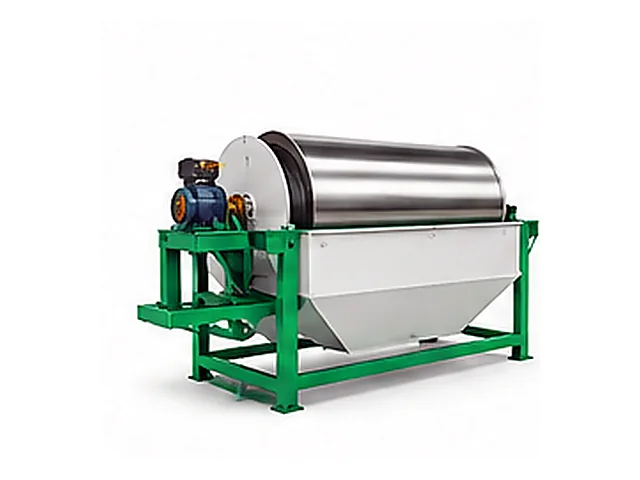
A regulated seed stream enters the hooded infeed collar of the Drum Seed Treater Machine where atomized slurry or low-pressure spray nozzles dose the falling product. The wetted seeds then travel down a trunnion-supported rotating drum whose slow tumbling action and contoured internal ribs transfer liquid evenly across every seed coat without mechanical shear.
Technical Specifications
The capacity and power ranges indicated in the table may vary depending on the crop type to be processed, initial foreign matter rate, moisture level, and machine configuration. Exact performance and actual measurement values are finalized following the engineering design and process detailing of the plant to be installed.
Selection and integration
Configuring a Drum Seed Treater Machine revolves around seed fragility, required rolling residence time, drum inclination angle, and liquid tackiness. Because there is no central screw shaft inside the cylinder, large cotyledon crops like chickpeas, dry beans, lupins, peanuts, and soybeans roll freely on a self-cushioning bed.
Key points to specify
- Confirm the crop, variety and incoming condition for Drum Seed Treater Machine.
- For the “Drum Seed Treater Machine” unit, check the operating choices against these factors: feed arrangement, the following process, seed condition and treatment objective.
- When setting up the “Drum Seed Treater Machine” unit, record feed arrangement, the following process, seed condition and treatment objective and assess both accepted output and unwanted product loss during the sample trial.
- Place the “Drum Seed Treater Machine” unit in the line drawing with its handoff elevations and cleaning access; use feed arrangement, the following process, seed condition and treatment objective to define the sample review.