Overview
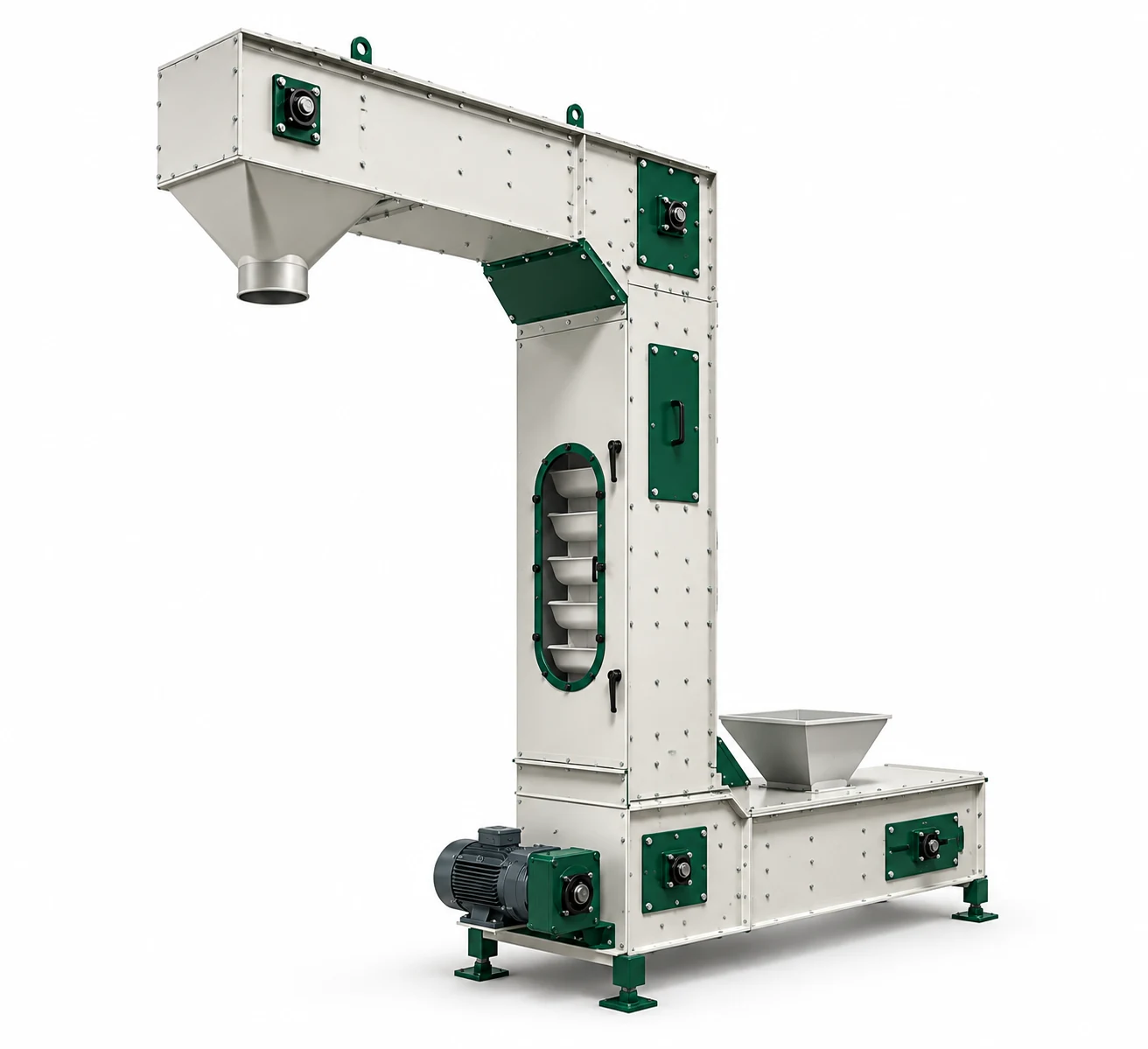
Twin parallel roller chains carry trunnion-mounted buckets along a C-shaped, Z-shaped, or multi-loop frame. At the lower horizontal infeed zone, a brush or overlapping lip device closes the gap between moving buckets so incoming product fills each pocket cleanly without spillage. As the chains turn upward into the vertical column and then level out along the upper gallery, gravity keeps the balanced pendulum buckets level until a stationary or pneumatic cam tilts each bucket smoothly over the chosen outlet hopper.
Technical Specifications
The capacity and power ranges indicated in the table may vary depending on the crop type to be processed, initial foreign matter rate, moisture level, and machine configuration. Exact performance and actual measurement values are finalized following the engineering design and process detailing of the plant to be installed.
Selection and integration
Configuring a Pendulum Bucket Z Elevator starts with mapping the exact lower horizontal pickup length, vertical climb, and upper horizontal distribution run. Because one Z-elevator can tip selectively into several overhead hoppers via pneumatic cam actuators, it often replaces a conventional belt-to-elevator-to-conveyor combination.
Key points to specify
- Confirm the crop, variety and incoming condition for Pendulum Bucket Z Elevator.
- The fit of the “Pendulum Bucket Z Elevator” unit should be checked on a representative sample, with product fragility, inlet/discharge alignment, transfer elevations and the route matched to the planned line duty.
- Use a product sample to set the acceptance target for the “Pendulum Bucket Z Elevator” unit; factors to review: product fragility, inlet/discharge alignment, transfer elevations and the route.
- Request written connection and maintenance details for the “Pendulum Bucket Z Elevator” unit, then check them against the site layout and cleaning access; keep product fragility, inlet/discharge alignment, transfer elevations and the route tied to the next process step.