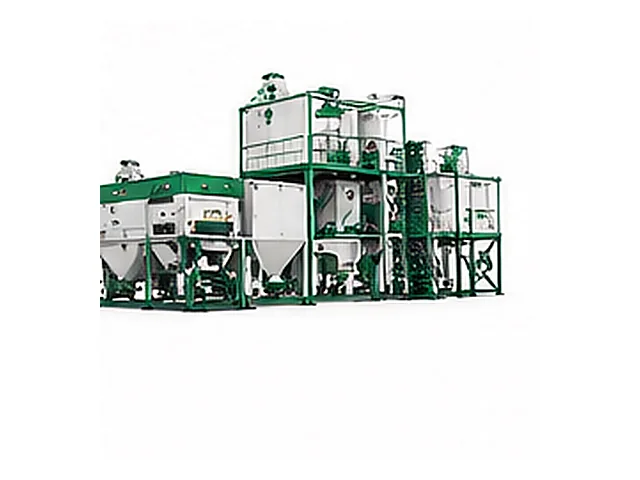
 Automation & Complete Processing Lines
Complete Seed Processing Line
End-to-end mechanical and process engineering integrating intake pits, cleaners, gravity tables, sorters, treaters, and bagging stations.
1–100 t/h, project-defined↗

Integrated plant engineering and centralized PLC-SCADA control architectures coordinate receiving, cleaning, grading, optical sorting, conditioning, and packaging into a unified, traceable processing operation.
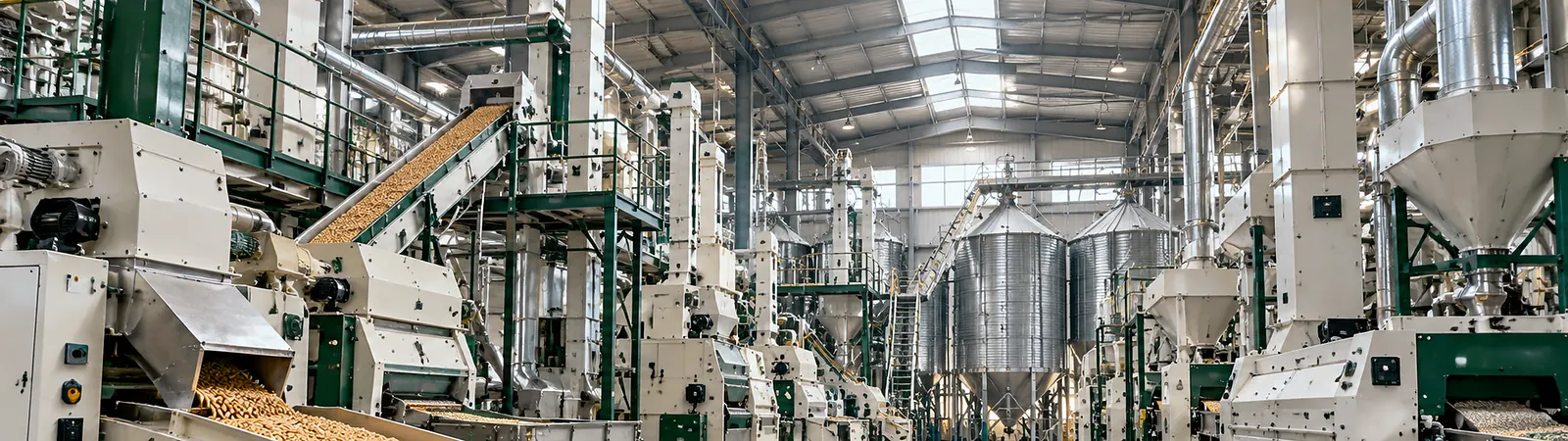
Explore full-scope processing line configurations and automated electrical control platforms below to align mechanical equipment layout, interlocking logic, and batch traceability with your project goals.
Automation & Complete Processing LinesEnd-to-end mechanical and process engineering integrating intake pits, cleaners, gravity tables, sorters, treaters, and bagging stations.
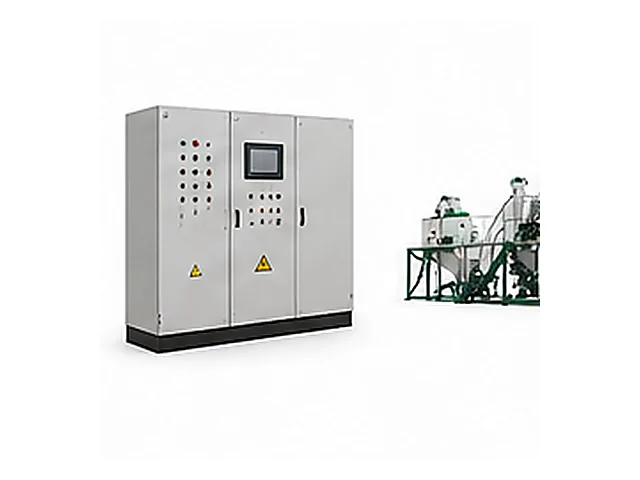 Automation & Complete Processing Lines
PLC and HMI supervisory control suites providing sequential startup interlocks, bin level monitoring, motor diagnostics, and recipe management.
Process engineers evaluate raw crop varieties, initial impurity profiles, required hourly tonnage, target purity grades, building column grids, eave heights, and utility connections to establish mass balance and flow diagrams.
Centralized programmable controllers link variable-frequency drives, rotary level switches, zero-speed sensors, and pneumatic diverter valves so upstream feeders modulate or pause automatically if a downstream machine trips.
Overall plant throughput is governed by the precision stage with the tightest specific loading limit—typically fine screen grading, gravity separation, or high-reject optical sorting—plus surge bin buffering between sections.
Retrofit engineering covers structural floor loads, spout drop angles, elevator discharge heights, aspiration tie-ins, motor control center spare capacity, and digital communication protocols for PLC interlocking.
Sharing representative raw seed photos or lab sieve analyses, seasonal operating schedules, desired packaging formats, site footprint drawings, and local electrical supply standards accelerates preliminary layout engineering.