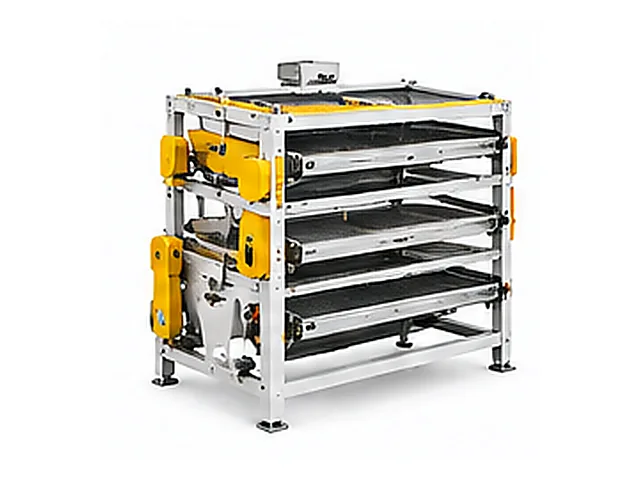
 Grading & Sizing
Seed Grader
Multi-deck dimensional classifier that divides pre-cleaned seed and grain lots into uniform size fractions across interchangeable perforated sieves.
2–30 t/h↗

Precision dimensional sizing by kernel width, thickness, and diameter produces uniform seed fractions for calibrated planter plates, even roasting or malting hydration, and consistent commercial market grades.
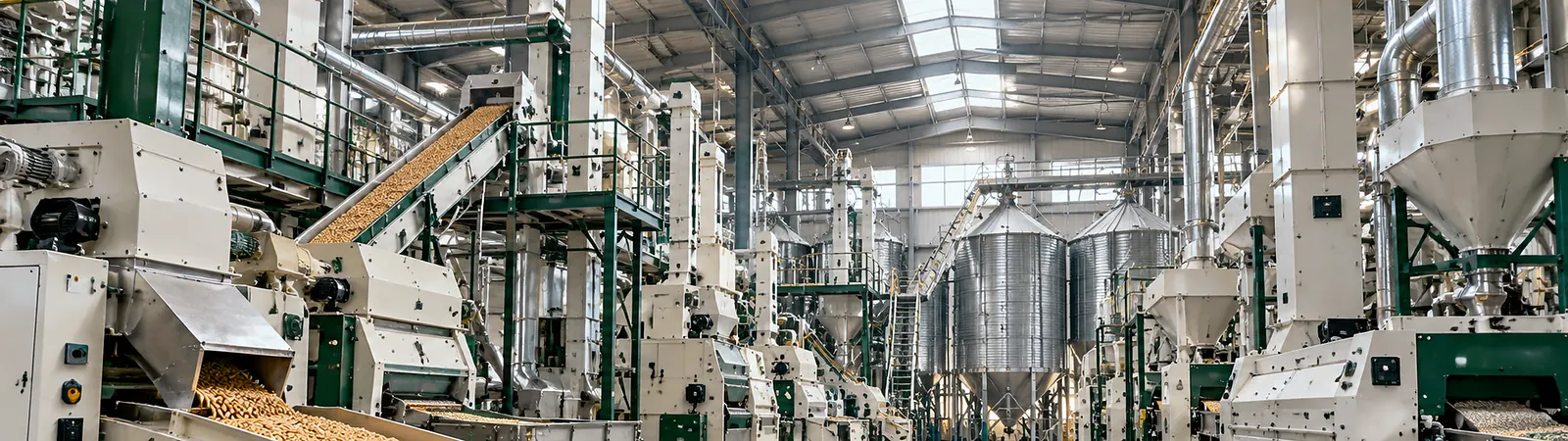
Evaluate flat-deck graders, rotating cylindrical screeners, and vibratory sizing units below to establish multi-fraction dimensional calibration tailored to your crop profile and commercial grade specifications.
Grading & SizingMulti-deck dimensional classifier that divides pre-cleaned seed and grain lots into uniform size fractions across interchangeable perforated sieves.
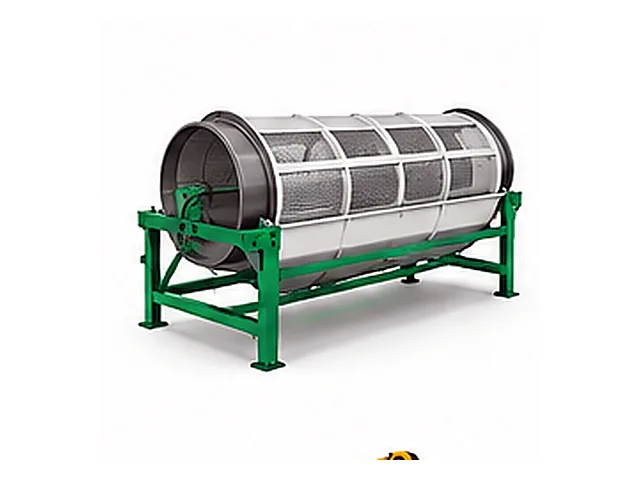 Grading & Sizing
Rotating perforated drum grader series CS 300/500/700 designed for high-precision width and thickness calibration of seeds, pulses, and nuts.
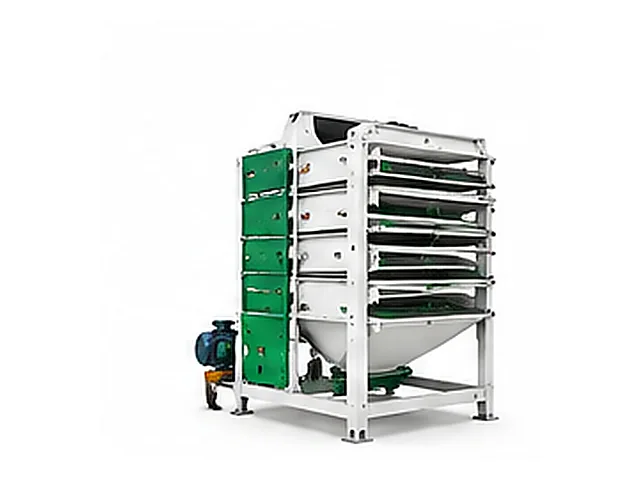 Grading & Sizing
Balanced reciprocating screen grader built for high-precision multi-fraction sizing and split-flow grading in commercial seed plants.
 Grading & Sizing
Oscillating sieve deck classifier engineered to separate granular crops and specialty seeds into distinct dimensional cuts with minimal blinding.
Flat reciprocating decks offer rapid screen changeovers and flexible flow splitting across many crops, whereas rotating cylindrical drums continuously turn elongated or flat kernels so they present accurately to slot or round apertures.
Depending on deck count or cylinder segments, a grader can split incoming stock into two to five calibrated size streams—such as oversize, large, medium, small, and undersized siftings—in a single pass.
Feeding uncleaned stock directly onto precision sizing screens causes rapid aperture blinding, uneven bed stratification, accelerated sieve wear, and carryover of stem fragments into calibrated product outlets.
Yes; operators swap modular perforated screen sheets or cylinder shells and adjust deck pitch, oscillation stroke, and feed gate opening to switch between cereals, pulses, oilseeds, and hybrid corn.
Close dimensional overlap between target fractions, high percentages of near-size kernels that must pass through screen openings, and elevated surface moisture reduce permissible bed thickness and hourly tonnage.