Home›Machines›Recirculating Batch Grain Dryer
Recirculating Batch Grain Dryer
MACHINERY CATALOGUE

Recirculating Batch Grain Dryer

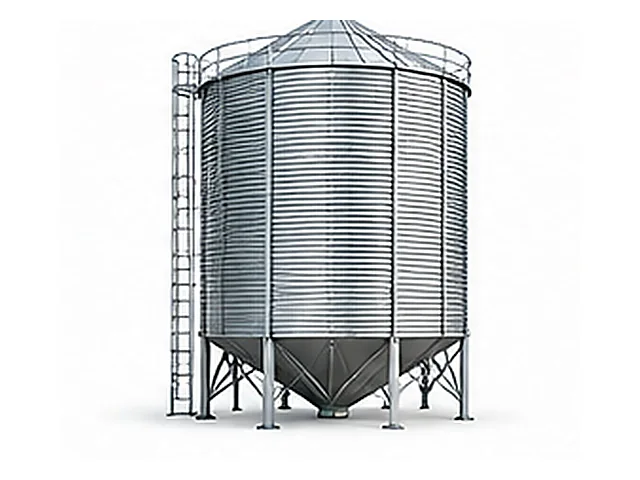
The Recirculating Batch Grain Dryer removes heavy harvest moisture from cereal grains, corn, rice, and oilseeds by cycling a self-contained batch repeatedly through vertical warm-air columns and an upper tempering bin. Alternating brief thermal exposure with longer moisture-equalization rest periods prevents kernel stress cracks and delivers uniform batch moisture.

Machines ↗

Overview

Once filled, the Recirculating Batch Grain Dryer meters grain downward through perforated drying walls flanking a central heated-air plenum while a bottom auger and vertical bucket elevator continuously return the grain to the upper garner zone. After the target moisture is reached, the burner shuts off and the fans run ambient air through the circulating column to cool the entire batch before unloading.

Technical Specifications

Technical ParameterRBG-25RBG-50RBG-100RBG-150
Drying / Cooling / Processing Capacity10 – 25 t/h30 – 50 t/h60 – 100 t/h110 – 150 t/h
Drive & Fan Motor Power1.5 – 4.0 kW5.5 – 7.5 kW11.0 – 15.0 kW15.0 – 18.5 kW
Operating Temperature Control (PID)35 – 110 °C (Seed ≤ 42 °C)35 – 110 °C (Seed ≤ 42 °C)35 – 110 °C (Seed ≤ 42 °C)35 – 110 °C (Seed ≤ 42 °C)
Active Airflow Volume8,000 m³/h18,000 m³/h32,000 m³/h48,000 m³/h

The capacity and power ranges indicated in the table may vary depending on the crop type to be processed, initial foreign matter rate, moisture level, and machine configuration. Exact performance and actual measurement values are finalized following the engineering design and process detailing of the plant to be installed.

Selection and integration

Selecting a Recirculating Batch Grain Dryer centers on holding volume per batch, initial harvest moisture, daily drying tonnage, and crop sensitivity to thermal shock. Crops with slow internal moisture diffusion—such as high-moisture maize, paddy rice, and oilseed sunflower—rely on the upper tempering phase so core moisture migrates outward without blistering the pericarp.

Key points to specify

  • Confirm the crop, variety and incoming condition for Recirculating Batch Grain Dryer.
  • Agree the crop condition and target for the “Recirculating Batch Grain Dryer” unit before installation, then verify initial product condition, residence needs, target condition and heat or air services against the actual sample.
  • Use a product sample to set the acceptance target for the “Recirculating Batch Grain Dryer” unit; factors to review: initial product condition, residence needs, target condition and heat or air services.
  • Show the infeed, discharge, transfer points and service clearances for the “Recirculating Batch Grain Dryer” unit on the plant layout; evaluate initial product condition, residence needs, target condition and heat or air services alongside the actual feed condition.

GUIDE · TECHNICAL SELECTION

What is this machine used for?

A Recirculating Batch Grain Dryer combines vertical cross-flow heating columns with continuous top-to-bottom batch turnover and built-in tempering intervals. By mixing and resting the grain charge on every pass, the dryer eliminates moisture gradients between inner and outer column layers and protects kernel test weight.

01

The role in the process

Positioned at the wet-intake section of grain storage terminals, feed mills, or seed conditioning plants, the Recirculating Batch Grain Dryer stabilizes freshly harvested deliveries before long-term silo storage. Because each batch is filled, dried, cooled, and discharged as a discrete lot, operators can process different crops or moisture grades consecutively without cross-mixing.

During each circulation pass, grain spends only a short interval inside the heated air columns before resting in the unheated upper garner bin where internal kernel moisture equalizes to the surface. This staged drying-and-tempering rhythm drastically lowers fuel consumption and prevents brittle fissures.

02

Material and application suitability

Dent and flint corn, paddy rice, wheat, barley, oats, rapeseed, sunflower, and soybeans each require distinct plenum temperature limits and circulation speeds. Variable-speed metering rolls at the base of the drying columns let operators adjust how fast the grain column turns over according to kernel size and moisture content.

When drying oilseeds like sunflower or canola with high trash or fine-particle content, clean screen perforations and regulated fan static pressure prevent localized overheating. Indirect heat-exchanger furnace options ensure zero combustion by-products touch food-grade grain or reproductive seed lots. Cleanout doors simplify variety changeovers.

03

Selection checklist

Before specifying a Recirculating Batch Grain Dryer, determine your peak harvest intake per day, typical incoming and storage-safe moisture levels, preferred fuel type, and wet-holding bin capacity ahead of the dryer. Check loading and unloading conveyor rates so non-drying turnaround time between batches stays minimal.

Calculate burner thermal output, drying air volume, and bed retention time from initial harvest moisture and maximum safe kernel temperature. Coordinate hot-air plenum ductwork, cooling zone airflow, and exhaust moisture venting within the building envelope. Uniform airflow distribution across the grain column prevents localized overheating and stress cracking.

Integration into a processing line

Plant layout and interface planning

Mount the Recirculating Batch Grain Dryer on a reinforced foundation pad adjacent to the wet-grain receiving pit and wet surge silo so filling takes only minutes. Orient the burner intake and exhaust louvres away from dusty receiving driveways to keep heat-exchanger surfaces and air plenums clean.

Route the dry-grain discharge spout directly to a clean-grain elevator leg or belt conveyor feeding long-term storage silos, avoiding high-speed pneumatic blows on freshly dried kernels. Provide safe ladder and platform access to the top recirculation elevator drive and moisture probe housing.

Factors that affect operating performance

Loading dirty grain with heavy green weeds or wet cobs slows column flow and creates uneven air distribution across the perforated screens. Running wet harvest lots through a high-capacity scalper or pre-cleaner prior to loading the batch dryer boosts drying speed and prevents screen plugging.

Process quality and line integration

An inline moisture monitor samples the circulating grain on every pass, automatically extinguishing the burner when the drying setpoint is reached and initiating the ambient cooling timer. Once the batch cools to safe bin temperature, the PLC can trigger automated unloading without operator intervention.

Frequently asked questions

Why does recirculating a grain batch reduce kernel cracking compared to static drying?

In a static dryer, grain closest to the hot air plenum over-dries and cracks while outer layers remain wet. Continuous recirculation blends the column and cycles every kernel through an unheated upper tempering zone, allowing internal moisture to diffuse outward gently between short heating passes.

Can the Recirculating Batch Grain Dryer cool the grain before discharging to silos?

Yes, as soon as the automated moisture sensor detects that the batch has reached the target moisture offset, the burner shuts down while the main fans and circulation loop continue running. Ambient air cools the entire grain charge inside the tower so it can be transferred straight into storage bins.

How are different crops with varying kernel sizes accommodated in the same dryer?

Perforated column screens are selected with aperture slots sized to retain small oilseeds like canola as well as large corn or soybean kernels, while variable-speed metering rolls adjust circulation speed. Stored PLC crop recipes automatically set the maximum safe plenum temperature and target moisture for each grain type.

REQUEST A TECHNICAL REVIEW

Recirculating Batch Grain Dryer

Let our thermal processing engineers know your harvest crops, initial and final moisture levels, daily drying volume, and preferred burner fuel to size the ideal Recirculating Batch Grain Dryer.