Home›Machines›Sesame Roaster-Batch Type
Sesame Roaster-Batch Type
MACHINERY CATALOGUE

Sesame Roaster-Batch Type

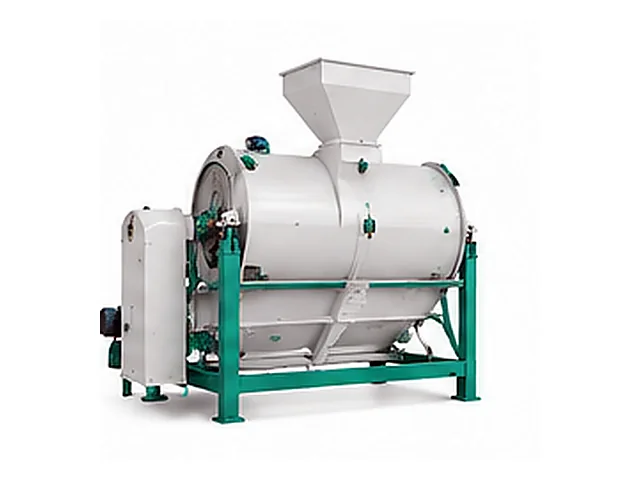
The Sesame Roaster-Batch Type heats measured charges of hulled or natural sesame seeds along a programmable time-and-temperature curve to develop rich Maillard aroma, uniform golden-to-amber colour, and low residual moisture. Discrete batch processing gives tahini, halva, and bakery producers complete control over roast profile from lot to lot.

Machines ↗

Overview

A weighed charge of cleaned, dehulled, or conditioned sesame enters the insulated vessel of the Sesame Roaster-Batch Type, where internal helical agitator paddles or a rotating drum keep the seed bed in constant turnover. Indirect thermal-oil, gas, diesel, or electric heating transfers energy evenly across the heated shell while a vapour exhaust hood evacuates steam and roast volatiles until the batch discharges rapidly to cooling.

Technical Specifications

Technical ParameterSRB-25SRB-50SRB-100SRB-150
Drying / Cooling / Processing Capacity10 – 25 t/h30 – 50 t/h60 – 100 t/h110 – 150 t/h
Drive & Fan Motor Power1.5 – 4.0 kW5.5 – 7.5 kW11.0 – 15.0 kW15.0 – 18.5 kW
Operating Temperature Control (PID)35 – 110 °C (Seed ≤ 42 °C)35 – 110 °C (Seed ≤ 42 °C)35 – 110 °C (Seed ≤ 42 °C)35 – 110 °C (Seed ≤ 42 °C)
Active Airflow Volume8,000 m³/h18,000 m³/h32,000 m³/h48,000 m³/h

The capacity and power ranges indicated in the table may vary depending on the crop type to be processed, initial foreign matter rate, moisture level, and machine configuration. Exact performance and actual measurement values are finalized following the engineering design and process detailing of the plant to be installed.

Selection and integration

Selecting a Sesame Roaster-Batch Type depends on batch charge weight, incoming sesame moisture after washing or peeling, target roast colour (light bakery, golden tahini, or dark toasted sesame oil), and available heating utility. Because roasting continues until the seed mass is cooled, rapid discharge into an adjacent cooler is essential.

Key points to specify

  • Confirm the crop, variety and incoming condition for Sesame Roaster-Batch Type.
  • Use a product sample to set the acceptance target for the “Sesame Roaster-Batch Type” unit; factors to review: residence needs, initial product condition, target condition and heat or air services.
  • Document the intended result for the “Sesame Roaster-Batch Type” unit against actual feed and line conditions; review: residence needs, initial product condition, target condition and heat or air services.
  • Show the infeed, discharge, required connections and cleaning or service access for the “Sesame Roaster-Batch Type” unit on the layout, then confirm handoff with adjacent stages; check residence needs, initial product condition, target condition and heat or air services before fixing the configuration.

GUIDE · TECHNICAL SELECTION

What is this machine used for?

A Sesame Roaster-Batch Type roasts discrete lots of sesame seed inside a thermally insulated, continuously agitated vessel to achieve precise flavour development, colour uniformity, and moisture reduction. Programmable batch recipes allow instant switching between light tahini roasts and deep aromatic toasted profiles.

01

The role in the process

Positioned between the sesame washing/de-hulling/drying section and the cooling-and-stone-milling stage, the Sesame Roaster-Batch Type is the flavour heart of a traditional or industrial tahini and halva plant. Batch operation is ideal when a facility produces multiple roast grades or handles variable origin sesame lots that require custom roast durations.

During the roast cycle, initial thermal energy evaporates residual moisture from wet-peeled or damp sesame before seed temperature climbs into the Maillard browning zone. An inline probe tracks actual seed-bed temperature while the operator or PLC triggers instant bottom discharge the moment the target roast degree is reached.

02

Material and application suitability

Tiny, high-oil sesame seeds scorch easily if left stationary against a hot metal surface even for a few seconds. The contoured internal paddles of the batch roaster lift and fold the entire seed charge continuously so heat transfers uniformly without blackening individual tips or expressing free oil prematurely.

Incoming moisture content strongly dictates total cycle time: sesame entering straight from a wet centrifugal huller requires more evaporative heat in the first phase of the batch than pre-dried seed. Using the live sample thief port, roast masters verify aroma, snap, and colour before locking the recipe timer. Cleanout doors simplify variety changeovers.

03

Selection checklist

When specifying a Sesame Roaster-Batch Type, define your desired batch weight, number of batches per shift, incoming seed moisture percentage, preferred heat source, and downstream cooling arrangement. Confirm local exhaust filtration or stack height rules for roasting vapour and loose skin fragments.

Calculate burner thermal output, drying air volume, and bed retention time from initial harvest moisture and maximum safe kernel temperature. Coordinate hot-air plenum ductwork, cooling zone airflow, and exhaust moisture venting within the building envelope. Include multi-point temperature sensors, modulated burner controls, and cleanout plenum doors for fire-safe operation.

Integration into a processing line

Plant layout and interface planning

Mount the Sesame Roaster-Batch Type on an elevated frame or directly above a receiving fluid-bed cooler so the entire roasted charge empties in seconds by gravity. Keep the overhead charging bin close to the inlet valve to minimize non-roasting fill intervals between consecutive cycles.

Pipe the vapour exhaust port through a stainless-steel cyclone or grease-and-chaff trap before venting outdoors so moisture condensate and fine sesame skins cannot drip back into the roasting chamber. Insulate all hot surfaces and burner housings to keep the surrounding work floor comfortable.

Factors that affect operating performance

Over-filling the batch vessel beyond its rated volume restricts seed turnover and lengthens the time required to evaporate initial moisture, leading to uneven colour. Weighing or volumetrically metering each incoming charge guarantees identical thermal response from one batch to the next.

Process quality and line integration

Once the roast timer completes and the discharge gate opens, the internal helical flights sweep the vessel clean in moments so residual seeds do not char during the next loading cycle. Saved digital temperature curves ensure consistent tahini viscosity and flavour across all shifts.

Frequently asked questions

Why do many tahini and halva producers prefer a batch sesame roaster?

Batch roasting allows the roast master to adjust time and temperature precisely for each incoming lot of sesame, compensating for origin differences in oil content, hull thickness, and moisture. It also makes switching between light halva tahini and dark aromatic bakery roasts effortless between cycles.

How does the batch roaster prevent tiny sesame seeds from scorching against the heated wall?

Close-clearance internal helical paddles or rotating drum lifters keep the entire sesame bed in constant, gentle motion throughout the cycle. Indirect jacketed heating spreads thermal energy evenly across the vessel shell, eliminating localized flame impingement hot spots.

What happens immediately after the roasting cycle finishes?

A wide-opening bottom discharge gate dumps the entire roasted charge in seconds into a downstream fluid-bed or perforated-tray air cooler. Immediate cooling stops internal carry-over cooking so the batch locks in the exact target colour and nutty flavour profile.

REQUEST A TECHNICAL REVIEW

Sesame Roaster-Batch Type

Share your batch capacity requirements, incoming sesame moisture, preferred fuel or heating utility, and target roast styles with our engineers to configure your Sesame Roaster-Batch Type.