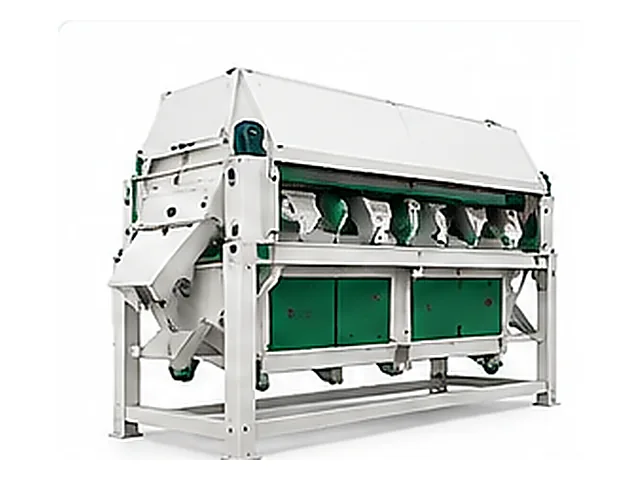
 Cleaning & Pre-Cleaning
Pre-Cleaner
Strips out dry bean vine stalks, shattered pod hulls, fine field dust, and oversized dirt clods at 5–40 t/h to protect downstream precision screens and elevators.
5–40 t/h↗

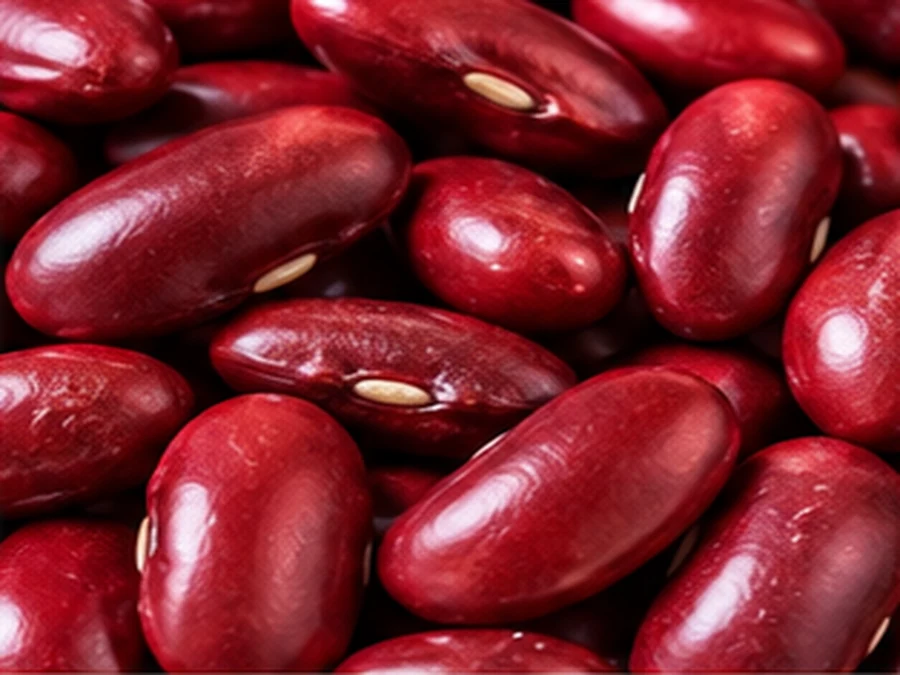
Commercial dry edible bean processing lines—handling white navy, red kidney, pinto, black turtle, cranberry, and great northern beans—must balance aggressive field-contaminant removal against extreme sensitivity to mechanical impact. Because phaseolus vulgaris seed coats (testa) check easily and dry cotyledons split along their cleavage plane when dropped onto steel surfaces, line engineering centers on low-velocity handling alongside precision cleaning. Integrating multi-deck air-screen cleaners, pressurized destoners, specific-gravity separators, canvas luster polishers, and trichromatic optical sorters eliminates mud balls, field stones, bruchid-bored seeds, and off-color variants while maintaining canning and retail hydration integrity.
Designing a high-recovery dry bean processing plant requires strict control of drop velocities, screen perforation geometry, and aerodynamic fluidization to eliminate soil clods and splits without inducing hairline seed-coat cracks.
Each machine in a dry edible bean line is selected and sized according to bean morphology—from small spherical navy beans to large reniform kidney beans—alongside incoming moisture and foreign-matter load.
Cleaning & Pre-CleaningStrips out dry bean vine stalks, shattered pod hulls, fine field dust, and oversized dirt clods at 5–40 t/h to protect downstream precision screens and elevators.
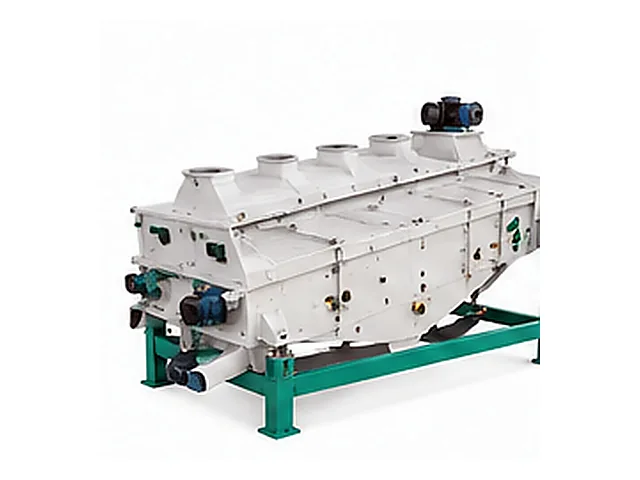 Cleaning & Pre-Cleaning
Combines dual aspiration channels with multi-deck oblong and round-hole sieves at 3–30 t/h to remove split cotyledons, undersized shriveled beans, and coarse trash.
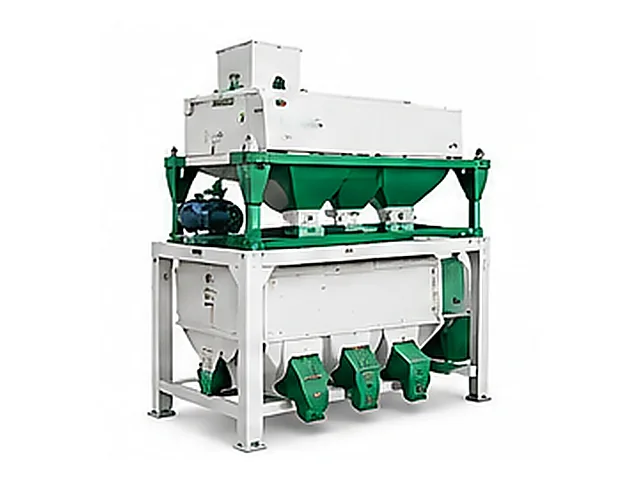 Separation
Isolates weevil-perforated, frost-blistered, and partially hollow dry beans from plump high-density kernels at 1–20 t/h across a pressurized oscillating air deck.
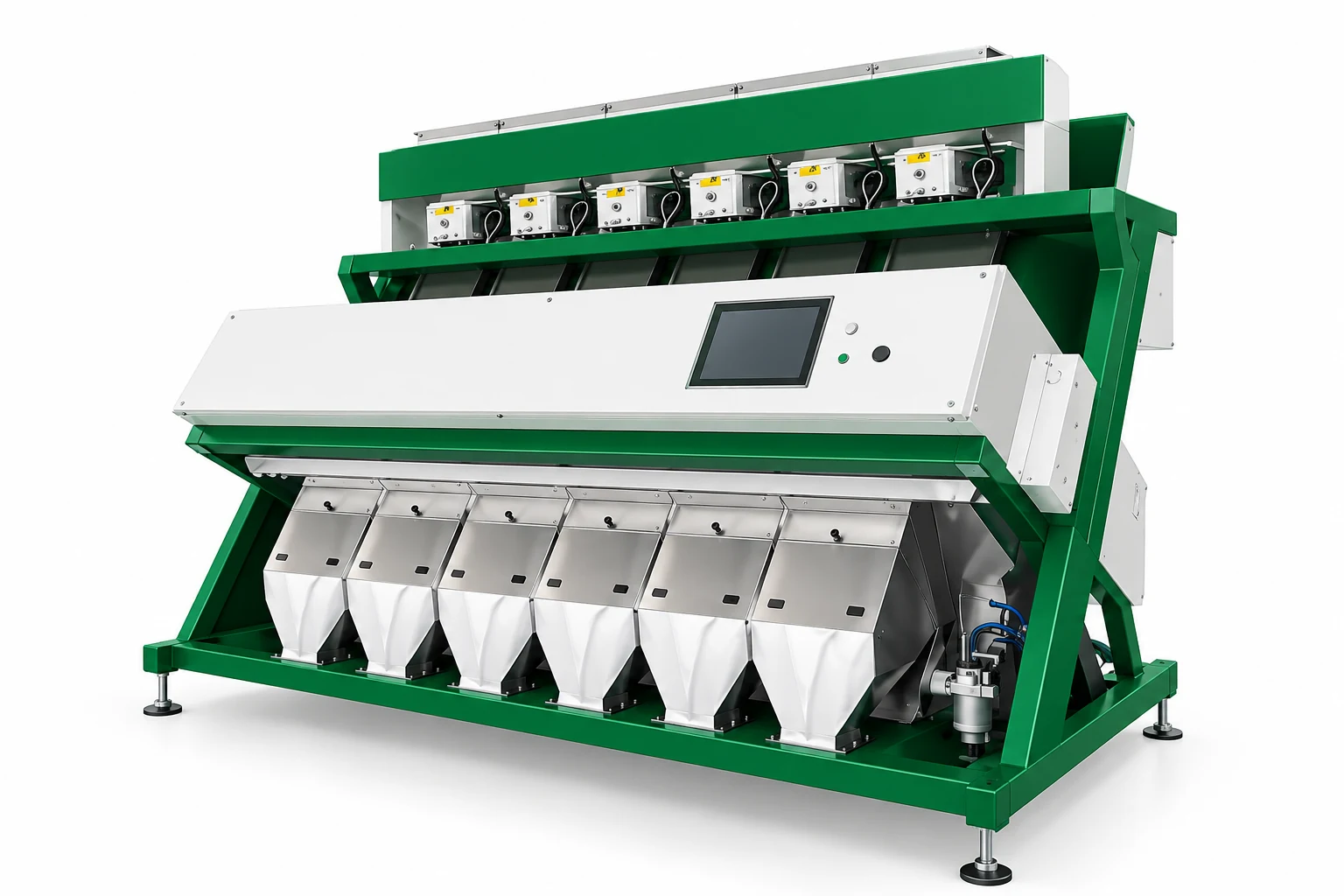 Optical Sorting
Ejects discolored, anthracnose-spotted, contrasting-class admixtures, and remaining mineral particles at 1–20 t/h using high-resolution RGB and NIR optical cameras.
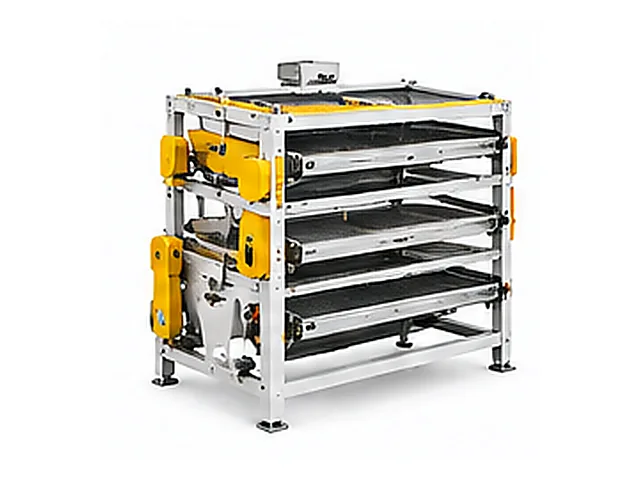 Grading & Sizing
Classifies commercial dry beans into tight millimeter width and thickness brackets at 2–30 t/h to guarantee uniform soaking hydration and cooking rates for canning buyers.
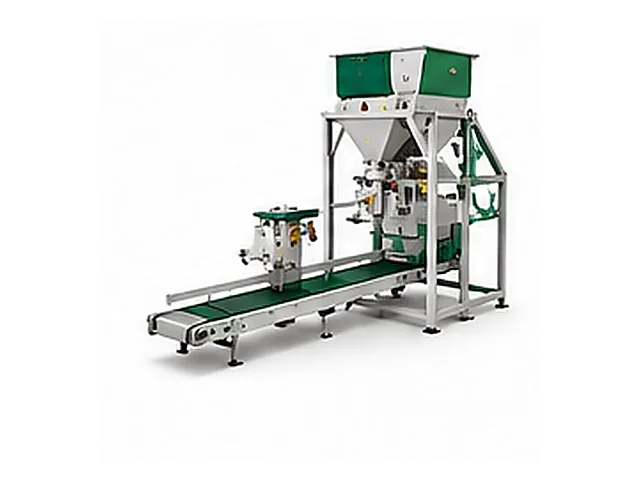 Packaging & Dispatch
Weighs and packs polished edible beans into 25 kg woven polypropylene sacks or 1000 kg FIBC bulk totes with cushioned low-drop chutes that prevent final-stage splitting.
Processing dry edible beans for export retail packs or industrial canning lines demands far more than standard grain screening. Harvested bean lots frequently arrive at 11% to 14% moisture—a brittle range where high-speed bucket elevators or unlined steel spouts cause microscopic seed-coat checking ('skin cracks') that only become visible as burst skins during commercial soaking and retort cooking. A properly engineered bean plant combines cushioned pendulum bucket elevators and belt conveyors with oblong split-removal sieves, vibro-pneumatic destoners, specific-gravity tables, and gentle cotton-canvas polishers to deliver dust-free, luminous whole beans with near-zero split loss.
Harvester pickup headers cut close to the soil line to capture low-hanging bean pods, introducing compacted clay clods and pebbles that match the exact cross-section of pinto or kidney beans. Primary air-screen cleaning removes flat split cotyledons through slotted oblong perforations, after which inclined vibro-destoners and eccentric gravity tables separate heavy mineral stones and lighter mud balls or bruchid-hollowed seeds by specific weight.
Equipment selection for phaseolus bean conditioning prioritizes gentle kinematics at every transfer point. Belt speeds on Z-elevators and horizontal conveyors are kept below 1.2 m/s, drop transitions incorporate bean ladders ('dead-boxes') or polyurethane wear liners, and rotary cotton/wood-sawdust or soft-brush polishing drums buff away adherent field clay to impart the bright natural seed-coat sheen required by retail markets.
Industrial canners test incoming navy, black, and kidney beans using cold-water soak indices to measure checked seed coats, hard-shell percentages, and hydration uniformity. Calibrating beans into narrow millimeter size fractions ensures every kernel in a retort batch cooks at the same rate, while optical color sorters remove sclerotinia Bodies, oxidized brown beans, and contrasting color classes to meet Grade 1 canning tolerances.
Airflow and deck oscillation parameters must be tuned specifically to the bulk density and aerodynamic drag of each bean cultivar. Broad, flat lima or large red kidney beans require higher fluidization air volumes on destoners and gravity tables than compact navy or black beans; improper damper settings either leave pea-sized stones in the clean stream or push sound peripheral beans into the middlings recycle loop.
Plant configuration diverges sharply depending on whether the line processes commercial food beans or certified planting seed. Culinary bean lines incorporate rotary brush or canvas polishers prior to optical color sorting so surface dust does not blind camera lenses or dull bag appearance, whereas seed-bean facilities bypass abrasive polishing and integrate precision batch film-coaters to apply fungicide and rhizobium inoculants without pericarp damage.
Supplier quotations for a dry bean processing plant should be evaluated against a standardized raw sample tested for initial splits, concealed hairline checks (via 5-minute warm water soak test), and mineral stone count. Contracts must stipulate maximum permissible increase in seed-coat checking across the entire conveying and cleaning circuit alongside guaranteed hourly capacity and clean-product recovery.
During factory acceptance and site commissioning, engineers must quantify good bean loss in the air-screen screenings, gravity table light rejects, and optical sorter secondary chutes. Incorporating a dedicated secondary resort camera Pass on the optical sorter ensures that sound beans accidentally ejected alongside adjacent discolored defects are recovered, keeping total reject loss under 0.5% of clean product.
Structural plant design plays a decisive role in preventing mechanical breakage across multi-story bean cleaning towers. Gravity flow spouts should never exceed a 45-degree incline without intermediate cushioned retarders or spiral let-down chutes inside storage bins, preventing free-fall impact speeds above 2.5 m/s that shatter dry kidney and pinto beans during winter processing.
Preventing testa checking and cotyledon cleavage requires eliminating high-velocity steel impacts throughout the plant. Replace centrifugal bucket elevators with slow-speed pendulum Z-elevators or troughed belt conveyors, line all transfer hoppers with vulcanized rubber or polyurethane sheets, install cushioned dead-boxes at chute angles, and install spiral let-down ladders inside steel holding bins.
While a split bean half has the same width and length as a whole bean, its thickness is roughly half that of an intact kernel; passing the stream over precision oblong-slotted screens allows flat splits to drop through on edge. Friable mud balls of identical bean dimensions are first abraded in a gentle brush polisher or isolated on a specific-gravity separator due to their lower bulk density compared to solid bean cotyledons.
A vibro-destoner only targets high-density mineral particles (quartz pebbles, field stones) that are significantly heavier than beans. A rectangular or triangular gravity separator stratifies the bean bed across a much finer density gradient, floating out bruchid-weevil perforated beans, pod-blighted lightweight kernels, sclerotinia fungal bodies, and uncompacted dirt clods that a destoner cannot differentiate.
Harvested dry beans frequently carry a microscopic film of field clay and organic dust clinging to the seed coat that dulls visual luster and creates false rejects on high-resolution optical sorter cameras. Running destoned beans through a horizontal brush or cotton-canvas polishing cylinder removes adherent dust via aspiration and imparts a clean, uniform gloss that improves optical defect contrast and retail bag appeal.
Before bulk storage or export container stuffing, dry beans should be conditioned to 13.0–15.0% moisture content; storing below 12% leaves beans excessively brittle for handling, whereas moisture above 16% triggers mold heating and testa darkening (hardening) during transit. Verify that stone count is zero, foreign matter is under 0.1%, and soaked-bean check tests meet buyer canning specifications.