Overview
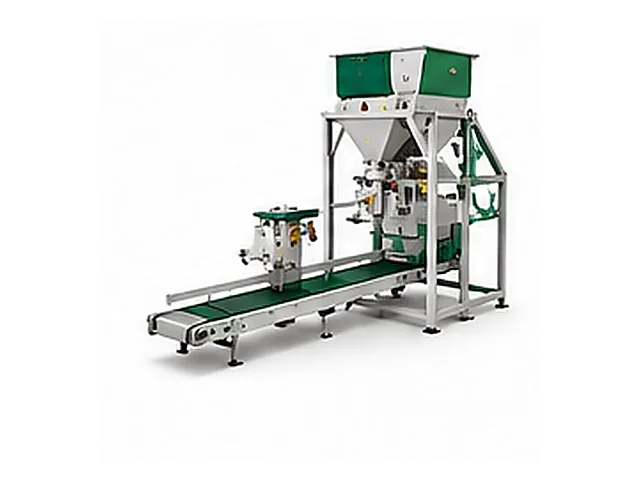
A complete Bagging & Packaging Line integrates buffer storage, gravimetric dosing, sack presentation, seam closure, and takeaway transport into one synchronized workflow. Product enters from the final storage bin into a level-controlled garner hopper that maintains constant head pressure above the feeding gate or belt feeder. Once the weigh controller completes its coarse-and-fine filling cycle and discharges the dose through a dust-aspirated spout, a standing-bag belt conveyor guides the filled sack upright through an industrial sewing head or heat sealer toward palletizing.
Technical specifications
The capacity and power ranges indicated in the table may vary depending on the crop type to be processed, initial foreign matter rate, moisture level, and machine configuration. Exact performance and actual measurement values are finalized following the engineering design and process detailing of the plant to be installed.
Key considerations
- Confirm the crop, variety and incoming condition for Bagging & Packaging Line.
- Document the intended result for the “Bagging & Packaging Line” unit against actual feed and line conditions; review: package format, target weight, product flow and discharge arrangement.
- For the “Bagging & Packaging Line” unit, check the operating choices against these factors: package format, target weight, product flow and discharge arrangement.
- Show the infeed, discharge, required connections and cleaning or service access for the “Bagging & Packaging Line” unit on the layout, then confirm handoff with adjacent stages; state how package format, target weight, product flow and discharge arrangement inform the selected setup.
Typical applications
Seed multiplication plants, pulse exporters, and spice mills deploy the Bagging & Packaging Line to pack sesame, lentils, dry beans, cumin seeds, coriander seeds, and alfalfa seeds into woven polypropylene, multi-wall paper, or polyethylene sacks. Because these crops span free-flowing spherical legumes to light, aromatic umbelliferous seeds, the feeder mechanism and spout venting are tailored to prevent bridging, air entrapment, or seed-coat scuffing.