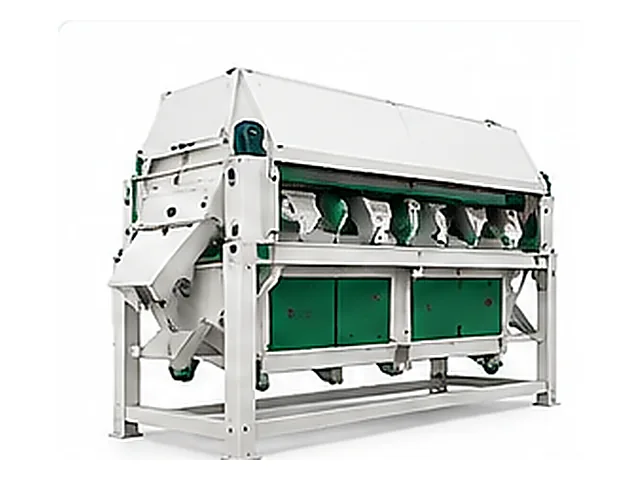
 Cleaning & Pre-Cleaning
Pre-Cleaner
Scalps coarse coriander stem straws, intact umbel crowns, and fine field dust at 5 to 40 t/h using low-impact screen motion and pre-aspiration.
5–40 t/h↗

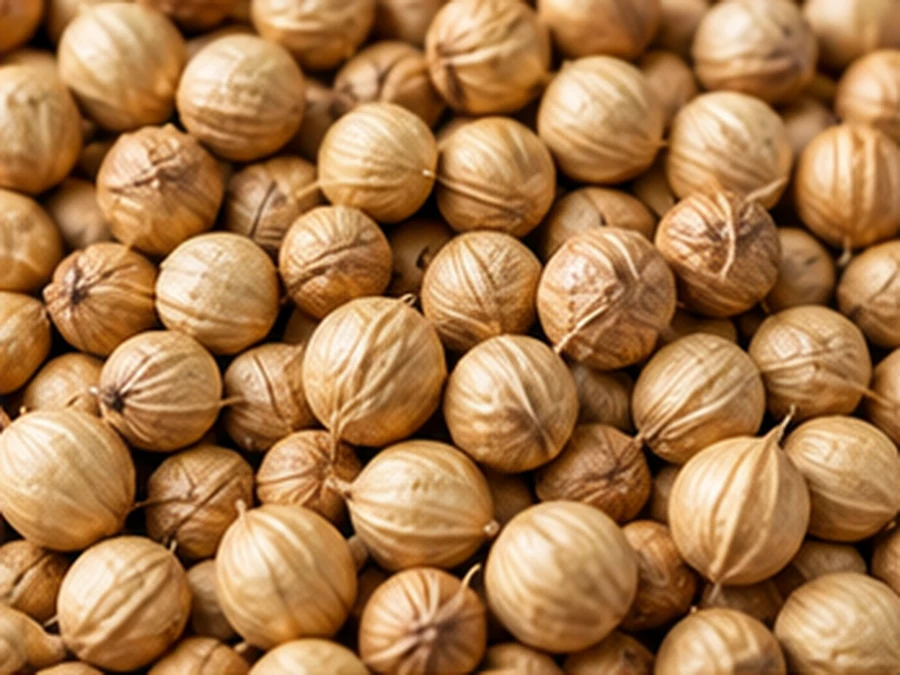
Engineering a commercial coriander seed processing line (Coriandrum sativum) centers on preserving the intact globular schizocarp while separating attached umbel pedicels, split single mericarps (halves), field stones, and sun-bleached or darkened fruits. Because whole coriander is a hollow, thin-walled double fruit held together along a fragile commissural seam, excessive impact velocity in pneumatic pipes, elevator discharge hoods, or aggressive beaters instantly shatters premium whole spice into lower-value splits.
Combine-harvested coriander arrives with hollow stem straws, unsplit twin-fruit clusters with attached stalks, hemispherical split halves, and soil clods that require gentle mechanical conditioning.
Producing export-grade whole coriander with minimal split content requires low-velocity handling paired with multi-deck round-hole sifters, indented cylinders, airflow destoners, and color sorters.
Cleaning & Pre-CleaningScalps coarse coriander stem straws, intact umbel crowns, and fine field dust at 5 to 40 t/h using low-impact screen motion and pre-aspiration.
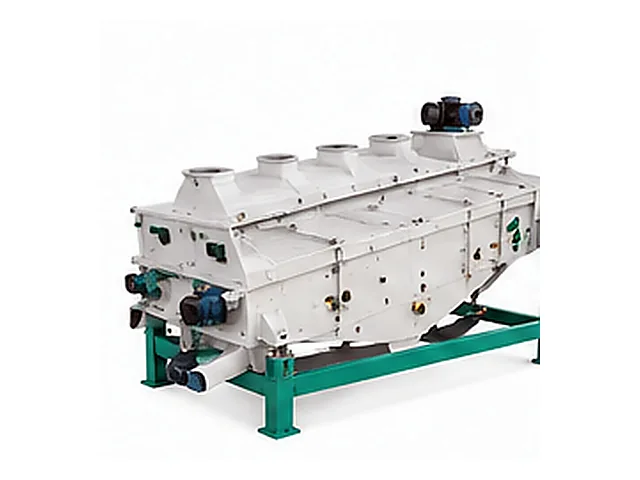 Cleaning & Pre-Cleaning
Sizes globular coriander fruits and separates undersized split halves at 3 to 30 t/h through precision round-hole and slotted sieve combinations.
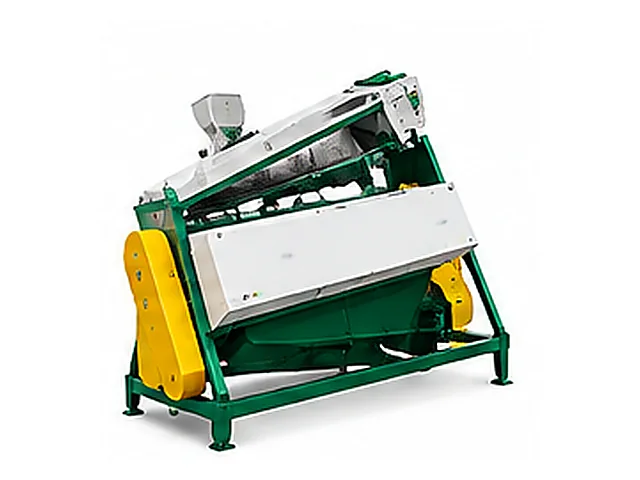 Separation
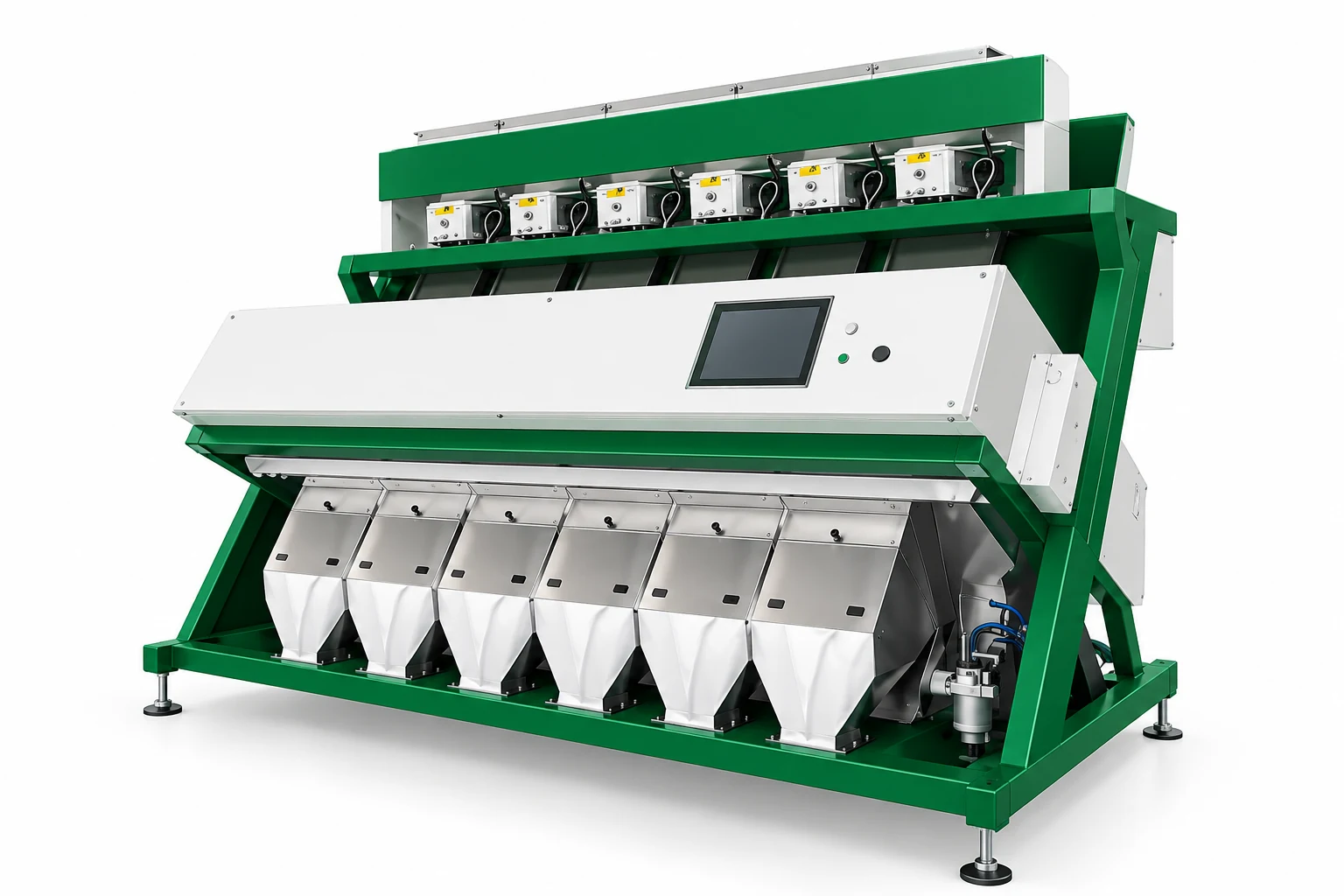 Optical Sorting
Rejects weather-blackened fruits, yellow-green immature seeds, and foreign stalks at 1 to 20 t/h via high-speed RGB and shape-recognition optical cameras.
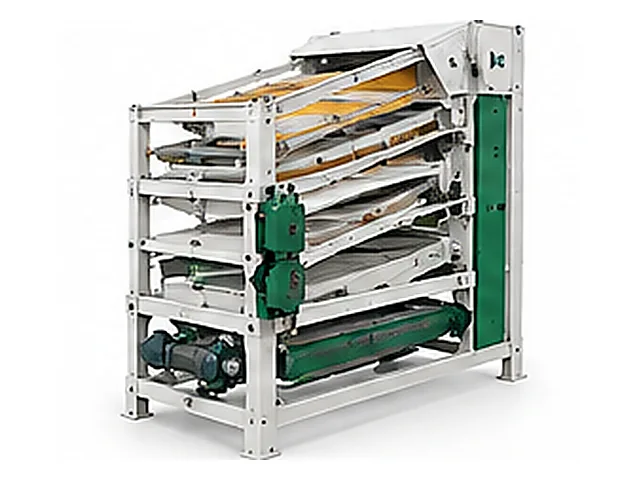 Grading & Sizing
Classifies cleaned coriander into bold whole, medium whole, and split-half commercial fractions at 2 to 25 t/h for spice packers and seed houses.
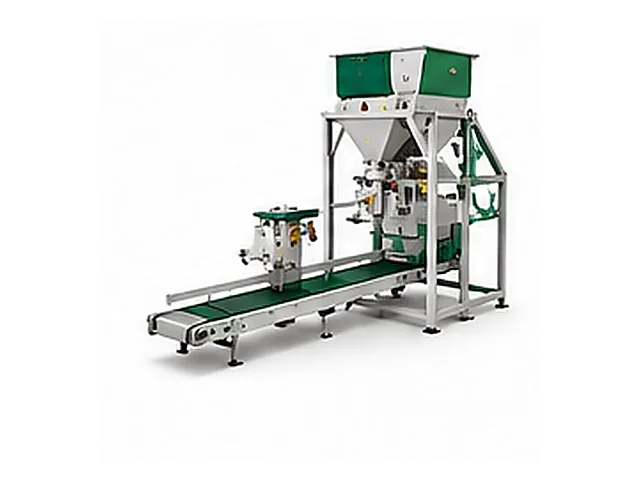 Packaging & Dispatch
Packs fragile whole coriander fruits into multi-wall paper sacks, woven polypropylene bags, or jumbo totes using low-drop gravity spouts to prevent splitting.
In international spice and planting-seed trade, whole coriander value is directly penalized by the percentage of split halves (single mericarps), attached pedicel stems, and weather-stained dark fruits. Because dried coriander has a very low bulk density (typically 280 to 360 kg/m³) due to the internal air cavity between its two concave mericarps, airflow velocities in aspiration channels and destoners must be calibrated far more delicately than for solid grains. A specialized coriander plant integrates low-drop conveying, precision round-hole and slotted screening, length or spiral separation, and optical sorting.
Intake conditioning starts with gentle vibratory scalping to remove long hollow stalks without striking the brittle globular fruits. Fine air-screen cleaners then use round perforations to calibrate whole fruit diameter and slotted sieves to drop flat split halves, while indented cylinders and optical sorters extract attached stems and discolored berries.
Because coriander weighs roughly half as much per cubic meter as wheat, a machine rated at ten tons per hour on cereal grain will process only four to five tons per hour of coriander by mass. Engineers must size elevator buckets, screen surface areas, and surge bins around volumetric cubic-meter flow while capping belt speeds below 1.2 meters per second to prevent impact splitting.
Whenever a globular coriander schizocarp fractures into two hemispherical mericarps, the inner commissural vittae oil canals are exposed to atmospheric oxidation, accelerating the loss of volatile linalool aroma. Furthermore, planting-seed lots require intact pericarp domes or carefully controlled mechanical splitting without crushing the enclosed embryo radical.
While whole spice buyers demand intact spherical fruits with less than two to four percent splits, certain culinary markets and commercial vegetable monogerm-seed producers intentionally split coriander into single mericarps. A well-engineered facility can isolate natural field splits into a clean secondary product stream—or bypass a controlled rubber-roll splitter—while keeping the primary whole-seed circuit completely free of impact forces.
Evaluating supplier proposals for coriander processing requires scrutinizing every vertical drop, chute angle, and conveyor transition in the general arrangement drawing. Eliminating pneumatic seed transport, installing dead-box rock-ladders in gravity spouts, and lining impact zones with food-grade polyurethane dramatically reduces in-plant split generation during commissioning trials.
Separating split halves from intact globular coriander relies on their distinct thickness-to-width ratio and rolling behavior. On an air-screen cleaner, intact spherical fruits ride over oblong slotted lower sieves while thinner hemispherical halves turn on edge and drop through; downstream, indented cylinders or spiral separators further isolate any remaining half-fruits and short stem pieces.
Removing small stones and hardened clay pellets from coriander requires a destoner equipped with fine-adjustable air dampers and a shallow deck inclination. Because hollow coriander fruits fluidize at very low air velocities, excessive under-deck fan pressure will blow whole seeds across the deck rather than allowing a stable stratified bed to form over the wire mesh.
Before finalizing optical sorter recipes for coriander, commissioning engineers program dual-wavelength cameras to distinguish between sun-golden whole fruits, rain-stained brown or gray fruits, and green immature seeds. Adding shape-sorting algorithms enables the ejector manifold to fire at fruits still carrying a protruding pedicel stem tail.
Coriander fruits split along their natural central suture whenever subjected to high-speed mechanical impact against steel elevator hoods, fan blades, or steep unlined chutes. Preventing split generation requires slow-speed continuous-discharge bucket elevators, polyurethane-lined transfer points, gravity rock-box transitions, and zero pneumatic conveying of the product stream.
When a spherical coriander fruit splits into two hemispherical mericarps, its diameter remains nearly unchanged, so round-hole sieves cannot separate halves from wholes. Instead, oblong slotted bottom screens allow the flatter split halves to pass through edgewise while retaining round whole fruits, and indented cylinders pocket the shorter halves for final polishing.
Loose long stalks are scalped off on the upper round-hole decks of the pre-cleaner and fine air-screen cleaner. Short stalk segments of matching thickness are extracted by indented cylinders that lift spherical coriander fruits out of long stems, while optical sorters with shape recognition eject individual fruits that still have a woody pedicel attached.
Industrial cleaners and elevators are nominally rated using wheat at a bulk density of 750 kg/m³, whereas dry whole coriander has an internal air cavity that lowers its bulk density to roughly 300–350 kg/m³. Consequently, a machine handling the same volumetric flow in cubic meters per hour will deliver less than half the tonnage by weight when running coriander.
Yes, modern RGB and bichromatic optical sorters easily differentiate bright straw-gold Eagle or Scooter grades from weather-weathered gray, brown, or mold-blackened coriander fruits. High-speed air ejectors can also be configured to run a re-sort pass on the primary reject stream to minimize the loss of good golden seeds.