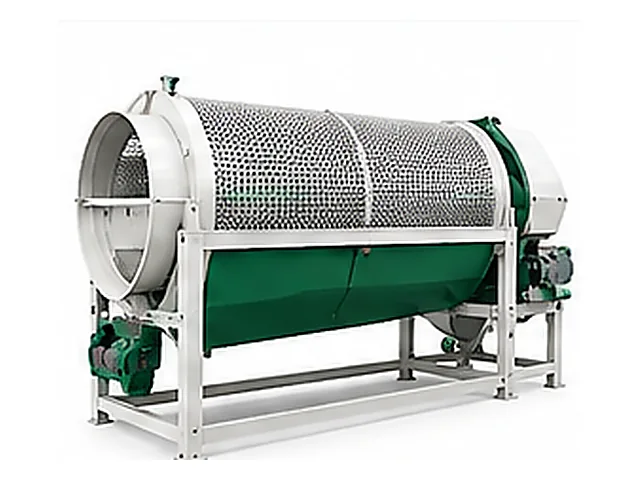
Overview
Size-graded pistachios entering the Pistachio Sheller pass through precision-gapped knurled rollers or centrifugal cracking rings that apply controlled radial compression just sufficient to snap the hard outer shell without pinching the kernel inside. The cracked stream then drops through a vertical aspiration column where rising airflow lifts loose shell fragments into a cyclone, while kernels and uncracked nuts proceed to a separating screen for final classification.
Technical Specifications
The capacity and power ranges indicated in the table may vary depending on the crop type to be processed, initial foreign matter rate, moisture level, and machine configuration. Exact performance and actual measurement values are finalized following the engineering design and process detailing of the plant to be installed.
Selection and integration
Configuring a Pistachio Sheller requires matching cracking nip clearance and roller peripheral speed to the narrow size caliber and moisture content of the incoming closed-shell stock. Because pistachio kernels command a substantial price premium when kept whole and unscarred, sample trials on graded nut fractions are used to lock in the exact gap setting that balances single-pass cracking rate against zero kernel crushing.
Key points to specify
- Confirm the crop, variety and incoming condition for Pistachio Sheller.
- Define the target output and the acceptance criteria for the pistachio shelling stage.
- When setting up the “Pistachio Sheller” unit, record crop variety, moisture, acceptable kernel damage and hull structure and assess both accepted output and unwanted product loss during the sample trial.
- Request written connection and maintenance details for the “Pistachio Sheller” unit, then check them against the site layout and cleaning access; include crop variety, moisture, acceptable kernel damage and hull structure in the selection record.