Overview
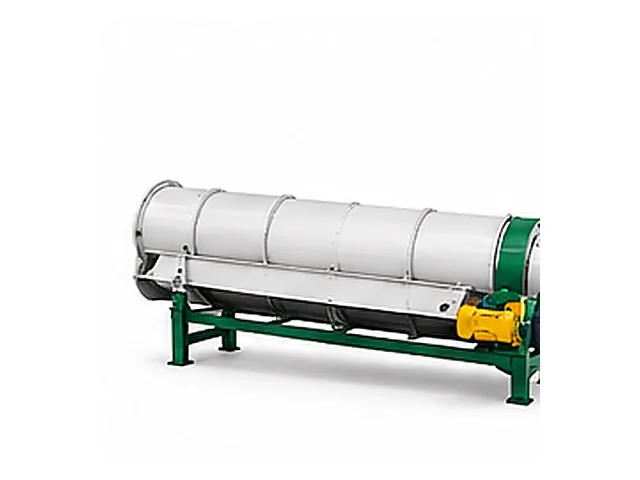
Pre-cleaned pulses, grains, or seeds enter the Seed Polisher Machine Brush Type through a regulated inlet gate and advance axially along the annular space between a spinning brush shaft and a stationary perforated mantle. Flexible synthetic or natural bristles buff each kernel while negative-pressure aspiration pulls detached dust through the screen apertures.
Technical Specifications
The capacity and power ranges indicated in the table may vary depending on the crop type to be processed, initial foreign matter rate, moisture level, and machine configuration. Exact performance and actual measurement values are finalized following the engineering design and process detailing of the plant to be installed.
Selection and integration
Configuring a Seed Polisher Machine Brush Type depends on pericarp hardness, the tenacity of adhering soil or wax film, bristle stiffness, rotor peripheral speed, and outlet back-pressure. Adjusting the weighted discharge gate alters how full the brushing chamber runs and how long seeds rub against the rotating bristles.
Key points to specify
- Confirm the crop, variety and incoming condition for Seed Polisher Machine Brush Type.
- Do not assume a standard setting for the “Seed Polisher Machine Brush Type” unit; test treatment objective, the following process, feed arrangement and seed condition on the intended material and document the accepted result in the technical offer.
- The fit of the “Seed Polisher Machine Brush Type” unit should be checked on a representative sample, with treatment objective, the following process, feed arrangement and seed condition matched to the planned line duty.
- Show the infeed, discharge, required connections and cleaning or service access for the “Seed Polisher Machine Brush Type” unit on the layout, then confirm handoff with adjacent stages; state how treatment objective, the following process, feed arrangement and seed condition inform the selected setup.