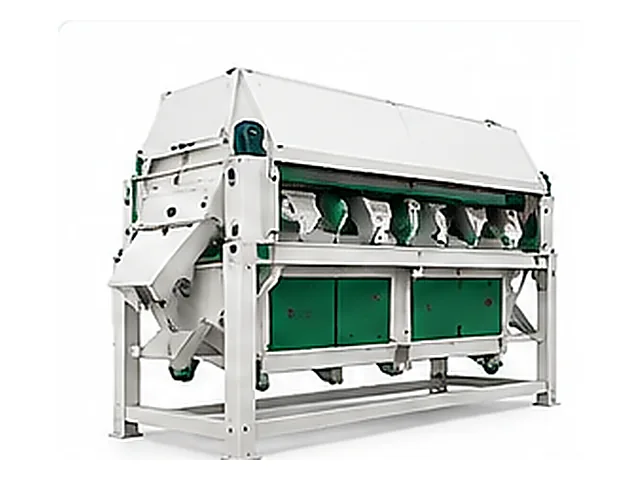
 Cleaning & Pre-Cleaning
Pre-Cleaner
Removes dried epicarp hull skins, orchard cluster stems, leaves, and aborted blanks across a 5–40 t/h intake capacity before in-shell pistachio silo tempering.
5–40 t/h↗

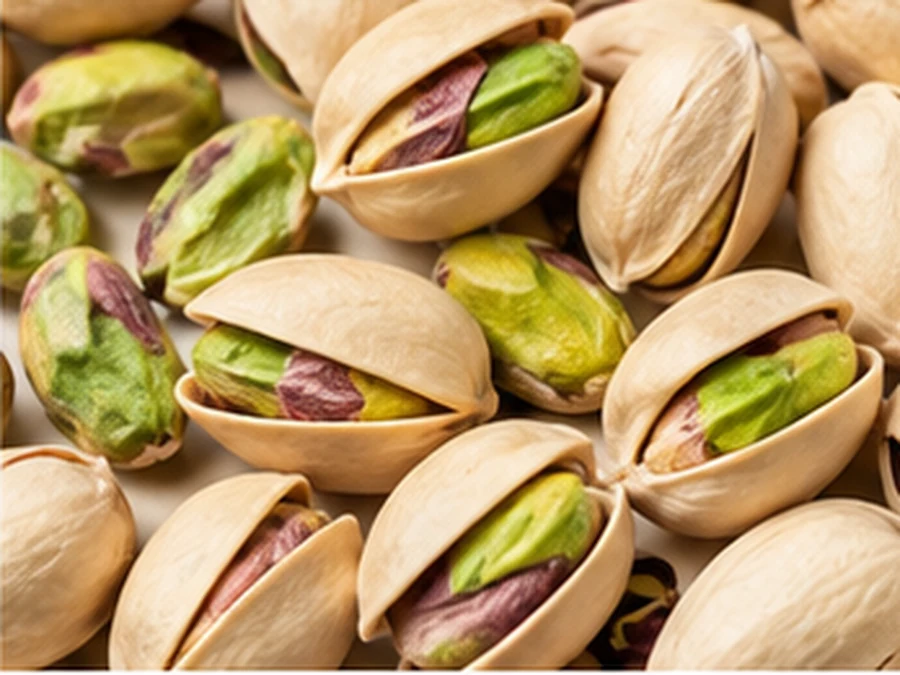
Industrial pistachio processing plants—conditioning long Antep, Siirt, Iranian Ahmad Aghaei/Fandoghi, or round Kerman cultivars—must coordinate rapid wet/dry post-harvest hulling and drying with specialized dry conditioning for in-shell roasted nuts and green confectionery kernels. Because incoming pistachio lots contain a mixture of naturally split open-mouth ('çıtlak') nuts, closed unsplit shells, empty blanks, hull-stained shells, and loose kernels, line engineering relies on mechanical slot/pin separation, aerodynamic density grading, precision nip-roller cracking, millimeter screen calibration, and multispectral optical sorting to maximize export value.
Engineering a commercial pistachio facility requires separating naturally split open-mouth in-shell nuts from closed shells and empty blanks while preserving bright ivory shell appearance and deep-green kernel grades.
Machinery across a pistachio conditioning and kernel shelling plant is configured to isolate lightweight blanks, separate unsplit closed nuts, and optically grade shell staining and green kernel hue.
Cleaning & Pre-CleaningRemoves dried epicarp hull skins, orchard cluster stems, leaves, and aborted blanks across a 5–40 t/h intake capacity before in-shell pistachio silo tempering.
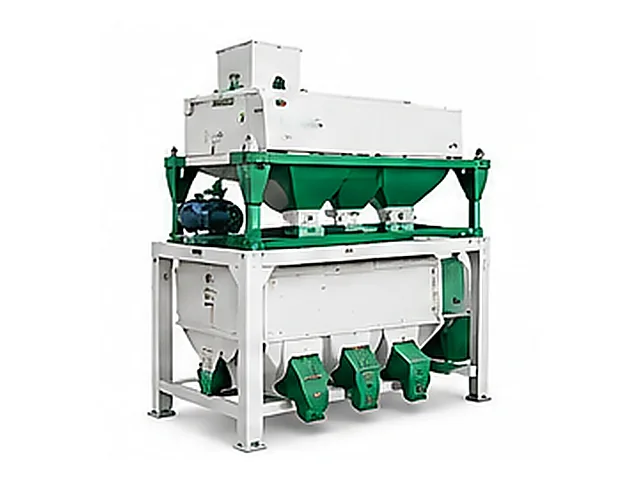 Separation
Uses an inclined air-stratified deck operating at 1–20 t/h to isolate half-filled shells, insect-tunnelled light nuts, and closed shells from heavy filled pistachios.
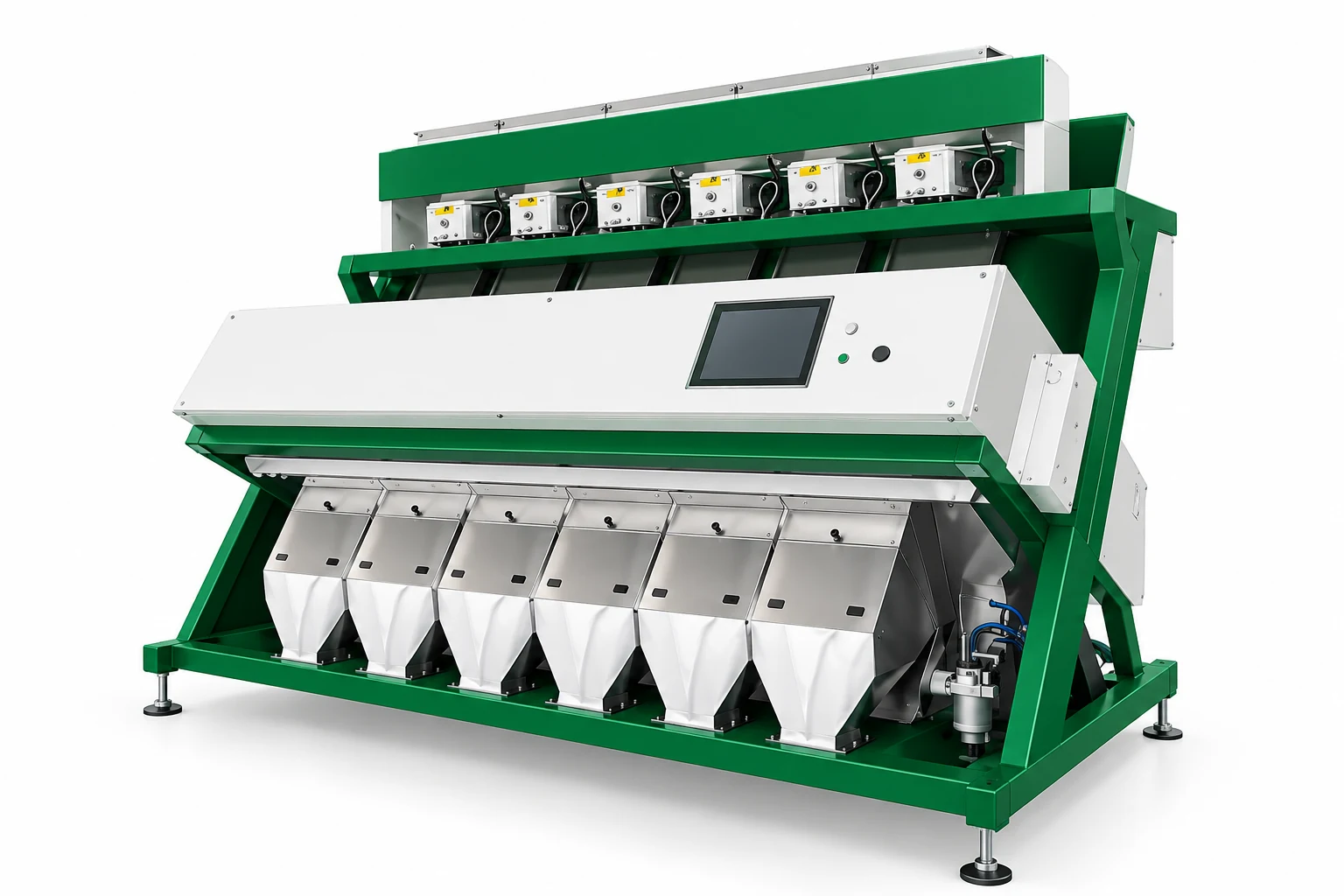 Optical Sorting
Grades in-shell pistachios for hull tannin stains and classifies shelled meats into deep-green Boz versus yellow-green grades at 1–20 t/h with RGB and SWIR optics.
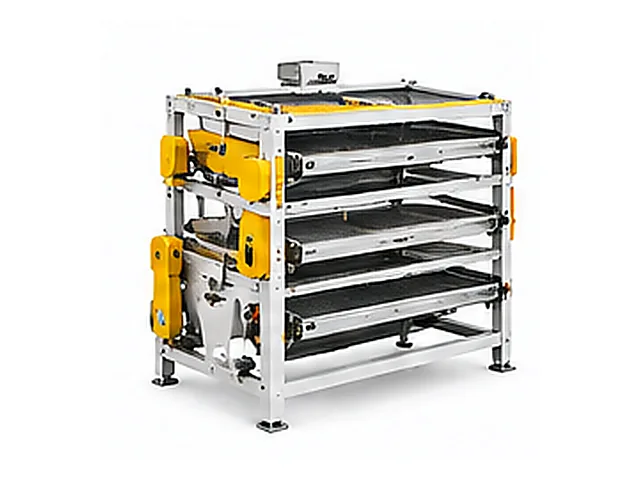 Grading & Sizing
Calibrates in-shell pistachios into commercial count-per-ounce brackets (18/20, 21/25, 26/30) and sizes shelled kernels at 2–30 t/h across precision screen decks.
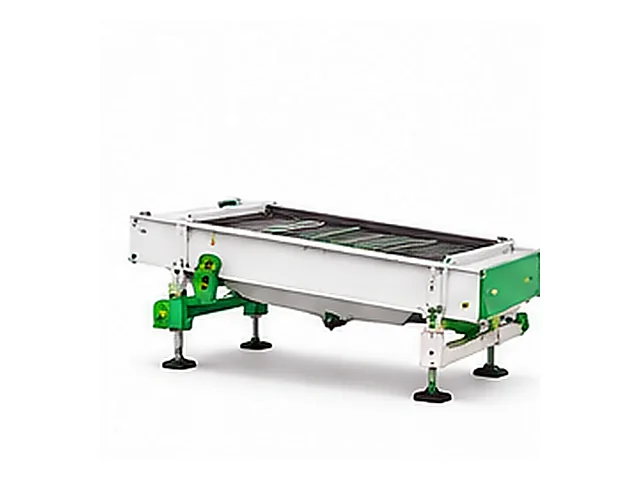 Conveying & Elevation
Moves delicate open-mouth in-shell pistachios and emerald-green kernels gently on smooth belts at 5–120 t/h, preventing shell detachment and skin abrasion.
Value creation in commercial pistachio processing hinges on two distinct market pathways: clean, unblemished naturally split in-shell nuts for retail snack roasting, and vibrant green whole kernels ('Boz' early-harvest or mature peeled kernels) for baklava, gelato, and artisanal confectionery. Delaying wet hull removal after harvest allows epicarp tannins to permanently stain the ivory endocarp shell and elevates Aspergillus aflatoxin risk inside early-split nuts. Once dried to 5–6% moisture, a dry conditioning line sequences pneumatic blank aspiration, specific-gravity separation, mechanical pin-drum open/closed shell separation, caliber screen grading, and RGB/SWIR optical sorting.
Orchard-run pistachios contain significant percentages of aborted empty shells (blanks), half-filled kernels, and physiological closed shells that never split along their suture on the tree. Multi-stage air aspirators and specific-gravity separators first float out empty blanks and lightweight insect-damaged nuts, after which rotating pin-picker drums (needle cylinders) hook the suture gap of naturally split open-mouth nuts to separate them from smooth closed shells.
Closed-shell pistachios isolated by the pin separators are either routed to precision tungsten-carbide nip rollers that artificially crack the shell suture without bruising the kernel, or fed into calibrated mechanical crackers and pneumatic shell aspirators to produce whole shelled pistachio meats. Multi-deck screen graders then classify in-shell lots into international count-per-ounce brackets (18/20, 21/25, 26/30, 30/32).
Export buyers penalize dark epicarp hull stains on in-shell pistachios and require strict mycotoxin screening because early-split nuts with torn hulls are susceptible to navel orangeworm and Aspergillus flavus entry. High-resolution RGB, UV, and InGaAs SWIR optical sorters eject stained or deformed in-shell nuts, remove residual shell shards from shelled meats, and classify kernels into premium deep-green, medium-green, and yellow grades.
Separating closed unsplit shells and half-empty pistachios requires combining mechanical suture detection with precision aerodynamic density stratification. Because a closed-shell nut containing a shriveled kernel can weigh the same as a small open-mouth nut, pre-grading the lot into narrow millimeter size bands before feeding the gravity separator and pin-picker drums drastically improves open-vs-closed separation accuracy and reduces manual hand-picking labor.
When processing shelled pistachio kernels for high-end pastry and chocolate manufacturers, preserving the purple-red skin membrane and vibrant green chlorophyll interior is paramount. Replacing abrasive augers with slow-speed food-grade belt conveyors, using multi-pass air aspiration to lift light skin flakes, and deploying InGaAs SWIR cameras ensures shell fragments under 1 mm are eliminated without bruising the soft kernel.
When evaluating turnkey proposals for a pistachio processing line, require performance guarantees verified on your specific cultivar's length-to-width ratio and split suture width. Contracts must stipulate blank-removal efficiency, open-versus-closed separation purity (exceeding 96–98% in a single pass), whole-kernel yield during closed-shell cracking, and optical sorting rejection accuracy on stained shells and shell fragments.
During commissioning acceptance trials, engineers should weigh both the clean accepted grades and the reject streams from pneumatic aspirators, gravity tables, and optical sorters. Because pistachios command high per-kilogram value, programming a multi-pass resort channel on the optical sorter recovers good open-mouth nuts and whole green kernels that were entrained with rejected shells.
Mechanical layout in a pistachio facility must prevent loose kernels from falling out of wide-split open-mouth shells during conveying and screening. Limiting vertical drop heights, lining all transfer spouts with soft food-grade elastomer pads, and using low-vibration horizontal belt conveyors preserve intact open-mouth presentation prior to salting, roasting, and retail packaging.
After pneumatic aspirators and specific-gravity tables remove empty blanks, the filled pistachio stream is fed into specialized mechanical open/closed separators (pin-picker drums). The inside of the rotating drum is lined with thousands of calibrated spring-steel needles or thin slots that catch the narrow suture opening of naturally split open-shell pistachios, lifting them into an upper trough while smooth closed shells slide out the bottom.
Freshly harvested pistachios are encased in a fleshy, high-moisture outer hull (epicarp/mesocarp) rich in phenolic tannins. If harvested nuts sit in bulk trailers for more than 12–24 hours before mechanical hull peeling and drying to 5–6% moisture, hull tannins oxidize and permanently stain the ivory shell dark brown, while warm humid conditions inside early-split hulls accelerate Aspergillus flavus mold and aflatoxin synthesis.
A vertical air aspirator separates completely empty blanks from heavy filled nuts by terminal velocity, but partially developed half-kernels and navel-orangeworm-tunnelled nuts fall in an intermediate aerodynamic zone. An inclined specific-gravity separator fluidizes the pre-sized pistachio bed across an oscillating deck, stratifying fully plump kernels to the high side while floating half-filled and insect-lightened nuts to the low-density discharge.
Confectionery buyers pay substantial premiums for early-harvest 'Boz' or deep emerald-green pistachio kernels compared to mature yellow-green meats. High-resolution RGB optical sorters coupled with LED illumination inspect both the outer purple-brown pellicle and exposed cotyledon hue, classifying kernels into Grade A deep green, medium green, and yellow roasted grades while InGaAs SWIR sensors eject same-color shell shards.
Before silo storage or bulk packaging, both in-shell pistachios and shelled kernels must be dried to 4.5% to 6.0% moisture content (water activity below 0.60). Storing pistachio lots in cooled dry warehouses kept around 6–10 °C with 55% relative humidity—or inside vacuum and nitrogen-flushed foil pouches for shelled green kernels—prevents moisture reabsorption, preserves chlorophyll color, and inhibits lipid oxidation.