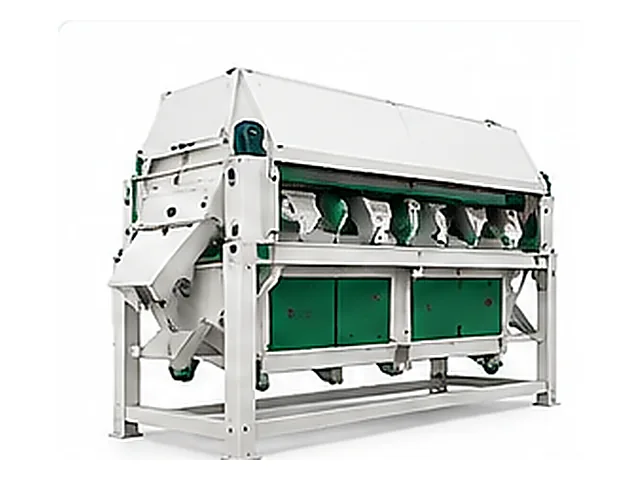
 Cleaning & Pre-Cleaning
Pre-Cleaner
Removes desiccated black hull remnants, orchard twigs, leaves, and shriveled empty shells at 5–40 t/h from incoming dried in-shell walnuts.
5–40 t/h↗

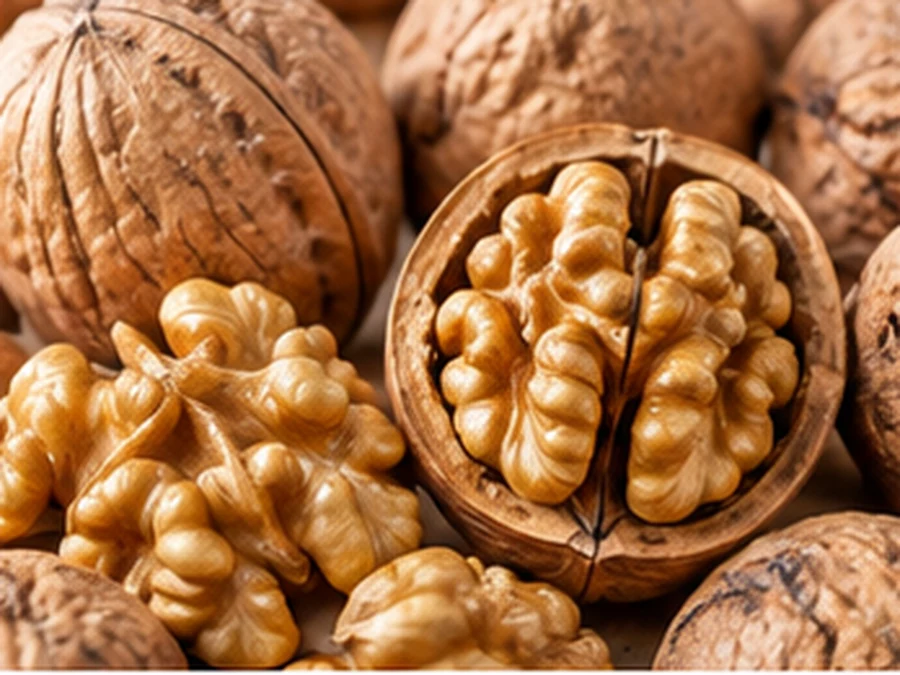
Industrial walnut processing lines—conditioning Chandler, Howard, Hartley, Franquette, and local thin- or hard-shell varieties—must maximize the yield of intact 'butterfly' halves (Extra Light and Light kernel grades) while eliminating every trace of woody shell and internal septum membrane ('shrivel/partition'). Because the convoluted, brain-like lobes of a walnut kernel are extremely brittle and encased around a tough internal woody partition, line engineering integrates in-shell millimeter calibration, controlled mechanical cracking, cascading pneumatic shell-blower aspiration, specific-gravity separation, screen sizing into halves and quarters, and RGB plus InGaAs SWIR optical sorting.
Engineering a high-recovery walnut cracking and conditioning plant requires matching cracker compression clearances to pre-sized in-shell calibers and using multi-stage air/optical separation to extract shell and septum fragments.
Machinery selection in a commercial walnut facility focuses on gentle low-drop kinematics, precise aerodynamic shell lifting, and multispectral detection of woody partition membranes.
Cleaning & Pre-CleaningRemoves desiccated black hull remnants, orchard twigs, leaves, and shriveled empty shells at 5–40 t/h from incoming dried in-shell walnuts.
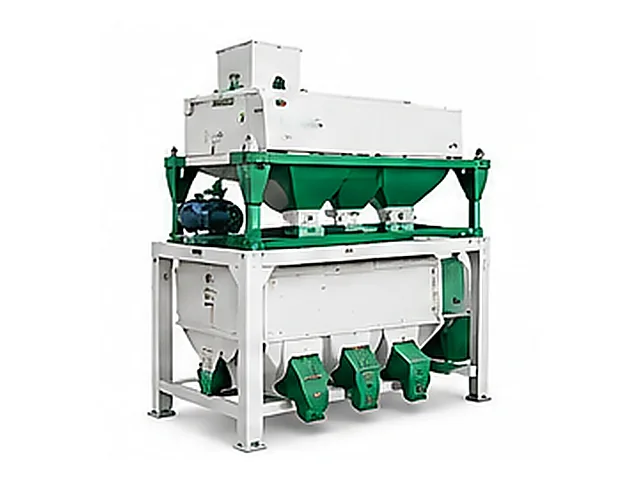 Separation
Separates dense stony endocarp shell corners, uncracked walnut pieces, and shriveled dark culls from sound kernel halves at 1–20 t/h on a fluidized air deck.
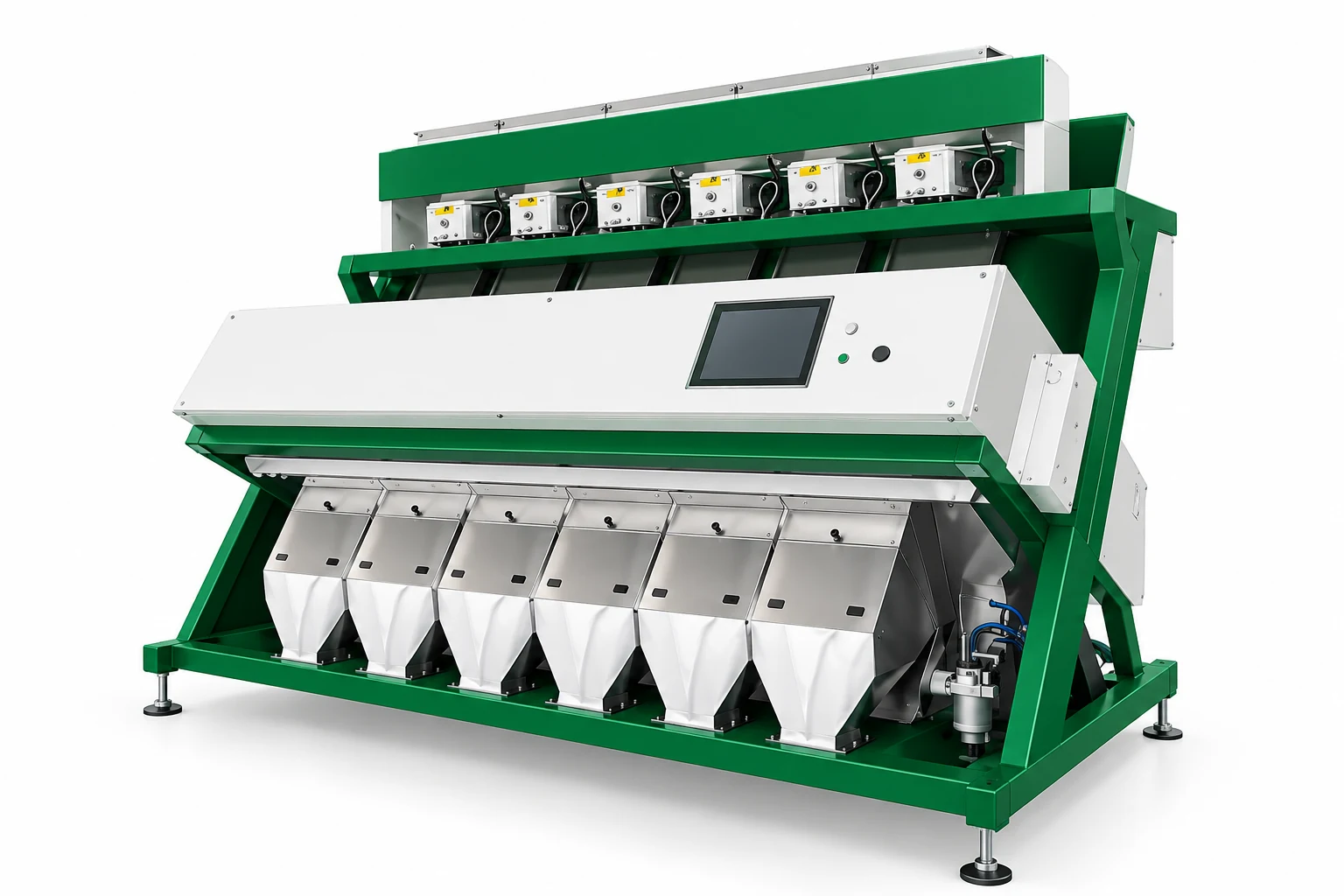 Optical Sorting
Ejects internal woody septum membranes, shell shards, amber/black oxidized kernels, and moldy defects at 1–20 t/h via RGB trichromatic and InGaAs SWIR sensors.
 Grading & Sizing
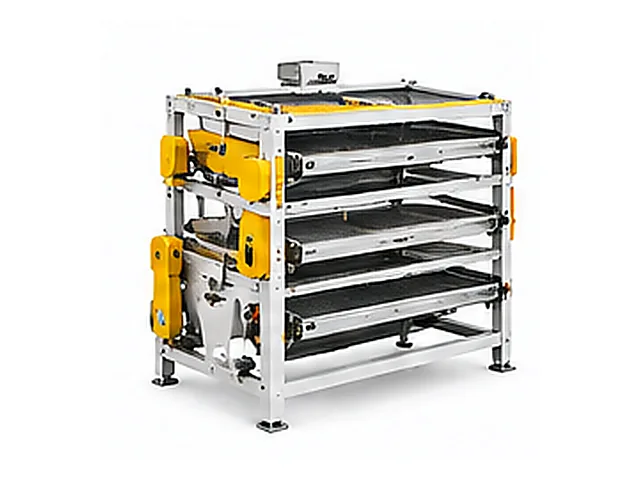
Calibrates in-shell walnuts into 28 mm, 30 mm, 32 mm, and 34 mm+ jumbo brackets and classifies shelled meats into halves, quarters, and pieces at 2–30 t/h.
 Conveying & Elevation
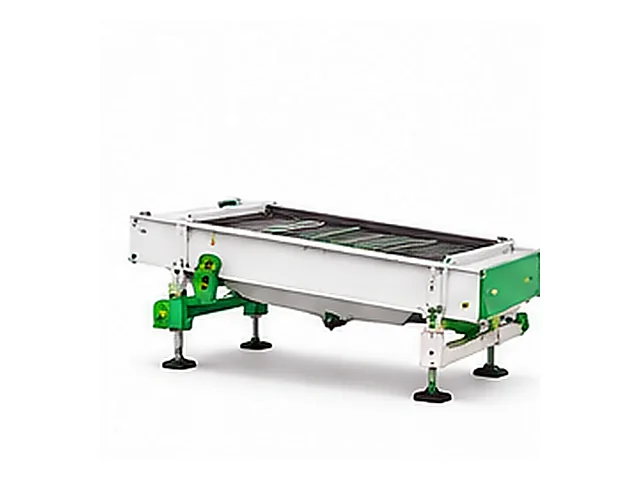
Conveys delicate walnut butterfly halves horizontally at 5–120 t/h on smooth food-grade belts without tumbling impact, preventing lobe breakage and oil smearing.
Commercial profitability in walnut shelling is driven by two primary benchmarks: the percentage of whole 'butterfly' halves recovered (typically 75–85%+ on thin-shell Chandler varieties when properly sized) and kernel pellicle lightness graded under USDA/UNECE color charts (Extra Light, Light, Light Amber, Amber). Because a walnut kernel's two convoluted halves are bridged by a leathery-to-woody internal septum (partition membrane) and surrounded by a sutured woody shell, rough mechanical cracking or high-drop conveying shatters premium halves into discounted bakery pieces. A custom-engineered walnut line combines multi-deck in-shell calibration, variable-gap cone or roller crackers, multi-stage shell aspirators, and InGaAs SWIR optical sorters.
After wet hulling, washing, and low-temperature drying (below 35 °C) to 8% in-shell moisture, walnuts are aspirated to remove empty blanks and calibrated across round-hole screens into under-28 mm, 28–30 mm, 30–32 mm, and 32 mm+ fractions. Feeding narrow size bands into calibrated mechanical crackers fractures the woody outer shell cleanly along its suture without compressing the internal butterfly lobes.
The cracked mixture passes through cascading vertical and zig-zag pneumatic shell blowers where upward airflow is tuned to lift paper-thin internal septum membranes and curved outer shell pieces while heavier walnut meats drop onto oscillating sizing screens. Multi-deck round-hole graders with gentle eccentric motion separate whole butterfly halves (larger than 22–24 mm) from quarters, large pieces, and meal.
Standard air aspirators cannot remove thick woody shell corners (basal stem ends) or dense septum knots whose terminal velocity matches a walnut quarter, and visible RGB cameras struggle when pale inner shell surfaces match Extra Light kernels. Integrating Short-Wave Infrared (InGaAs SWIR) sensors alongside RGB cameras detects the cellulose signature of shell and septum fragments while grading kernels by pellicle lightness.
Tuning pneumatic air velocities across multi-stage walnut shell blowers requires separating the cracked stream by particle size first. If ungraded halves, quarters, and small pieces enter a single aspiration column together, the airflow required to lift thick woody shell fragments out of the large halves will simultaneously blow sound small walnut pieces into the shell waste cyclone; staging aspiration after each screen deck prevents good meat loss.
Walnut kernels contain up to 65% polyunsaturated fatty acids (linoleic and alpha-linolenic acids) that oxidize rapidly if drying temperatures exceed 35–38 °C or if mechanical abrasion ruptures surface oil cells on the thin pellicle. Designing the entire post-cracking line with gentle horizontal belt conveyors, cushioned transfer chutes, and low-drop inspection tables preserves intact butterfly wings and prevents rancid off-flavors.
When comparing turnkey walnut plant quotations, verify that the supplier specifies independent cracking and shell-aspiration modules for each size fraction along with a dedicated return cracker for partially cracked nuts ('Pinchers'). Performance guarantees must define whole-half extraction yield against a hand-cracked reference lot, maximum residual shell/septum fragments (under 0.05% by weight), and color-grade separation accuracy.
During commissioning acceptance testing, engineers must inspect both the final butterfly-half packing belt and the shell cyclone discharges plus optical sorter reject chutes. Installing a two-stage or three-stage optical sorting program—where primary cameras target shell/septum foreign matter and secondary cameras classify Extra Light versus Amber color grades while re-sorting rejects—maximizes net kernel recovery.
Structural plant layout for walnut shelling should avoid vertical bucket elevators on shelled halves wherever possible, utilizing inclined cleated food-grade belt conveyors with low-drop discharge hoods. All product contact surfaces should be constructed of stainless steel or food-grade polymers with quick-release access doors to prevent walnut oil film accumulation and rancid dust build-up.
Maximizing intact butterfly halves starts with conditioning in-shell walnuts to 8% moisture (approximately 4.0–4.5% kernel moisture) so the kernel lobes are slightly pliable rather than glass-brittle, followed by pre-sizing in-shell nuts into 2 mm caliber bands (28–30, 30–32, 32–34 mm+). Feeding each size fraction into a precision-gapped cracker and eliminating drops over 20 cm onto steel surfaces keeps the thin bridge joining the two lobes intact.
The internal septum membrane dividing the two walnut halves has a larger surface-area-to-weight ratio than a solid kernel quarter, while its center knot can be dense and woody. After cracking and screen sizing, multi-stage zig-zag air aspirators lift out the papery septum wings by aerodynamic drag, and downstream InGaAs SWIR optical sorters detect and eject dense septum knots and shell corners by their lignocellulose infrared spectrum.
Under visible light, the pale interior concave surface of a freshly cracked Chandler walnut shell and the light-brown septum membrane closely match the RGB color profile of Extra Light and Light Amber walnut kernels. Short-Wave Infrared (InGaAs) sensors measure molecular absorption differences between high-oil walnut cotyledons and dry woody cellulose, allowing the sorter to eject same-color shell and septum shards while RGB cameras grade kernel lightness.
In-shell walnuts are calibrated on round-hole perforated screens by equatorial diameter into Medium (28–30 mm), Large (30–32 mm), and Jumbo (32 mm+ and 34 mm+) grades after blank aspiration. Shelled walnut meats are graded over specialized round-hole screen decks into Halves (7/8ths or more of an intact butterfly kernel), Quarters, Large Pieces, Medium Pieces, and Meal, then sub-classified by pellicle lightness.
Because walnuts are exceptionally rich in polyunsaturated omega-3 and omega-6 oils, drying air temperatures after wet hulling must never exceed 35–38 °C, as higher heat darkens the pellicle from Extra Light to Amber and initiates lipid peroxidation. Shelled walnut kernels should be stabilized at 3.5–4.5% moisture and stored in dark, refrigerated warehouses (2–7 °C, 55–65% RH) inside vacuum or nitrogen-flushed barrier packaging.