SEED PROCESSING GUIDEOat Processing Plant Engineering: Clipping, Wild Oat Separation, and Groat Recovery
Field-run oats typically exhibit bulk densities as low as 42 to 48 kg/hl because elongated hull tips, awns, and unseparated double-grains create large void spaces in the grain mass. Furthermore, milling plants must split the incoming crop into plump primary oats and slender secondary oats so centrifugal impact dehullers can operate at optimal rotor speeds for each size class without pulverizing the groats. A well-engineered oat line integrates rotary clippers, slotted graders, indented cylinders, and gravity tables.
01 / PROCESSOat Clipping and Twin-Spikelet Separation for Higher Test Weight
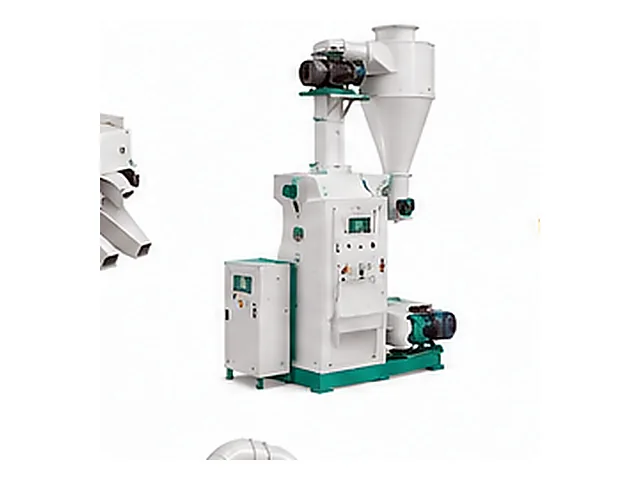
Passing pre-cleaned oats through a grain clipper trims the papery distal tips of the lemma and palea and breaks apart attached 'bosom' double-oats without stripping the hull from the caryopsis. Controlled clipping raises bulk density to 54–58 kg/hl, eliminates bridging in farm seed drills, and improves downstream screen and indent efficiency.
02 / EQUIPMENTSeparating Wild Oats (Avena fatua) and Free Groats via Indented Cylinders
Wild oats are the most difficult botanical contaminant in oat seed production because their width and density closely mirror cultivated varieties. By staging indented cylinders with precisely chosen pocket diameters after slotted thickness screening, processors lift shorter cultivated oats and free groats while longer, awned wild oats ride the cylinder trough to reject.
03 / QUALITYGravity Table Stratification and Milling Oat Calibration
In oat flake and groat milling, unhulled paddy oats returning from the impact dehuller must be separated cleanly from dense naked groats, while seed plants must reject partially filled spikelets. Specific gravity separators and paddy tables exploit the pronounced density gap between hulled kernels (approx. 500 kg/m³) and dehulled groats (approx. 680 kg/m³) to guarantee pure product streams.
Technical Engineering Checklist for Oat Cleaning and Milling Lines
- Measure incoming hectoliter weight, moisture content, double-oat (bosom grain) percentage, free groat ratio, and wild oat count per kilogram.
- Define target output specifications—such as minimum 54 kg/hl clipped seed weight or below 0.1% hull residue in finished milling groats.
- Verify hopper cone angles (minimum 60 degrees for unclipped oats), rotary feeder drives, and aspiration filter sizing for high-volume hull dust.
Because unclipped oats occupy roughly 40 percent more volume per ton than wheat and exhibit much higher internal friction, standard cereal spouting and screen areas will choke rapidly. When reviewing supplier engineering offers, confirm that volumetric conveyor capacities, sieve widths, and aspiration cyclones are explicitly derated for 45 kg/hl oat density.
Acceptance testing on an oat line must measure three critical performance metrics: test-weight gain across the clipper, free-groat breakage added during mechanical handling, and usable plump oats lost in the light aspiration and under-sieve streams. Adjusting clipper outlet weights and gravity deck air profiles on a live batch sample locks in maximum yield.
Plant Layout and Material Handling Considerations for Hulled Oats
Oat hulls are highly abrasive due to their silica content and generate large volumes of fibrous, low-density dust during clipping and screening. Spouting elbows should feature replaceable wear-resistant liners, while centralized baghouse filters require airlocks sized to discharge bulky hull chaff without bridging.
During laboratory sample fractionation, technicians should separate the raw oat lot into four groups: coarse straw and panicle joints, light sterile hulls and dust, thin secondary pin oats passing a 1.9 mm slot, and plump primary kernels above 2.2 mm. This breakdown dictates both the screen aperture plan and the indented cylinder pocket selection.
For oat milling facilities, grading cleaned oats into at least two thickness classes (plump vs. slender) before impact dehulling is essential. Dehulling mixed sizes together forces operators to run the impact rotor fast enough to hull small oats, which shatters the large groats into low-value flour and fines.
Core Equipment for Oat Cleaning, Clipping, and Grading Plants

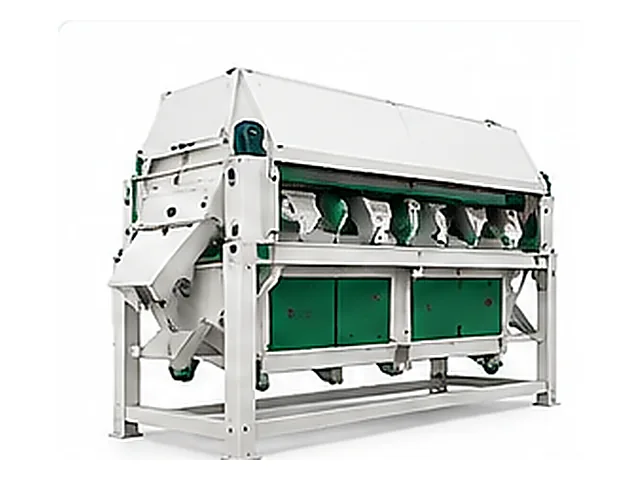 Cleaning & Pre-Cleaning