Home›Rye
Rye Processing
Grains & Cereals

Rye Processing

Industrial rye processing centers on two critical technical objectives: accommodating the slender, elongated geometry of the rye caryopsis on narrow slotted screens and achieving near-total eradication of toxic ergot sclerotia (Claviceps purpurea). Whether conditioning hybrid seed rye or preparing high-Hagberg breadmaking grain, the line must combine precision air-screen thickness grading, indented cylinder length separation, specific gravity tables, and trichromatic optical sorting to meet stringent EU and export food-safety regulations.

Open catalogue

Multi-Stage Process Architecture for Milling and Hybrid Seed Rye

Because rye kernels are significantly narrower and more pointed than wheat and lack a protective hull over the germ tip, conditioning requires tailored perforation widths and multi-physics ergot defense. The workflow moves systematically from intake scalping and aspiration to slotted thickness calibration, length indenting, density stratification, and optical sorting.

01Receiving
02Pre-cleaning
03Separation
04Grading
05Sorting
06Storage
07Packaging

Selecting Rye Cleaners, Slotted Graders, Gravity Separators, and Ergot Sorters

Selecting machinery for a rye conditioning plant demands careful attention to oblong screen aperture tolerances, gravity deck air balance, and gentle bucket elevator speeds. Standard wheat screen packages will lose prime slender rye into the under-sieve tailings and fail to isolate same-width ergot fragments.

Pre-CleanerCleaning & Pre-Cleaning

Pre-Cleaner

Scalps long brittle rye straw, unthreshed spike segments, and oversized ergot horn bodies (5–40 t/h) ahead of silo binning. Removing coarse field trash and large sclerotia early reduces fungal dust in storage and prevents blockages at hopper gates.

5–40 t/h↗
Air Screen CleanerCleaning & Pre-Cleaning

Air Screen Cleaner

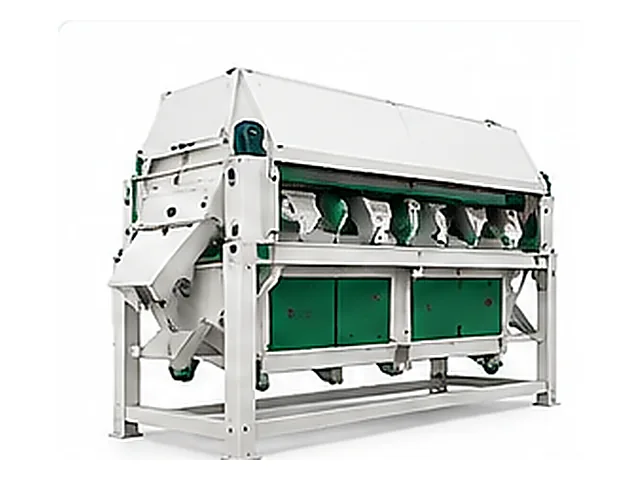
Combines dual-channel aspiration with precision 1.6 to 1.8 mm oblong bottom slots (3–30 t/h) to drop shriveled thin rye and fine weed seeds away from plump milling grain. Active rubber-ball screen cleaning keeps narrow slots open even when elongated pointed kernels attempt to wedge.

3–30 t/h↗
DestonerSeparation

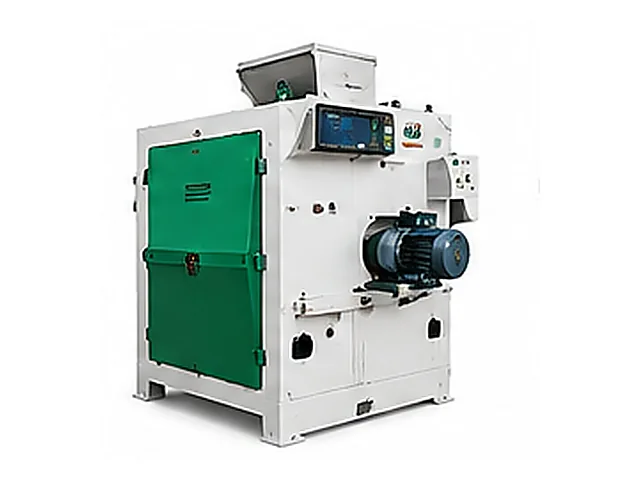
Destoner

Fluidizes the rye stream across an inclined counter-vibrating deck (2–25 t/h) to extract dense field stones, flint chips, and mineralized soil clods. Eliminating hard mineral inclusions protects downstream roller mills and flaking stands from roll grooving and spark hazards.

2–25 t/h↗
Seed GraderGrading & Sizing

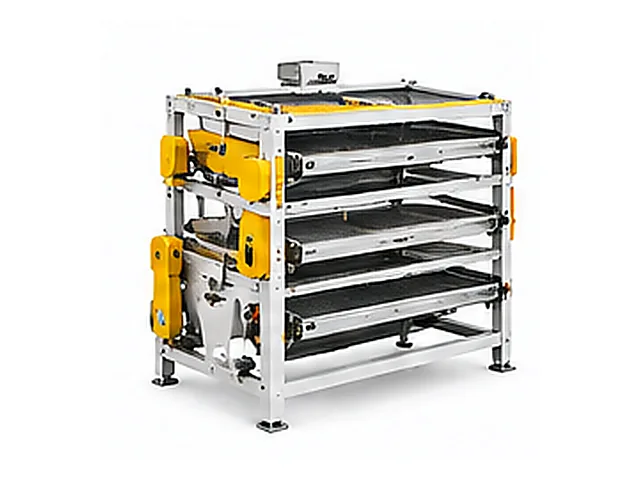
Seed Grader

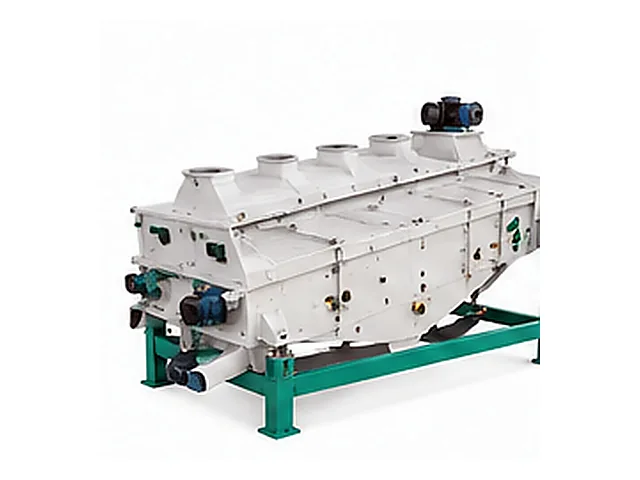
Grades cleaned rye by slot thickness and exact length (2–30 t/h), pairing multi-layer slotted sieve boats with rotary indented cylinders. Short-pocket indents lift out broken rye halves and spherical corncockle seeds, while long-pocket cylinders reject elongated ergot sclerotia and wild oats.

2–30 t/h↗
Magnetic SeparatorSeparation

Magnetic Separator

Captures ferrous hardware, combine knife fragments, and wire splinters from rye flows (2–35 t/h) across high-intensity neodymium magnetic tubes. Positioning magnetic traps ahead of indented cylinders and roller mills prevents costly mechanical scoring and dust-explosion sparks.

2–35 t/h↗
Aspiration ChannelCleaning & Pre-Cleaning

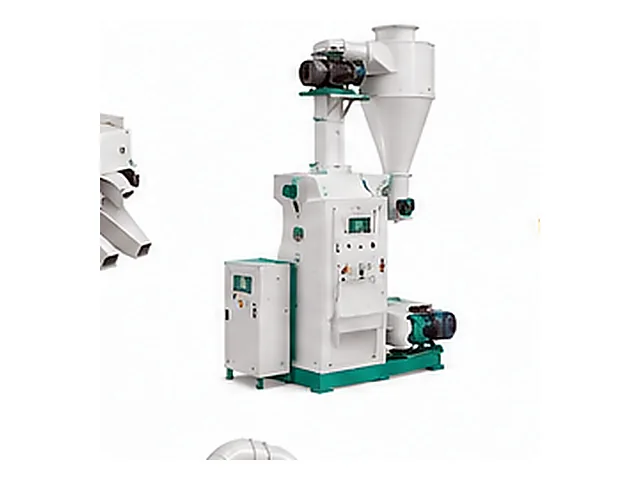
Aspiration Channel

Subjects the falling rye curtain to a regulated upward airstream (3–40 t/h) that strips light glumes, beard fragments, sterile florets, and low-density ergot dust. Precision damper controls maximize light-impurity extraction without pulling slender viable rye into the cyclone.

3–40 t/h↗
Bucket ElevatorConveying & Elevation

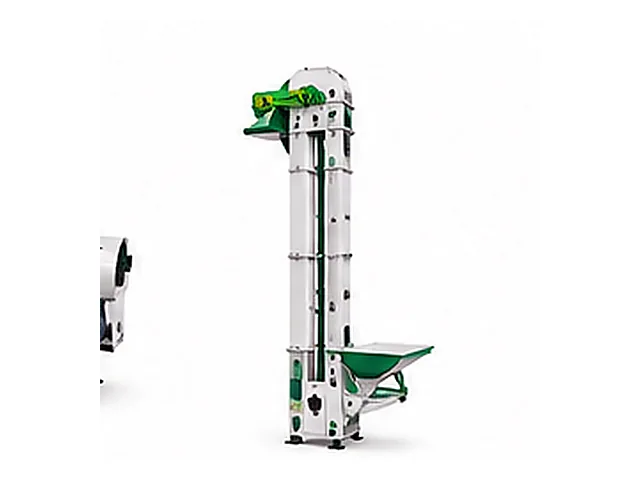
Bucket Elevator

Conveys conditioned milling and hybrid rye upward (5–100 t/h range) via low-impact bucket profiles and controlled belt speeds. Gentle head discharge geometry protects the exposed, prominent embryo tip at the base of the naked rye kernel from mechanical bruising.

5–100 t/h↗
SEED PROCESSING GUIDE

Rye Processing Engineering: Multi-Stage Ergot (Claviceps purpurea) Removal and Slotted Calibration

Rye is uniquely susceptible to cross-pollination infection by Claviceps purpurea, which replaces individual kernels in the ear with dark, alkaloid-toxic ergot sclerotia. While large ergot horns are easily scalped off on top screens, broken sclerotia fragments match sound rye kernels in both width and length, rendering purely dimensional screening inadequate. High-compliance rye plants therefore deploy a triad of slotted/indented sizing, specific gravity separation, and optical color sorting.

01 / PROCESS

Three-Stage Ergot Eradication: Screens, Gravity Tables, and Optical Sorters

Meeting EU food limits for ergot sclerotia (below 0.05% by weight) requires attacking the contaminant across three physical axes. First, round scalping screens and indented cylinders remove intact sclerotia longer or thicker than rye; second, a specific gravity table floats out ergot bodies due to their lower bulk density (approx. 0.95 vs. 1.35 g/cm³); third, a trichromatic optical sorter ejects any remaining purple-black fragments.

02 / EQUIPMENT

Narrow Slotted Perforation Engineering for Slender Rye Kernels

Even high-grade rye exhibits a smaller cross-sectional thickness than winter wheat, meaning a standard 2.0 mm wheat bottom screen would reject up to 25 percent of sound rye into the feed bin. Engineers configure rye air-screen cleaners with 1.6 mm to 1.8 mm x 20 mm oblong bottom sieves and adjust ball-tray bounce to stop needle-shaped kernels from pegging the slots.

03 / QUALITY

Protecting Falling Number, Amylograph Viscosity, and Seed Embryo Vigor

Rye starch gelatinizes at a low temperature, making breadmaking quality acutely sensitive to pre-harvest sprouting and alpha-amylase activity. Stratifying the cleaned lot on a gravity separator removes low-density sprouted and weather-damaged kernels to boost Hagberg Falling Number, while cushioned conveying protects the protruding germ tip in hybrid seed lots.

Technical Specification Checklist for Rye Cleaning and Milling Prep Lines

  • Quantify raw intake ergot sclerotia percentage by weight, kernel moisture, hectoliter test weight, and Hagberg Falling Number baseline.
  • Define target output specifications—such as ergot below 0.02–0.05% for human milling or zero sclerotia per 500g sample for certified hybrid seed.
  • Verify narrow-slot sieve inventory (1.5 to 1.9 mm), gravity separator deck zoning, and optical sorter re-sort recovery ratios.

When comparing supplier engineering offers for a rye conditioning plant, demand a stage-by-stage ergot reduction guarantee backed by trial runs on contaminated lots. No single machine can eliminate 100 percent of whole and fractured sclerotia alone; the quotation must size the gravity separator and optical sorter to handle the exact throughput of the pre-cleaned and length-graded stream.

During commissioning and acceptance testing, operators must weigh and analyze the reject streams from the indented cylinders, gravity table middlings, and optical sorter second-pass chutes. Re-routing the gravity table intermediate fraction or adding a dedicated optical re-sort lane prevents excessive loss of sound grey-green rye kernels alongside dark ergot fragments.

Layout and Handling Design for Hybrid Seed and Breadmaking Rye

Because the rye caryopsis threshes free of its hull and carries a sharply pointed germ end, high-velocity impacts against bare steel elbows easily snap the embryo tip or split the longitudinal crease. Specifying polymer-lined spouting, dead-box drop cushions, and elevator belt speeds under 1.8 m/s preserves germination energy above 92 percent for hybrid seed contracts.

Laboratory intake assessment of rye batches should separately record four impurity classes: oversized intact ergot horns above 3.5 mm, broken ergot segments matching kernel dimensions, Bromus (bromegrass) and wild oat seeds, and thin shriveled rye passing a 1.6 mm slot. This detailed profile allows operators to preset indent pocket sizes and gravity deck air pressures before starting the run.

Dedicated aspiration and dust collection around ergot-reject chutes is an important occupational health and food-safety measure in modern rye mills. Keeping alkaloid-bearing ergot dust segregated from general mill screenings prevents cross-contamination of animal feed by-products.

Core Equipment for Rye Cleaning, Grading, and Ergot Removal

Rye Processing Engineering: Ergot Removal & Calibration FAQ

Why can't an air-screen cleaner and indented cylinder remove all ergot from rye on their own?

While intact ergot sclerotia are typically longer and thicker than rye kernels, combine threshing and auger conveying snap many sclerotia into short segments that match sound rye in both width (1.8–2.8 mm) and length (6–9 mm). Removing these dimensionally identical fragments requires density separation on a gravity table followed by optical color sorting.

How does a specific gravity separator isolate ergot and sprouted kernels from sound rye?

Fungal ergot sclerotia have a porous mycelial structure with a true density around 0.95–1.10 g/cm³, whereas sound endosperm-filled rye sits near 1.35–1.40 g/cm³. On a fluidized, inclined gravity deck, upward airflow lifts the lighter ergot bodies and hollow sprouted kernels to the top of the grain bed so they slide downhill to the light-reject outlet.

What bottom screen perforation sizes are recommended for cleaning milling vs. seed rye?

Commercial rye milling lines typically use 1.6 mm or 1.7 mm x 20 mm oblong slotted bottom sieves to drop out shriveled tailing grains and fine weed seeds. Certified and hybrid seed rye plants often step up to 1.8 mm or 1.9 mm oblong slots to guarantee high thousand-kernel weight and vigorous field emergence.

Why does rye have a higher risk of embryo damage during conveying than barley or oats?

Unlike barley and oats, which retain a fibrous protective hull around the kernel, rye is a naked grain whose pointed embryo protrudes visibly at the basal tip. High-speed elevator discharge or steep unlined chute drops bruise this exposed germ tissue immediately, causing a sharp drop in seed germination vigor.

Can mechanical conditioning improve the Hagberg Falling Number of weather-damaged rye?

Yes—when wet harvest weather triggers incipient sprouting in a small percentage of ears, those sprouted kernels lose starch density and swell slightly. Removing the lowest-density 5 to 10 percent fraction on a precision gravity separator strips out the high-alpha-amylase grains, often raising the lot's overall Falling Number back into breadmaking specification.