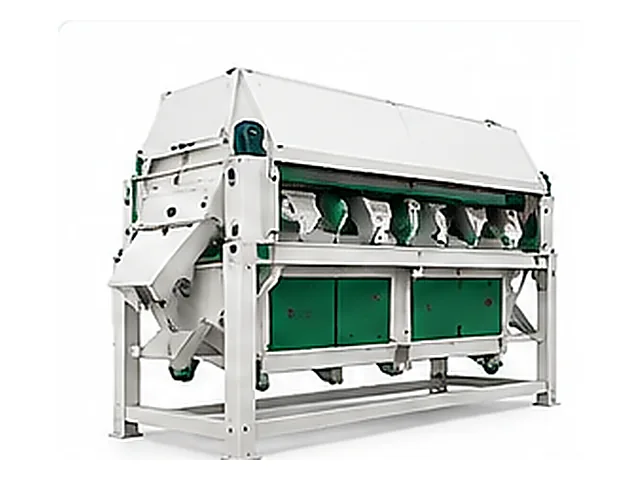
 Cleaning & Pre-Cleaning
Pre-Cleaner
High-capacity intake cleaner designed to scalp coarse straw, pods, cob fragments, and fine sand prior to silo storage or drying.
5–40 t/h↗

Scalping, air-screen separation, de-awning, and density pre-cleaning stages strip field trash, straw, stones, and undersized weed seeds at intake to protect downstream equipment and stabilize product purity.
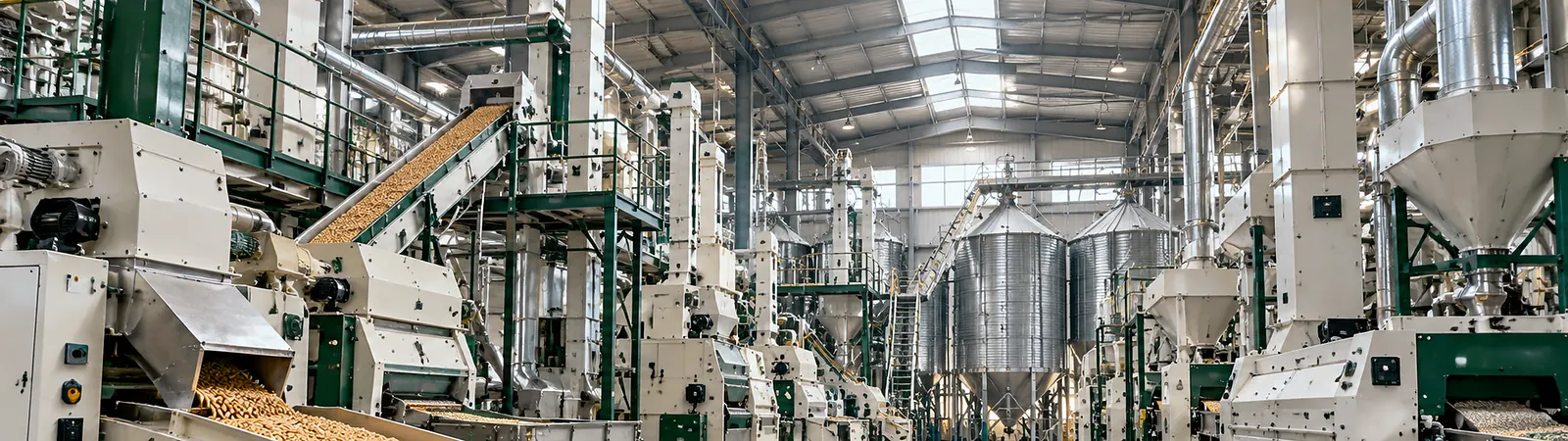
Compare scalpers, multi-deck air-screen cleaners, pressure destoners, grain clippers, and rotary fine cleaners below to configure primary and secondary cleaning stages for cereals, pulses, and oilseeds.
Cleaning & Pre-CleaningHigh-capacity intake cleaner designed to scalp coarse straw, pods, cob fragments, and fine sand prior to silo storage or drying.
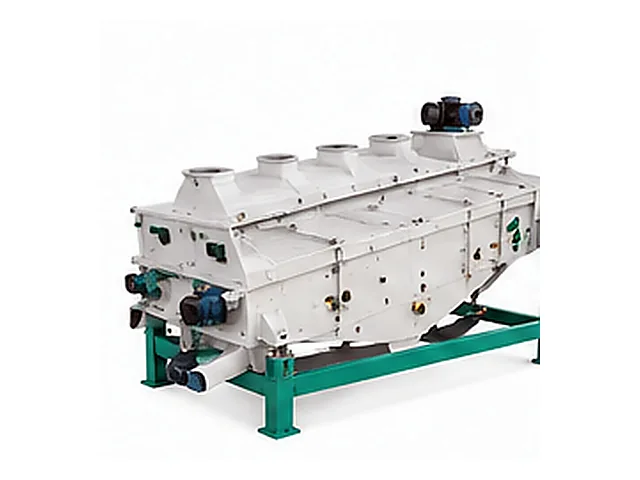 Cleaning & Pre-Cleaning
Multi-deck reciprocating sieve shoe combined with pre- and post-aspiration channels for versatile seed and commercial grain cleaning.
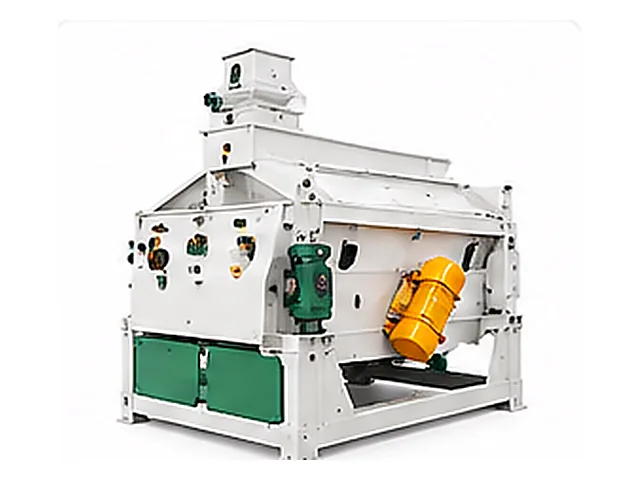 Cleaning & Pre-Cleaning
Fluidized inclined deck separator utilizing positive airflow and eccentric oscillation to eject stones, glass, and dense soil clods.
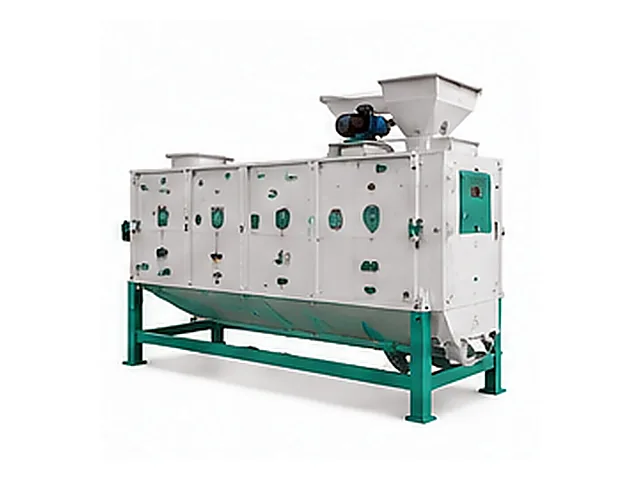 Cleaning & Pre-Cleaning
Precision multi-screen conditioning unit configured with gentle feed distribution and ball-tray sieve cleaning for high-value seed lots.
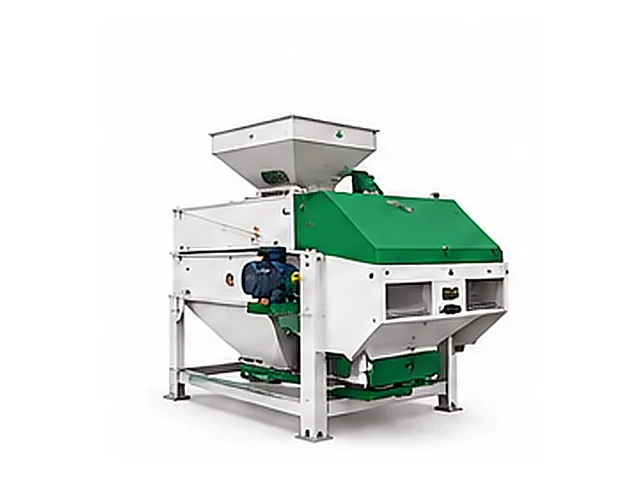 Cleaning & Pre-Cleaning
Mechanical de-awning and hull-trimming cylinder that removes tenacious awns, beards, and basal hairs from barley, oats, and grass seeds.
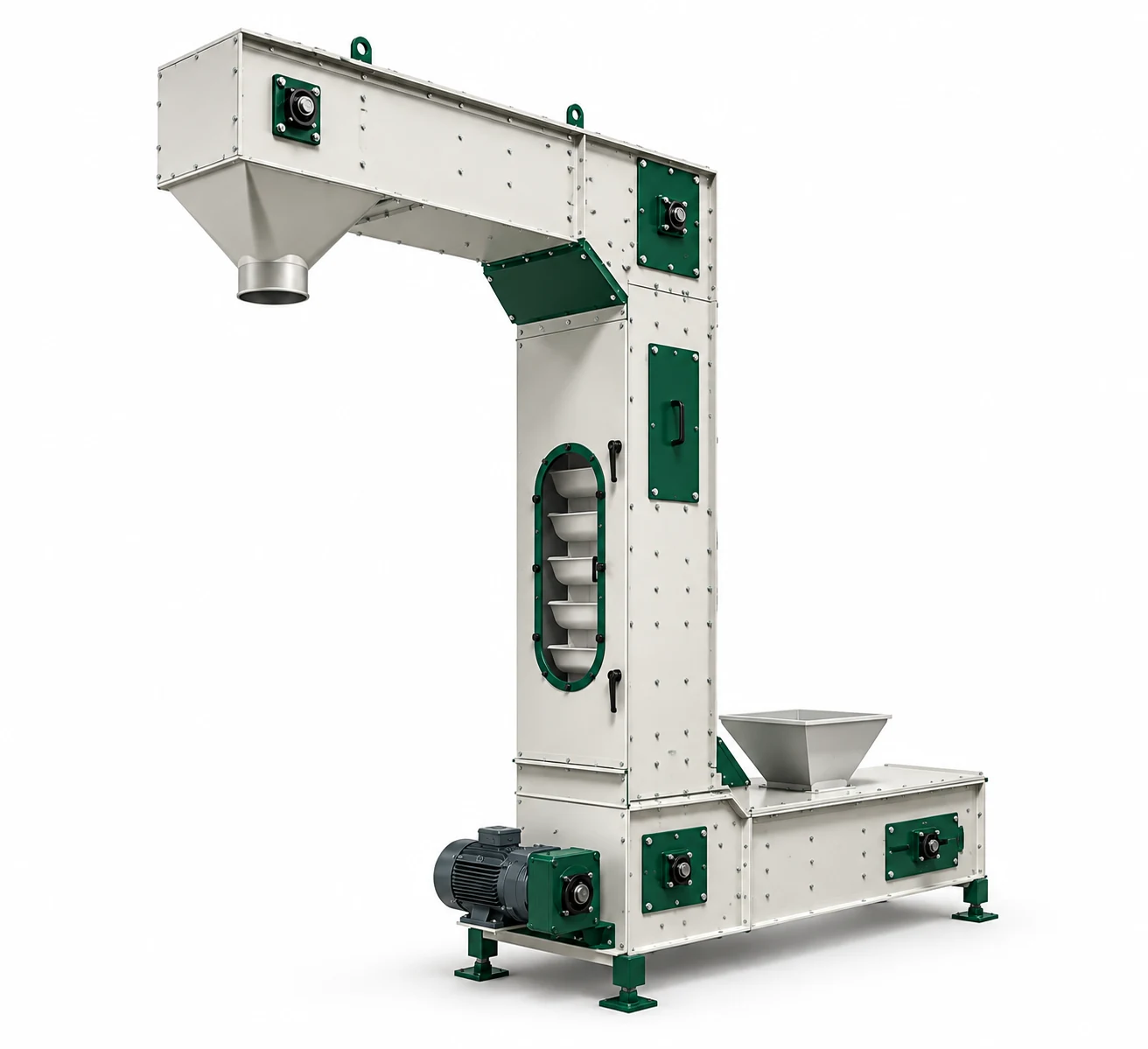 Cleaning & Pre-Cleaning
Non-overlapping pivoting bucket conveyor offering horizontal-to-vertical Z-path elevation without kernel pinching or variety cross-contamination.
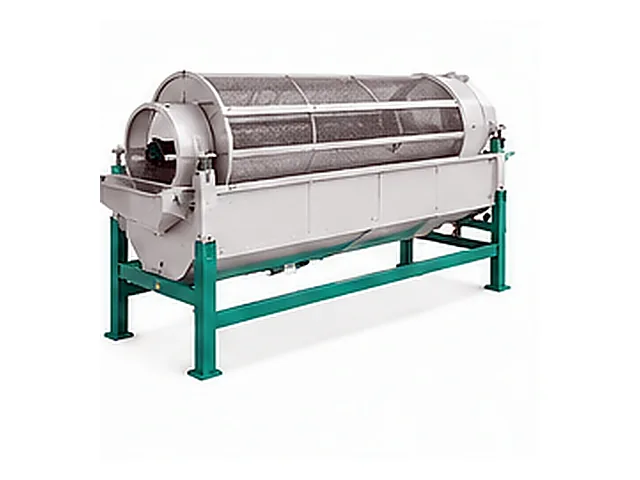 Cleaning & Pre-Cleaning
Rotating cylindrical sieve drum combined with internal aspiration to separate oversized trash and fine siftings at steady feed rates.
 Cleaning & Pre-Cleaning
Extended-deck fine cleaner engineered for tight width and thickness calibration alongside dual-stage aerodynamic dust and chaff removal.
Intake pre-cleaning runs at high flow rates with wide screen perforations to strip green trash, rubble, and dust before storage, whereas fine cleaning uses tight sieve tolerances and lower feed rates to achieve market or planting purity.
Kernel geometry, thousand-kernel weight, harvest moisture content, percentage of coarse and light admixture, fragility against impact, and required hourly capacity dictate screen area and aspiration configuration.
Crops containing high levels of harvest dust, loose hulls, or shriveled kernels benefit from intake aspiration before the top scalping deck and a second air leg at clean-grain discharge to polish final test weight.
Round perforations sort particles primarily by width, while oblong slotted screens separate by kernel thickness; pairing the correct top scalping and bottom grading apertures prevents good seed loss into the tailings.
Elevated grain moisture, high dockage percentages, bearded seed coats, or narrow dimensional gaps between good kernels and weed seeds require slower deck travel and thinner bed depth than dry, free-flowing wheat.