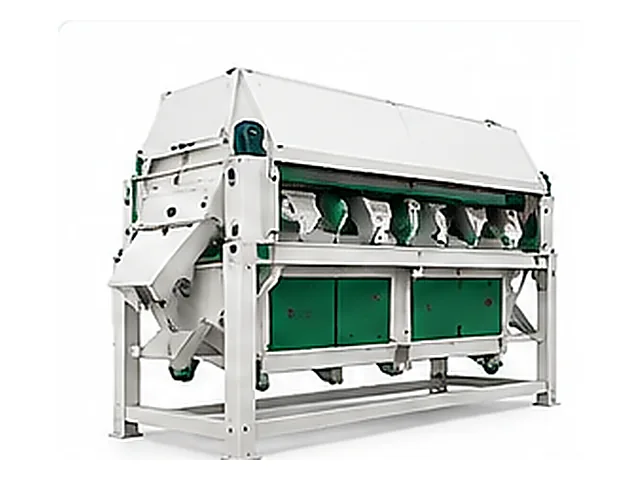
 Cleaning & Pre-Cleaning
Pre-Cleaner
Scalps coarse umbel stalks, dry flower heads, and chaff from threshed carrot seed lots at 5 to 40 t/h after initial de-bearding stabilizes material flow.
5–40 t/h↗

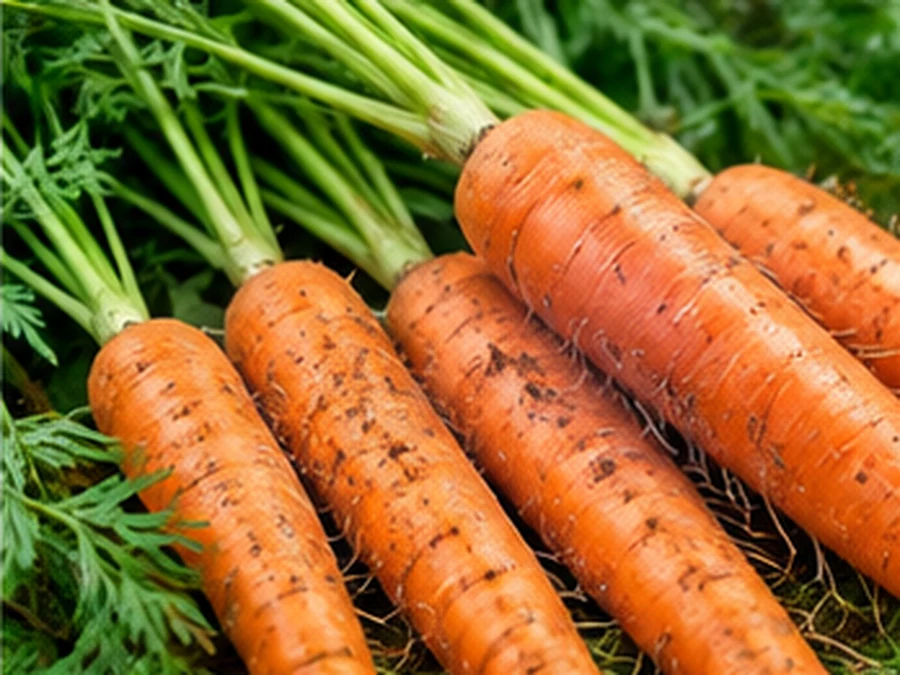
Conditioning commercial carrot seed (Daucus carota) presents a unique mechanical challenge because freshly threshed mericarps are covered in hooked lateral spines—known in the seed trade as the beard—that cause individual seeds to interlock into non-flowing mats. Before any air-screen sizing, indented cylinder length grading, or gravity density upgrading can function, an industrial carrot seed line must pass the lot through specialized rotary de-bearding and brushing equipment that shears off the spines without bruising the underlying oil ducts or embryo.
Field-harvested carrot umbels arrive containing interlocked bearded seeds, pedicel stalks, floral bracts, and embryoless flat mericarps that require de-bearding before precision dimensional and density fractionation.
Achieving singulated, high-germination carrot seed lots suited for pneumatic precision planters or rotary pelleting pans requires integrating gentle de-bearders, fine sifters, indented cylinders, and gravity tables.
Cleaning & Pre-CleaningScalps coarse umbel stalks, dry flower heads, and chaff from threshed carrot seed lots at 5 to 40 t/h after initial de-bearding stabilizes material flow.
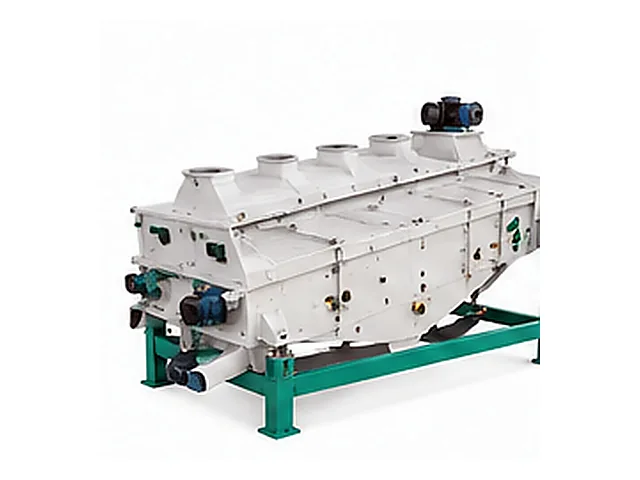 Cleaning & Pre-Cleaning
Grades de-bearded carrot mericarps by exact width and thickness at 3 to 30 t/h using micro-perforated slotted and round-hole sieves with stepless air aspiration.
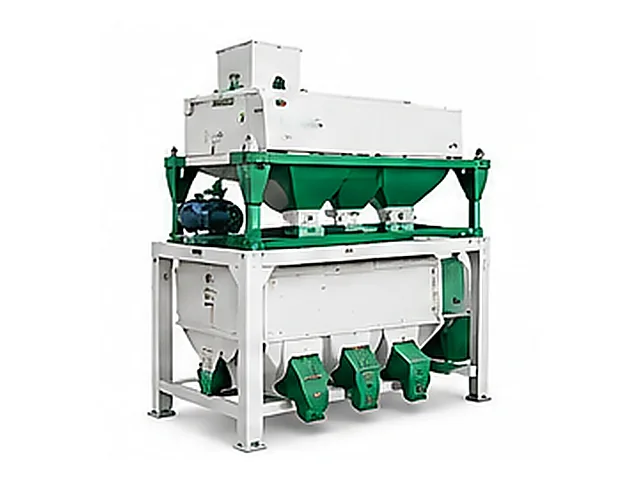 Separation
Eliminates embryoless, Lygus-bug-damaged, and shriveled immature carrot seeds at 1 to 20 t/h on a fine-mesh fluidized deck to maximize lot germination.
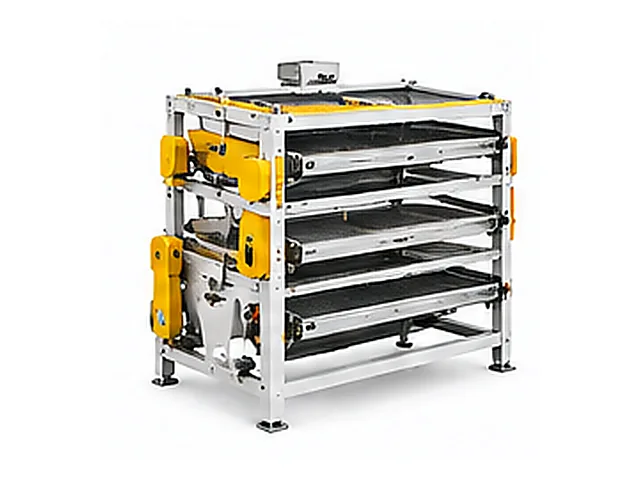 Grading & Sizing
Separates conditioned carrot seed into narrow millimeter caliber fractions at 2 to 30 t/h required for uniform seed encrusting, pelleting, and vacuum-plate singulation.
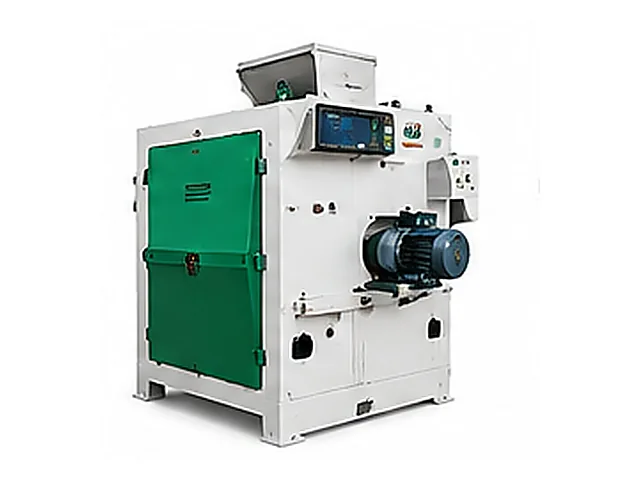 Separation
Extracts rough-textured weed seeds and soil granules from smooth de-bearded carrot lots at 2 to 35 t/h when micro-dosed magnetic polishing is required.
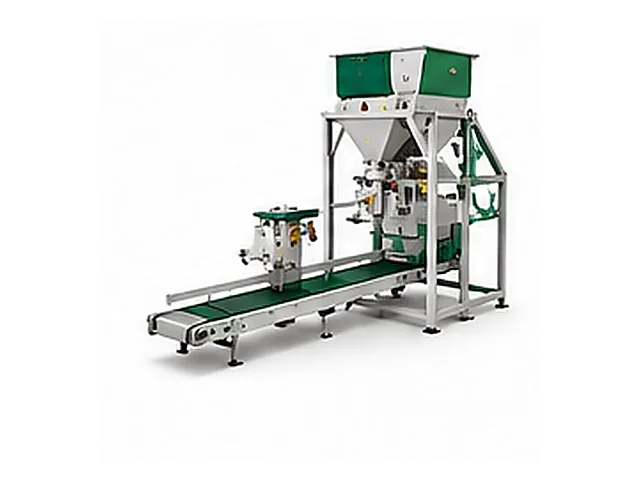 Packaging & Dispatch
Packages high-value hybrid carrot seed into moisture-barrier foil pouches, hermetically sealed tins, or bulk intermediate totes with precision net-weight scales.
High-value hybrid and open-pollinated carrot seed lots are sold on strict germination vigor, embryo maturity, and dimensional uniformity standards required by commercial vegetable growers using vacuum precision drills. Because carrot flowers bloom sequentially across primary, secondary, and tertiary umbel orders, harvested lots inevitably contain a mixture of plump, fully developed seeds alongside immature, shriveled, or Lygus-damaged mericarps. Engineering a dedicated carrot conditioning line requires mastering spine removal, width-and-length calibration, and micro-density separation.
Raw carrot seed cannot be metered evenly onto flat screens until its hooked costal spines are removed in a horizontal rubber-lined or brush de-bearder followed by immediate dust aspiration. Once singulated and free-flowing, the seed stream passes through fine air-screen cleaners, indented cylinders that extract broken pedicels, and specific-gravity tables that isolate dense, viable embryos.
Because thousand-seed weight in carrot lots typically ranges from just 0.8 to 2.0 grams, standard grain-cleaning airflows and screen perforations will blow viable seed straight into the cyclone collector. Conditioning equipment must feature micrometric air-gate dampers, woven-wire and laser-cut miniature aperture sieves, and high-frequency, short-stroke gravity decks.
Over-aggressive rotor speed or excessive discharge back-pressure inside the de-bearder can strip the outer pericarp ribs, rupture aromatic vittae oil canals, or snap the elongated mericarp in half. Process engineers monitor seed coat temperature and microscopic pericarp abrasion during de-bearding while relying on downstream gravity and liquid-density upgrading to reach ninety-plus percent germination.
Modern vegetable seed companies rarely sell raw, ungraded carrot seed; instead, conditioned lots are directed toward physiological priming, fungicidal film-coating, or spherical rotary pelleting. Each of these high-value enhancement processes demands a completely spine-free, dust-free seed surface and tight 0.20 mm width calibration so every pellet builds to an identical diameter.
When evaluating equipment for umbelliferous vegetable seeds, processors should inspect every internal weld, sieve frame gasket, and elevator boot for potential seed traps. Hybrid carrot seed lots are frequently processed in small, high-value batches of 50 to 500 kilograms, making tool-free screen extraction and compressed-air self-cleaning decks essential to prevent genetic cross-contamination.
During mechanical de-bearding, detached spines generate a large volume of fine, irritating organic dust and light chaff that must be evacuated immediately through an overhead aspiration hood. Leaving abraded spine fuzz inside the seed stream causes bridging in downstream feed hoppers and coats the woven-wire mesh of the specific-gravity separator deck.
After width and thickness grading on the air-screen cleaner, carrot seed lots still contain tiny umbel ray segments and broken pedicels that match the cross-sectional width of a mericarp. Passing each width-graded fraction through a precision indented cylinder lifts the shorter carrot seeds in hemispherical pockets while dropping longer stalk fragments into the internal trough.
Before setting final gravity table cut dividers on a carrot lot, quality labs perform X-ray imaging or cut-testing across samples drawn from each discharge zone along the deck edge. Visualizing internal embryo length and endosperm fill allows operators to position the middlings and reject splitters precisely where embryoless and Lygus-feeding-damaged seeds concentrate.
Natural carrot mericarps bear rows of microscopic hooked barbs along their secondary ribs that lock neighboring seeds together into spongy clusters. Without first rubbing off these spines in a rotary de-bearder, the seed mass bridges inside feed hoppers, rolls across screens in clumps rather than passing through perforations as single seeds, and entraps stem trash.
When Lygus bugs feed on developing carrot umbels, they inject enzymes that destroy the embryo without shrinking the outer woody pericarp wall, making damaged seeds identical in width and length to healthy ones. Pre-calibrating the lot into narrow size fractions and stratifying each fraction on a fine-weave gravity separator isolates these lighter, hollow mericarps into the low-density tail.
Flat screens separate carrot seed by width (round holes) and thickness (slotted holes), but slender umbel pedicel stalks of the same diameter slip endwise through round perforations alongside the seed. Indented cylinders pocket the shorter oval carrot mericarps and carry them into the clean-seed trough while leaving longer stem segments and double-attached twin mericarps behind.
Grading cleaned carrot seed into tight 0.2 mm width increments (such as 1.4 to 1.6 mm and 1.6 to 1.8 mm) ensures that every raw kernel entering the coating pan starts at the same core diameter. Furthermore, sizing correlates closely with primary versus secondary umbel maturity, giving vegetable growers synchronized seedling emergence and uniform root sizing at harvest.
Preventing carry-over between proprietary carrot hybrids requires open-frame tubular machinery, quick-release sieve clamps without hidden ledges, smooth stainless steel chutes, and vibratory conveyors instead of conventional deep-boot bucket elevators. Vacuum-assisted cleanout ports and color-coded screen sets allow rapid, inspected lot changeovers with zero residual seed.