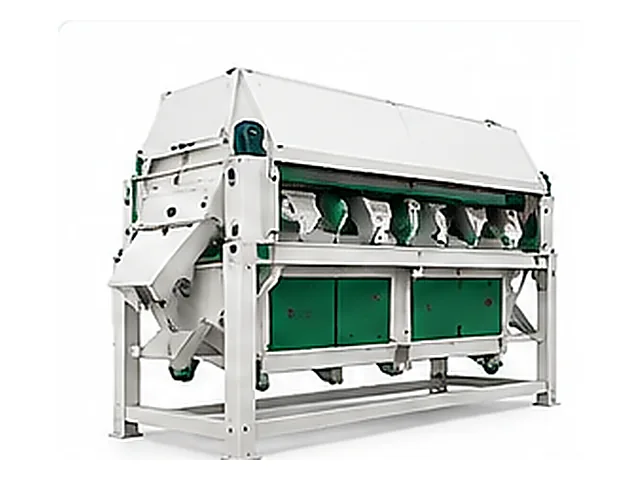
 Cleaning & Pre-Cleaning
Pre-Cleaner
Scalps long straw stems, unthreshed panicle heads, and light leaf chaff from combine-run grass seed at 5 to 40 t/h using positive-drive agitator feed hoppers.
5–40 t/h↗

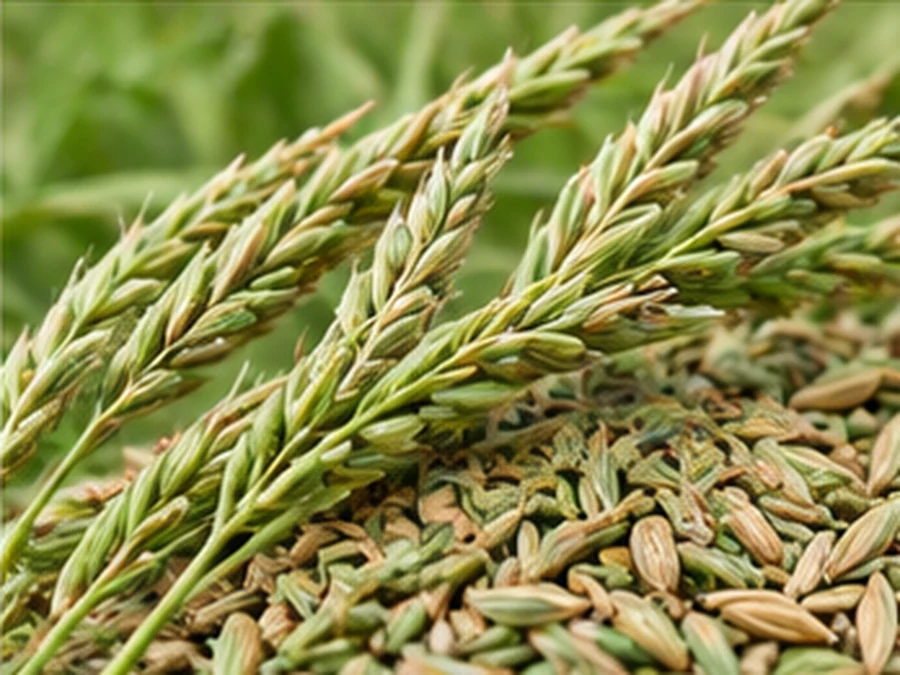
Engineering an industrial grass seed conditioning plant—spanning perennial and annual ryegrass (Lolium), tall and fine fescues (Festuca), orchardgrass (Dactylis), and Kentucky bluegrass (Poa pratensis)—requires overcoming severe hopper bridging, multiple-floret spikelets (doublets), long lemmas awns, and noxious grass weeds of nearly identical morphology. Because chaffy grass florets exhibit low bulk density and high inter-particle friction, every hopper, feeder, de-awner, air-screen cleaner, and indented cylinder battery must be purpose-built for non-free-flowing seeds.
Field-harvested grass seed lots arrive with attached awns, unthreshed multiple-floret spikelets, straw nodes, sterile empty glumes, and noxious Bromus or wild oat contaminants requiring specialized conditioning.
Achieving blue-tag turf and forage certification demands agitator-equipped intake hoppers, de-awning/brushing conditioners, long-sieve fine cleaners, multi-cylinder length graders, and specific-gravity separators.
Cleaning & Pre-CleaningScalps long straw stems, unthreshed panicle heads, and light leaf chaff from combine-run grass seed at 5 to 40 t/h using positive-drive agitator feed hoppers.
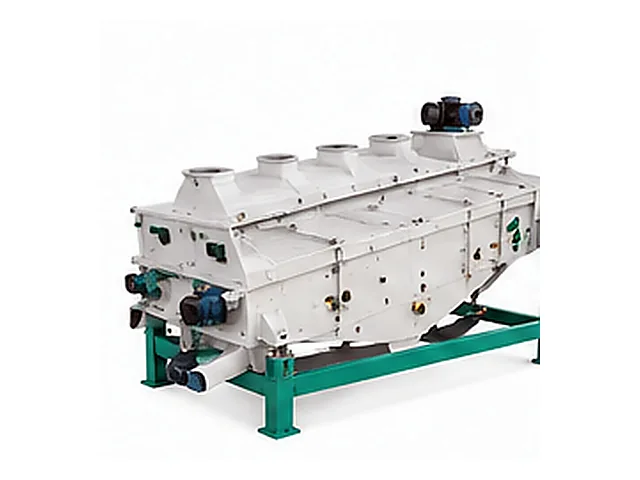 Cleaning & Pre-Cleaning
Separates slender grass florets from broadleaf and grass weeds at 3 to 30 t/h across extended multi-deck slotted and round-hole screen shoes with precision air aspiration.
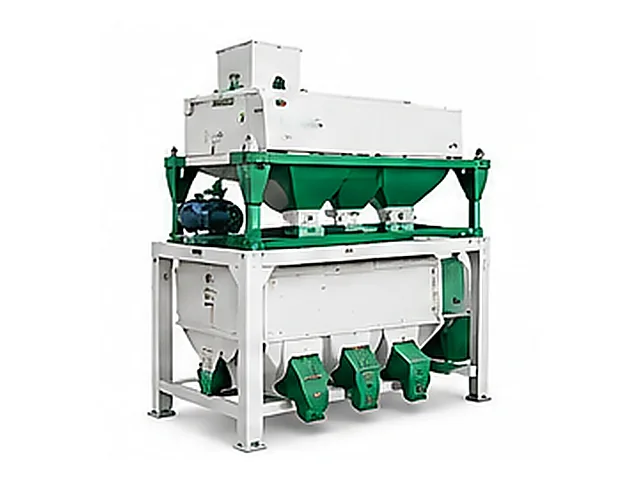 Separation
Upgrades thousand-seed weight and germination vigor at 1 to 20 t/h by floating sterile empty florets, ergot bodies, and caryopsis-shrunken seeds off the gravity deck.
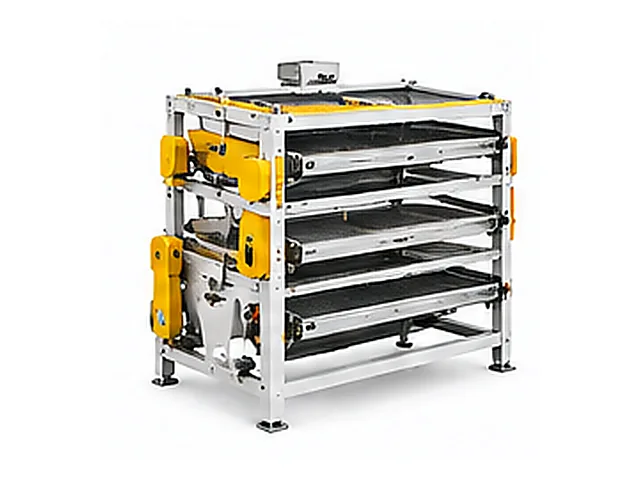 Grading & Sizing
Classifies conditioned turf and forage grass species into uniform width and thickness fractions at 2 to 30 t/h ahead of indented cylinder batteries or seed coating.
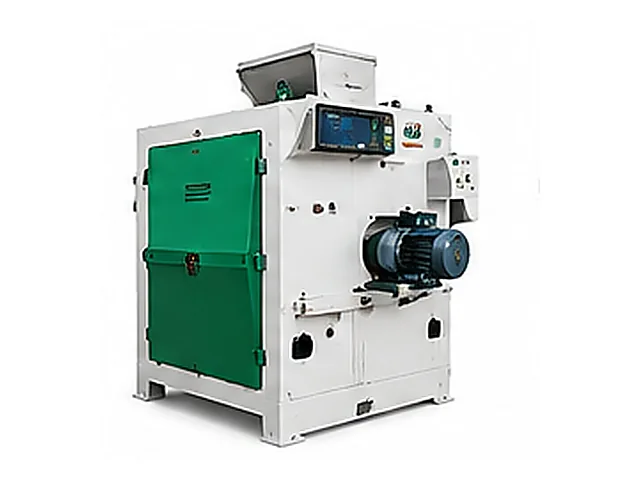 Separation
Removes rough-coated sheep sorrel, dodder, and plantain weed seeds from smooth-hulled grass lots at 2 to 35 t/h via iron-powder magnetic roll conditioning.
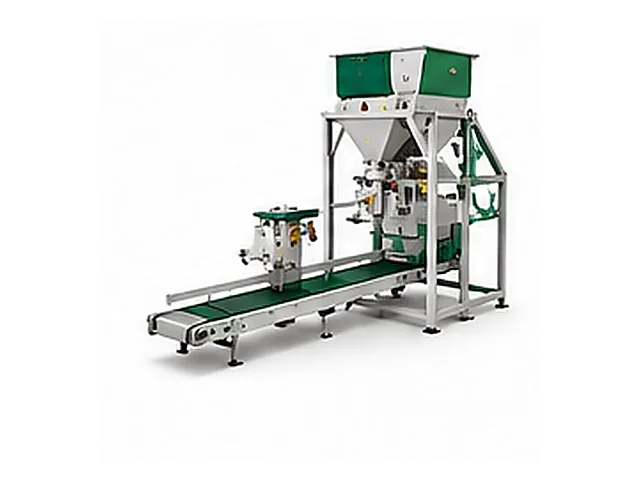 Packaging & Dispatch
Weighs and packages low-density grass seed blends into paper valve sacks, woven poly bags, or retail lawn-seed cartons using auger-assisted or vibratory net weighers.
Unlike free-flowing cereal grains or spherical oilseeds, turf and forage grass seeds consist of a caryopsis enclosed within boat-shaped lemma and palea bracts that frequently carry terminal awns, basal rachilla hairs, or attached sterile florets. Without proper mechanical conditioning, these appendages cause the seed bulk to rat-hole in bins, blind perforated screens, and trap weed seeds within doublets. A high-capacity grass seed plant combines mechanical de-awning/delinting, long-deck air-screen cleaning, cascaded indented cylinder length separation, and precision pneumatic/gravity upgrading.
Conditioning begins in agitated receiving hoppers that feed rotary de-awners or brush conditioners designed to break apart doublets (multiple-floret spikelets) and clip terminal awns without hulling the caryopsis. The free-flowing florets then pass through multi-screen air cleaners, series-connected indented cylinders that isolate short and long weed grasses, and gravity tables that reject empty glumes.
Because grass florets travel horizontally across flat screens much more slowly than round seeds and require longer residence time to orient endwise or edgewise through perforations, grass-seed cleaners utilize extended screen lengths and steeper shoe inclinations. Downstream, banks of four to twelve indented cylinders operate in series to achieve ultra-sharp length cuts.
A major quality defect in ryegrass, fescue, and bluegrass processing is unintentional dehulling—stripping the protective lemma and palea off the naked caryopsis—which rapidly degrades storage longevity and germination vigor. Operators must calibrate de-awner rotor speed, elevator discharge velocity, and aspiration pressure to strip sterile chaff while keeping the fertile floret hull intact.
Commercial grass seed facilities must often process dozens of proprietary turf cultivars and forage species across the same conditioning line over a single harvest season. Because a single stray annual ryegrass or coarse tall fescue seed can ruin a certified fine-turf Kentucky bluegrass lot, machinery must feature self-cleaning screen decks, full-length cylinder access doors, and conveyor systems free of dead pockets.
When comparing engineering proposals for a grass seed plant, processors should evaluate the effective square meters of screen surface area and total indented cylinder pocket area rather than nominal wheat-based tonnage ratings. A cleaner rated at twenty tons per hour on wheat will typically process only two to four tons per hour of chaffy fescue or ryegrass at certification purity.
Indented cylinders are the workhorse of every grass seed plant because noxious grass weeds—such as cheat/brome (Bromus), quackgrass (Elymus repens), and wild oats—are longer than cultivated ryegrass or fescue, while weeds like Poa annua and chickweed are shorter. By passing the air-screened seed through a two-stage cylinder battery, the first cylinder lifts short weeds in small pockets while the second cylinder lifts the crop seed and leaves long weeds behind.
Orchardgrass, meadow foxtail, and unconditioned Kentucky bluegrass present severe flow challenges due to cobwebby basal hairs (pubescence) or clustered spikelets. Installing a specialized de-awner/polisher with adjustable beater bars and an aspirated screen mantle rubs apart clusters and removes fine hairs so individual florets can enter cylinder indents cleanly.
Multi-stage pneumatic aspiration and specific-gravity separation provide the final upgrading step by removing sterile florets (blind seeds) that consist of empty lemma and palea hulls with no developed grain inside. Because sterile florets have the exact same length and width as fertile seeds, only terminal-velocity air channels and fluidized gravity decks can isolate them to boost pure-seed and germination percentages.
Awned and chaffy grass florets interlock under static pressure in standard conical hoppers, forming stable arches that starve downstream machines. Grass seed plants prevent bridging by utilizing steep asymmetric hopper walls, rotary pin agitators inside intake bins, positive-drive fluted roll feeders, and preliminary mechanical de-awning to remove interlocking bristles.
Most critical weed contaminants in turf and forage grass production are other grass species that share the same width and thickness as the crop seed, rendering flat screens ineffective. Indented cylinder batteries exploit millimeter differences in floret length: one set of indents lifts short weeds like annual bluegrass out of ryegrass, while a second larger-indent set lifts the ryegrass away from long brome or quackgrass.
Sterile grass florets have normal exterior lemma and palea dimensions, so they pass through sieves and indented cylinders alongside filled fertile florets. Because they lack an internal starchy caryopsis, sterile florets are significantly lighter and are extracted using precision multi-chamber aspiration channels followed by a specific-gravity table.
Naked seeds occur when the outer lemma and palea bracts are knocked loose from the caryopsis by over-aggressive de-awner beater speeds, high-velocity pneumatic conveying elbows, or tight cylinder clearances on dry seed. Maintaining safe seed moisture, using slow-speed bucket elevators instead of air transport, and tuning conditioner RPM to each species preserves hull integrity.
Because fine bluegrass, slender fescue, and heavier ryegrass segregate rapidly if dropped into a single tall silo, turf mixtures are prepared after conditioning using multi-bin loss-in-weight belt feeders discharging into a gentle horizontal paddle or ribbon mixer. Mixed turf lots are then fed directly to packaging scales via short, anti-segregation surge hoppers.