 Cleaning & Pre-Cleaning
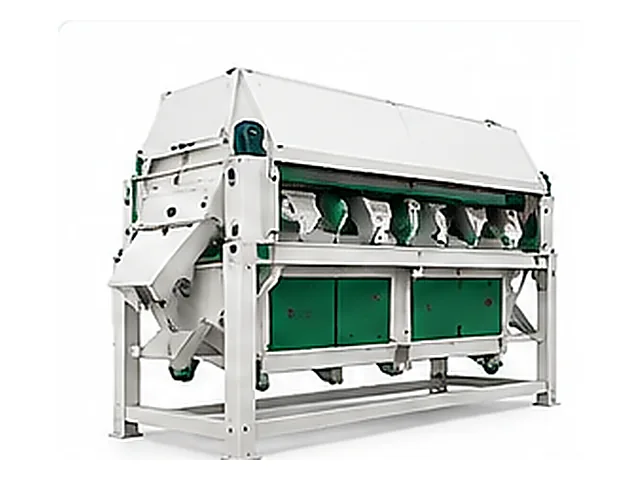
Pre-Cleaner
Scalps coarse bolting stalk segments, dried flower heads, and loose pappus fluff from field-run lettuce achenes (5–40 t/h) under low-velocity airflow.
5–40 t/h↗

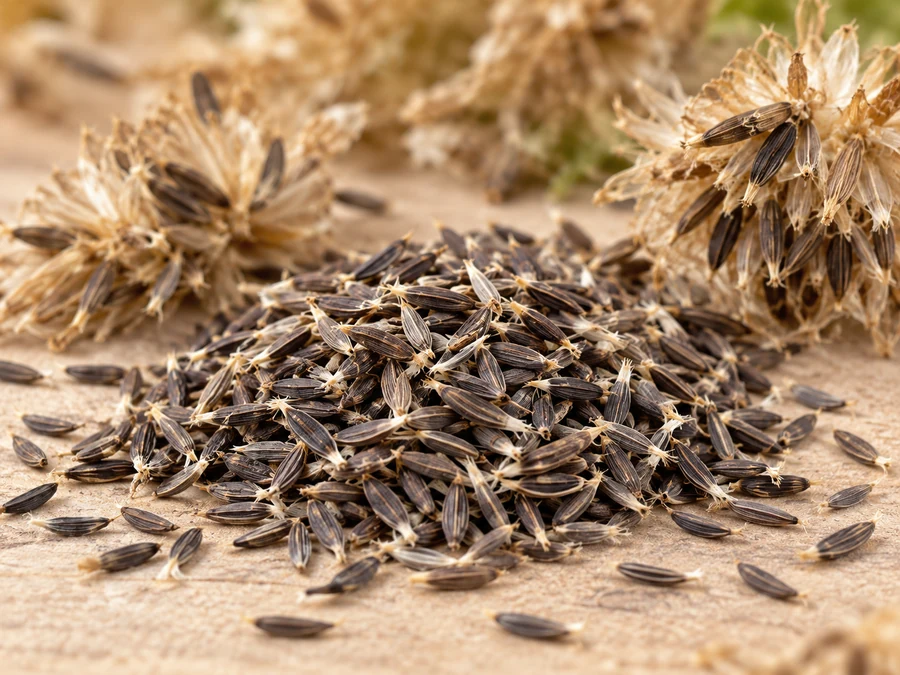
Conditioning commercial lettuce seed (Lactuca sativa) is one of the most delicate operations in the vegetable seed industry because the slender, ribbed achene (cypsela) has an extremely low thousand-seed weight (0.8 to 1.3 grams), a brittle pericarp tip, and a low aerodynamic terminal velocity that overlaps closely with floral pappus chaff and cylindrical stem fragments. An engineered lettuce conditioning line must integrate gentle de-pappusing, micro-metered air-screen cleaning, precision indented cylinder length separation, and laminar gravity upgrading ahead of rotary seed pelleting.
Combine-harvested lettuce seed arrives carrying fluffy pappus bristles, cylindrical flower-stalk segments of identical width to the achene, sterile flat husks, and sticky latex granules requiring multi-stage conditioning.
Preparing high-germination white-seeded and black-seeded lettuce cultivars for commercial greenhouse seeding or spherical clay pelleting requires ultra-gentle screening, length pocketing, and density stratification.
Cleaning & Pre-CleaningScalps coarse bolting stalk segments, dried flower heads, and loose pappus fluff from field-run lettuce achenes (5–40 t/h) under low-velocity airflow.
 Cleaning & Pre-Cleaning
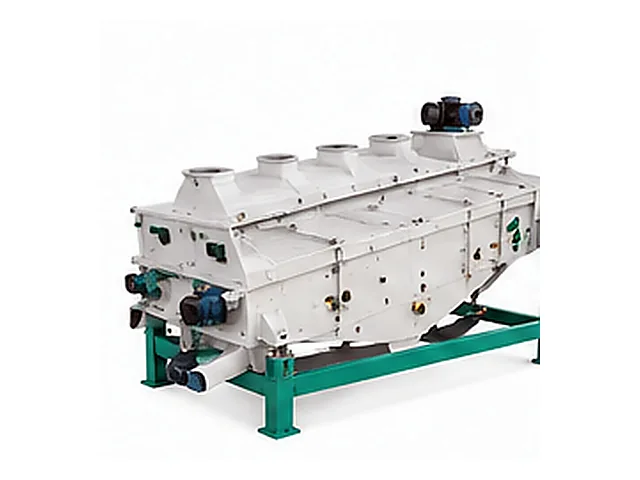
Separates slender lettuce achenes from fine dust and wide trash via slotted and miniature round-hole sieves with micro-metered aspiration (3–30 t/h).
 Separation
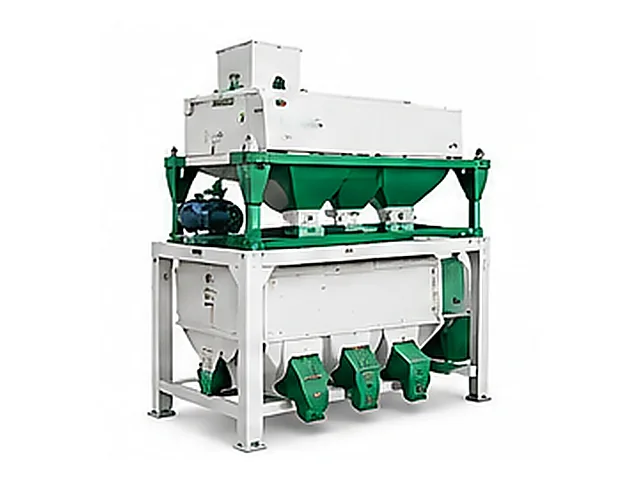
Isolates plump, fully filled lettuce achenes from flat embryoless husks across a fine-weave laminar gravity deck (1–20 t/h) to maximize lot germination.
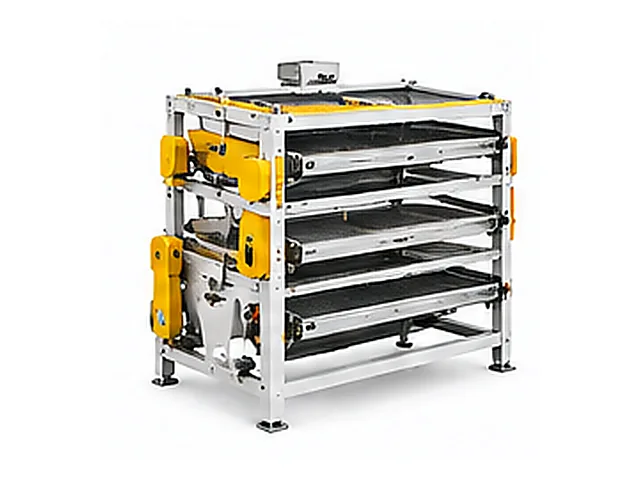 Grading & Sizing
Calibrates cleaned lettuce seed into tight width and thickness bands at 2 to 30 t/h so rotary pelleting pans build uniform spherical pellets around each achene.
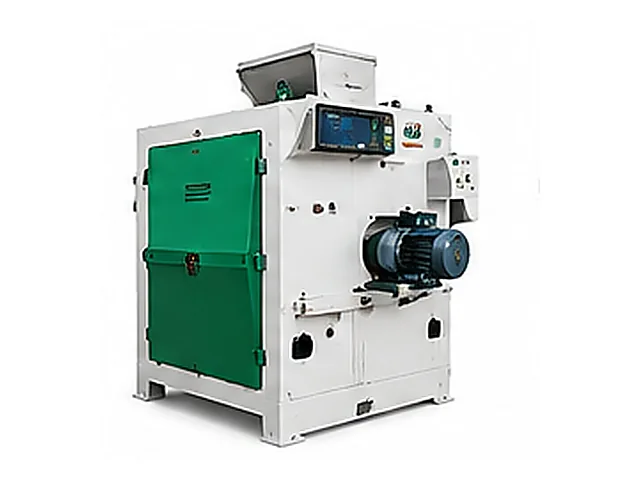 Separation
Removes rough soil granules, latex-coated clots, and sticky weed seeds from smooth lettuce achenes at 2 to 35 t/h when fine magnetic polishing is required.
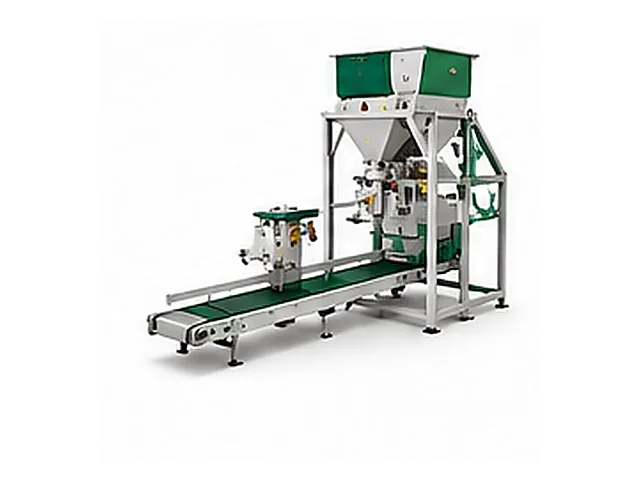 Packaging & Dispatch
Packs high-value naked or pelleted lettuce seed into hermetically sealed foil pouches, cans, or climate-controlled totes with gram-level weighing accuracy.
Nearly all commercial iceberg, romaine, butterhead, and leafy lettuce crops in modern horticulture are established using precision-pelleted seed or high-speed greenhouse tray seeders where every single missing or double plant reduces harvestable head yield. Because Lactuca sativa flowers mature unevenly across the branched panicle and exude milky latex when cut during harvest, raw seed lots contain a difficult mixture of plump mature achenes, flat unfilled hulls, latex-cemented dirt balls, and short cylindrical stem pieces that match the exact 1.0 mm width of the seed.
Conditioning starts with gentle scalping and low-velocity aspiration to strip off silky pappus parachutes and coarse bolting straw without blowing light achenes into the dust collector. Multi-deck fine air-screen cleaners then establish precise width and thickness cuts, followed immediately by indented cylinders that separate short stem rods and fine-mesh gravity tables that discard empty seed coats.
On a flat air-screen cleaner, broken flower-stalk segments that measure 1.0 mm in diameter and 6 to 10 mm in length slip endwise through upper round-hole screens and ride over lower slotted screens right alongside 4 mm lettuce achenes. Only precision indented cylinders—or trieur batteries—can pocket the shorter lettuce seeds while rejecting the longer stalk rods.
Lettuce achenes have a thin, ribbed pericarp wall protecting an embryo that is highly sensitive to mechanical impact, elevated drying temperatures, and high relative humidity. Conditioning plants must avoid pneumatic seed transport, maintain cool ambient processing room temperatures to prevent secondary thermodormancy, and provide solvent-free cleaning access to remove dried lactucarium latex gum from screens.
Preparing lettuce seed for rotary pan pelleting imposes the strictest dimensional and purity requirements in vegetable seed engineering. If a single cylindrical stem fragment of the same length as an achene remains in the clean seed lot, the pelleting pan will coat that dead stem with clay and polymer just like a viable seed, resulting in a blind hole in the grower's field or greenhouse tray.
Because lettuce cultivars exist in both white/cream-seeded and charcoal/black-seeded genotypes, optical color sorting is highly effective when removing dark weed seeds or dark soil/latex granules from white-seeded varieties, or pale straw stems from black-seeded varieties. Combining high-resolution trichromatic cameras with mechanical length and density separation eliminates virtually all non-seed particles.
Achieving clean separation between 3.5–4.5 mm lettuce achenes and 5.5–9.0 mm floral stem segments requires selecting indented cylinder shells with laser-drilled or stamped trapezoidal pockets matched to the exact cultivar length. Operating two cylinders in series—first lifting any tiny round weed seeds in 1.5 mm pockets, then lifting the lettuce achenes in 4.0 to 4.5 mm pockets while long stems discharge out the tail—guarantees stem-free seed.
After width, thickness, and length calibration, the lettuce lot still contains immature achenes harvested from late-blooming tertiary flower heads that have full exterior length but shriveled, paper-thin embryos. Feeding the calibrated stream onto a high-frequency, fine-mesh gravity table allows upward laminar air to float these flat, low-mass husks to the light reject spout while dense, viable seeds travel uphill.
During harvest of green-stemmed lettuce seed crops, sticky milky latex sap oozes from cut stalks and binds fine soil dust and pappus hairs into dark rubbery pellets matching the size and density of viable achenes. When gravity tables cannot fully separate these heavy latex-soil balls, dry magnetic separation or bichromatic optical sorting provides the decisive final clean-up.
Broken lettuce flower stalks often share the exact 0.9 to 1.2 mm cross-sectional width and thickness of a lettuce achene, allowing long stem pieces to tip vertically through upper round-hole sieves and sit atop lower slotted sieves. They are removed downstream by passing the screen-cleaned lot through an indented cylinder, whose pockets lift the shorter 4 mm lettuce achenes while leaving longer 6 to 12 mm stalks behind.
Unfertilized or late-maturing lettuce flowers produce full-length achene shells that lack a plump internal embryo, depressed germination counts without looking visibly smaller on flat screens. Stratifying the size-graded lot on a fine-mesh specific-gravity separator uses controlled upward airflow and deck oscillation to float light, embryoless husks away from heavy, high-vigor seeds.
During seed pelleting, fine clay powder and water binder adhere around every individual particle tumbling inside the coating pan. Any stem fragment or latex ball left in the raw seed batch gets built up into a spherical pellet indistinguishable from a real pelleted seed, directly reducing usable plant stand in precision vacuum planters.
When lettuce stems are swathed or combined, milky latex sap gums together soil dust and chaff into dense, dark granules that often match the size and specific weight of viable achenes. Because these granules have a rough, soil-impregnated surface and distinct spectral reflectance, they are extracted using a combination of dry high-intensity magnetic roll separation and trichromatic/NIR optical sorting.
Because lettuce achenes weigh only about one gram per thousand seeds, aspiration channels must use expanded settling chambers and micro-adjustable dampers so viable seed is never pulled into the dust baghouse. Additionally, processing and storage rooms should be dehumidified and kept cool to prevent moisture reabsorption and heat-induced thermodormancy.