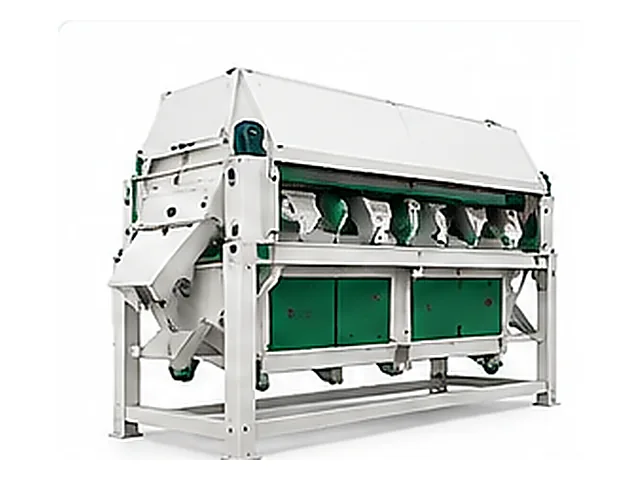
 Cleaning & Pre-Cleaning
Pre-Cleaner
Scalps dry umbel stalks, intact seed capsules, and papery perianth chaff from threshed Allium lots (5–40 t/h) using gentle screen motion.
5–40 t/h↗

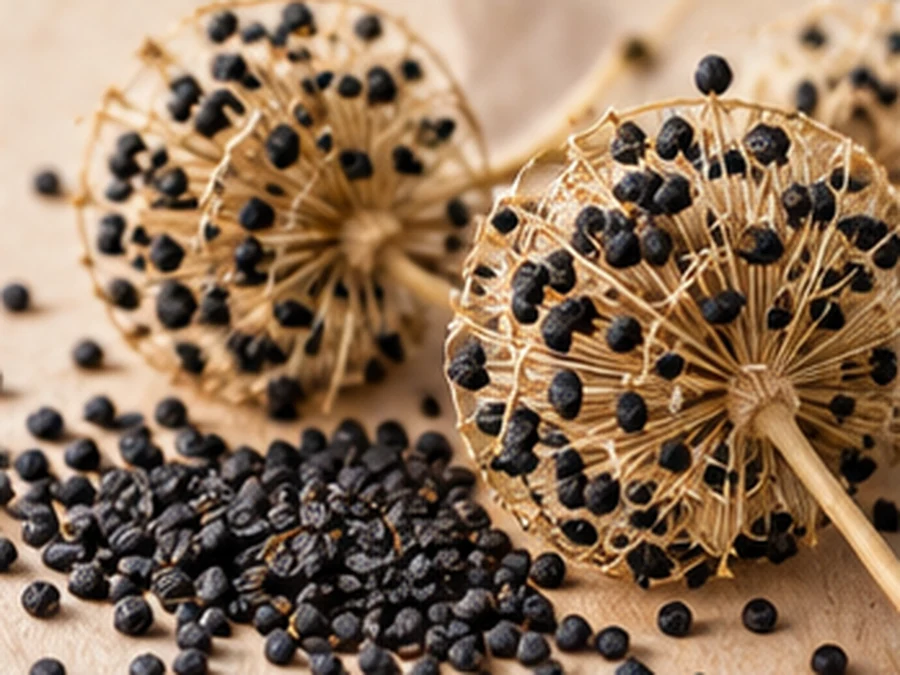
Engineering a commercial onion seed conditioning line (Allium cepa)—as well as related leek, chive, and bunching onion seeds—presents a distinct technical challenge: because every onion seed possesses a uniformly jet-black, angular, wrinkled seed coat regardless of internal embryo health, optical color sorters cannot distinguish viable seeds from dead, shriveled, or unfertilized ones. Consequently, maximizing germination vigor and pure-seed recovery relies entirely on gentle capsule de-hulling, precision air-screen sizing, indented cylinder pedicel removal, and high-sensitivity specific-gravity stratification.
Field-harvested onion umbels arrive containing three-valved capsule hulls, slender pedicel flower stalks, receptacle knobs, and light embryoless black seeds requiring mechanical and density conditioning.
Because optical cameras cannot see inside the opaque black testa of Allium cepa, conditioning lines rely on precision air channels, woven-wire sieves, length cylinders, and laminar gravity tables.
Cleaning & Pre-CleaningScalps dry umbel stalks, intact seed capsules, and papery perianth chaff from threshed Allium lots (5–40 t/h) using gentle screen motion.
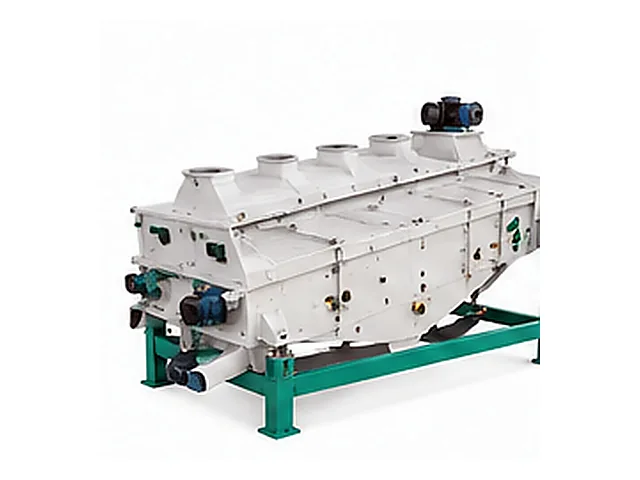 Cleaning & Pre-Cleaning
Separates angular black onion seeds from fine sand and floral debris at 3 to 30 t/h across precision round-hole and slotted woven-wire sieves.
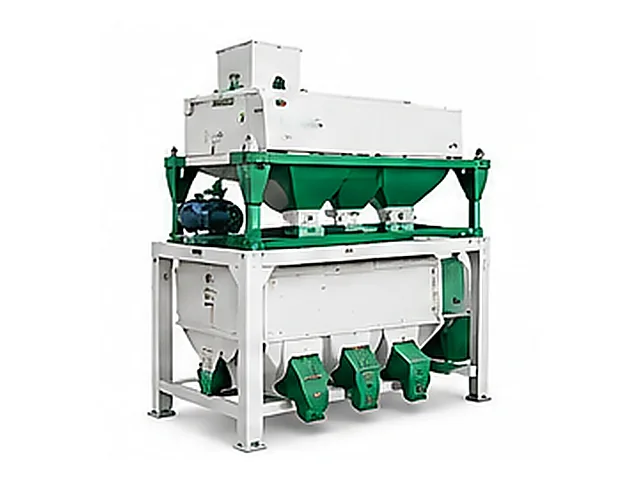 Separation
Stratifies size-calibrated onion seed by specific weight at 1 to 20 t/h, floating shriveled, unfertilized, and low-vigor black seeds off the gravity deck.
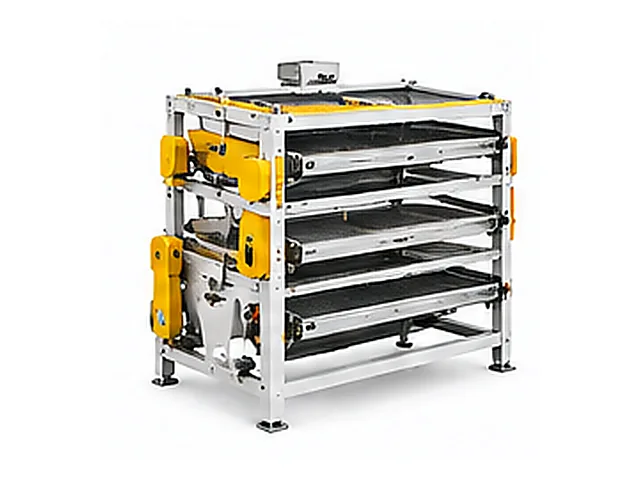 Grading & Sizing
Classifies conditioned Allium seed into tight 0.25 mm dimensional grades (2–30 t/h) required for uniform film-coating, encrusting, and precision drilling.
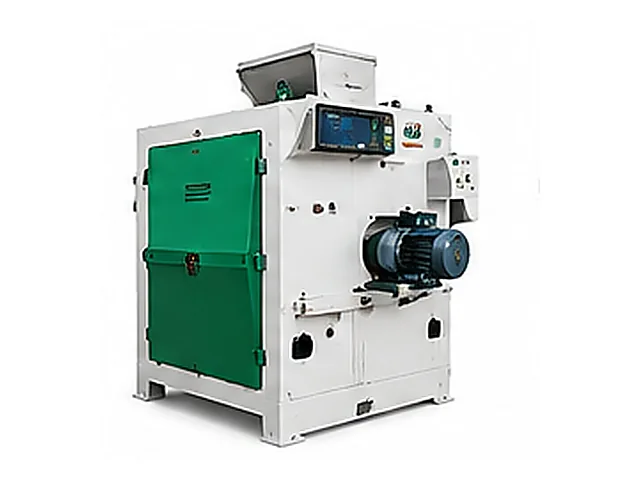 Separation
Extracts soil micro-clods, rough weed seeds, and capsule receptacle fragments from onion seed at 2 to 35 t/h via dry or micro-dosed magnetic rolls.
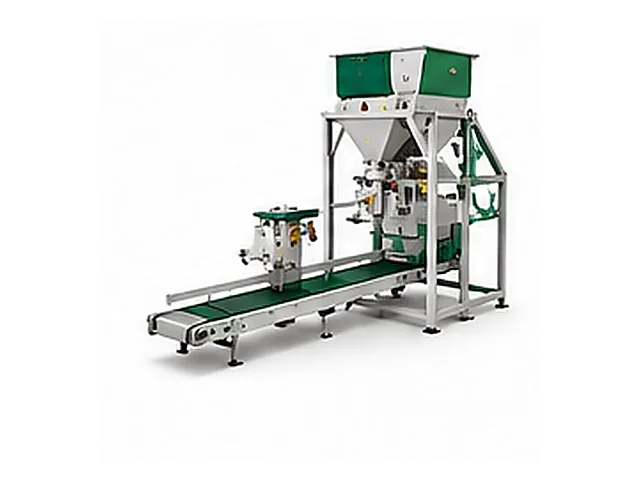 Packaging & Dispatch
Fills high-value hybrid onion seed into moisture-proof foil-laminated bags, sealed tins, or bulk intermediate containers with precision net-weight scales.
Among all major vegetable seed crops, Allium cepa has one of the shortest natural storage lifespans and the most brittle seed coat when over-dried. Harvested umbel heads produce irregular, three-sided pyramid-shaped black seeds alongside a heavy load of woody pedicel stalks, globe-shaped umbel receptacle cores, and papery capsule valves. Because unfertilized or heat-blasted onion seeds develop the exact same black outer testa as viable seeds, an industrial onion seed line must be engineered around multi-stage aerodynamic and specific-gravity density separation.
Conditioning begins with gentle capsule opening and scalping to remove umbrella-like umbel rays without cracking the brittle black seed coat. Fine air-screen cleaners then calibrate seed width and thickness while dual aspiration channels lift papery capsule shells, followed by indented cylinders that remove short pedicel stems and specific-gravity tables that isolate high-germination heavy seed.
Because onion seeds are sharply angled and roughly 2.5 to 3.0 mm across with a thousand-seed weight of 3.2 to 4.5 grams, they tumble differently on screens and indent pockets than smooth round brassicas. Sieve decks require active ball-tray or brush cleaning beneath woven-wire meshes so angular seed tips do not wedge inside square apertures during continuous runs.
Microscopic cracks in the black onion seed coat—invisible to the naked eye—cause rapid lipid peroxidation during storage and catastrophic seedling abnormality during germination tests. Engineers eliminate pneumatic conveying, limit elevator belt speeds, and rely on multi-fan laminar gravity tables (and, for elite hybrid lots, liquid density separation) to push lot germination above ninety percent.
Commercial bulb onion growers rely on pneumatic precision planters or pelleted/encrusted seed to establish exact in-row plant spacing, which directly governs harvest bulb diameter. Delivering seed that meets these planting tolerances requires grading the cleaned onion lot into tight 0.25 mm width bands before feeding each individual band onto the specific-gravity separator.
When comparing supplier proposals for an Allium seed facility, processors must verify that the air-screen cleaner and gravity separator feature independent, high-precision air volume controls and smooth, ledge-free product contact surfaces. Because hybrid onion seed carries extremely high per-kilogram value, any seed loss into the aspiration cyclone or gravity tailing stream must be recoverable via controlled re-run circuits.
During combine harvesting or stationary umbel threshing, the globe-shaped floral receptacle breaks into corky nodules and hundreds of slender pedicel stalks that match the cross-sectional thickness of an onion seed. While flat air-screen cleaners remove oversized umbel stalks and fine dust, an indented cylinder is essential to pocket the 3 mm angular onion seeds and discharge longer 5 to 10 mm pedicel stems.
Umbel receptacle cores and dried flower ovaries often match both the diameter and length of an onion seed, passing right through screens and indented cylinders. Because these spongy floral fragments have a lower specific density than solid endosperm-filled onion seeds, a carefully tuned rectangular or triangular gravity table floats them toward the low-density tail alongside shriveled, non-viable black seeds.
Before locking in final gravity deck splitter positions on an onion lot, seed technologists draw samples every five centimeters along the discharge lip and perform rapid cut-tests, X-ray evaluations, or accelerated germination assays. Mapping the exact boundary where hollow and shrunken-endosperm seeds transition to plump, ivory-white endosperms maximizes pure-live-seed recovery without sacrificing germination percentage.
Both healthy, high-vigor onion seeds and unfertilized, shriveled, or heat-killed onion seeds develop the exact same opaque, jet-black, wrinkled outer seed coat (testa). Because optical cameras only inspect surface color and reflectance, they can eject pale straw stems or light soil clods, but separating viable from non-viable black onion seeds requires specific-gravity density separation.
Slender pedicel stalks that slip endwise through round-hole screens are extracted by passing the lot through an indented cylinder, which lifts the short angular onion seeds in hemispherical pockets while rejecting longer stems. Spongy umbel receptacle cores that match both the width and length of the seed are floated off downstream on an inclined specific-gravity separator.
An onion umbel produces seeds ranging from 1.8 mm to over 3.0 mm depending on floret position and pollination timing. If wide size ranges are fed together onto a gravity deck, a large half-empty seed weighs as much as a small fully filled seed, causing them to mix in the middle of the deck; pre-sizing into 0.25 mm bands ensures sharp density stratification.
The angular black testa of onion seed becomes extremely brittle at low moisture contents, and impact cracks over the radicle tip severely reduce storage life and field emergence. Conditioning lines protect seed coat integrity by eliminating pneumatic transport, running slow-speed belt-and-bucket or vibratory elevators, and cushioning all gravity chute transitions.
Onion and leek seeds deteriorate faster under warm, humid ambient conditions than almost any other vegetable crop. Immediately after gravity upgrading and caliber grading, conditioned lots should be dried to 6.0%–7.5% equilibrium moisture and sealed inside vapor-proof foil-laminated packaging or stored in dehumidified cold rooms maintained at 5–10 °C and below 30% relative humidity.