 Cleaning & Pre-Cleaning
Pre-Cleaner
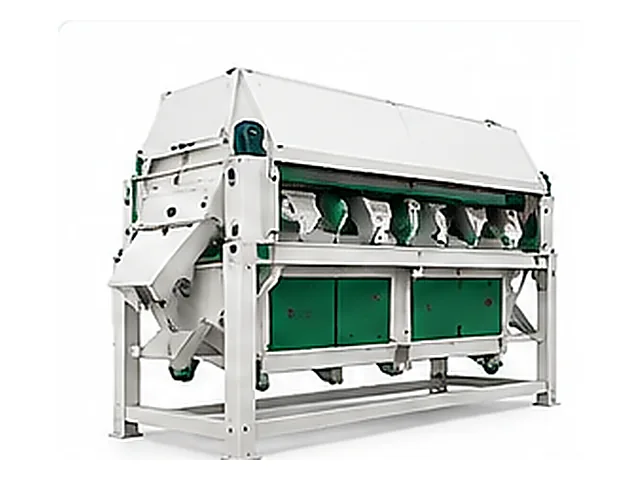
Breaks apart dried seed clumps and scalps coarse dried tomato skin flakes and placenta trash at 5 to 40 t/h following initial rotary brushing.
5–40 t/h↗

Engineering an industrial tomato seed conditioning line (Solanum lycopersicum) begins where wet fruit extraction, acid/enzymatic fermentation, washing, and seed drying end: dried tomato seeds are covered in dense epidermal trichomes (fine surface hairs or pubescence) that cause individual seeds to mat together into clumps and trap dried placenta skins. Before precision air-screen grading, multi-fan gravity upgrading, or optical color sorting can operate, the dry conditioning line must singulate the lot through controlled rotary brushing (de-fuzzing) without scorching the flattened oval seed coat.
Batch-dried tomato seed arrives from wet extraction lines with clumped pubescent seed clusters, dried tomato peel flakes, placenta fibers, and flat embryoless seed coats requiring de-fuzzing and density upgrading.
Conditioning high-value F1 hybrid and open-pollinated tomato seed lots requires gentle de-hairing/brushing units, micro-air-screen sifters, fine-mesh gravity tables, and trichromatic optical sorters.
Cleaning & Pre-CleaningBreaks apart dried seed clumps and scalps coarse dried tomato skin flakes and placenta trash at 5 to 40 t/h following initial rotary brushing.
 Cleaning & Pre-Cleaning
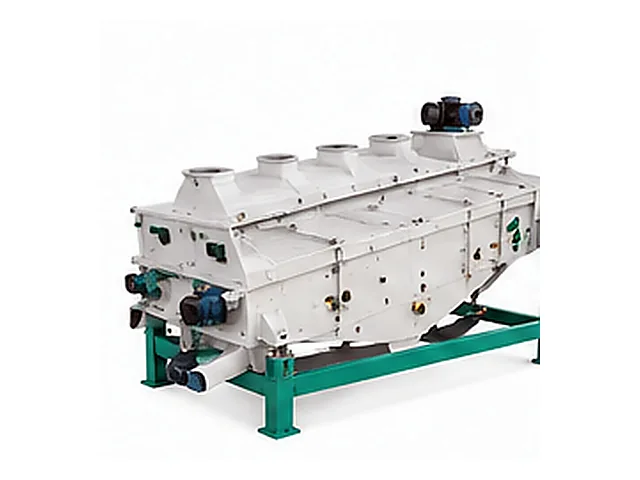
Grades singulated, de-fuzzed tomato seeds by exact thickness and width (3–30 t/h) via slotted and round-hole sieves paired with fine air aspiration.
 Separation
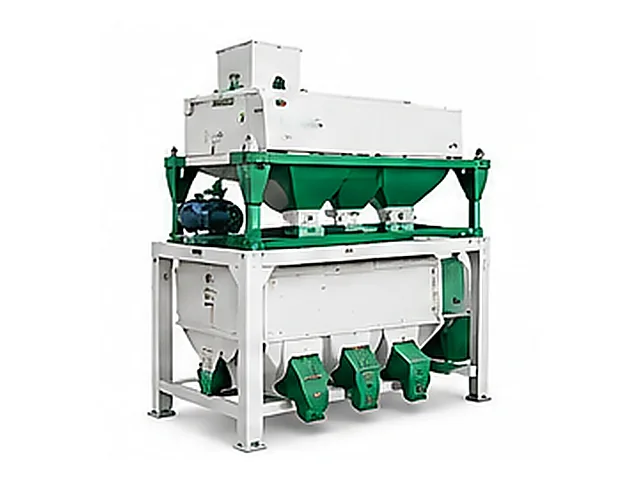
Eliminates flat, unfertilized, and partially filled tomato seeds across a laminar-airflow gravity deck (1–20 t/h) to achieve over 95% greenhouse germination.
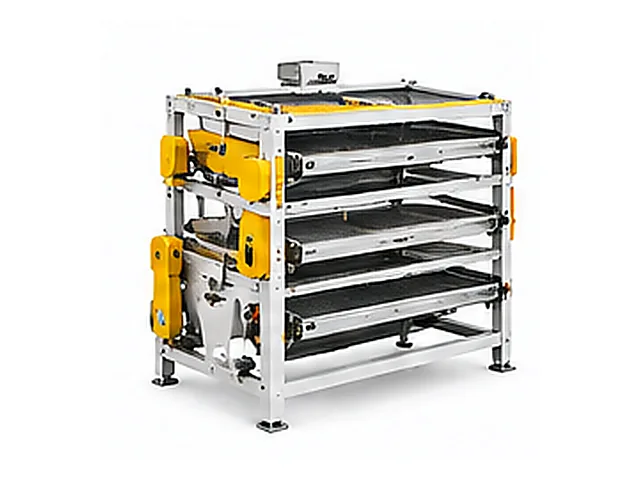 Grading & Sizing
Calibrates cleaned tomato seed into tight dimensional fractions (2–30 t/h) for high-speed vacuum tray seeders, polymer film-coating, and rotary pelleting.
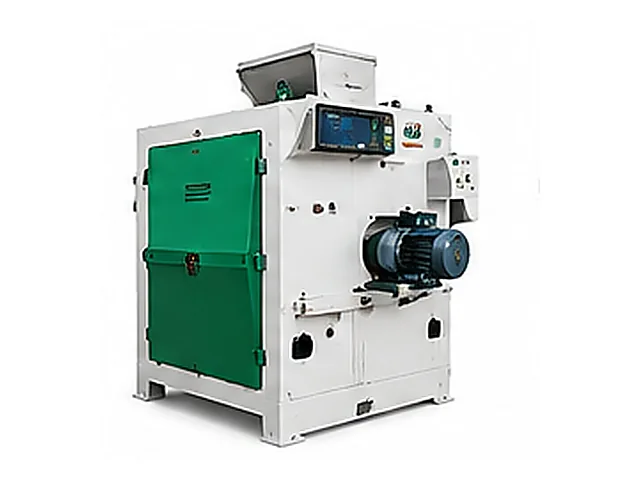 Separation
Separates dark soil specks, rough weed seeds, and adherent pulp crusts from tomato seed lots (2–35 t/h) whenever dry magnetic polishing is needed.
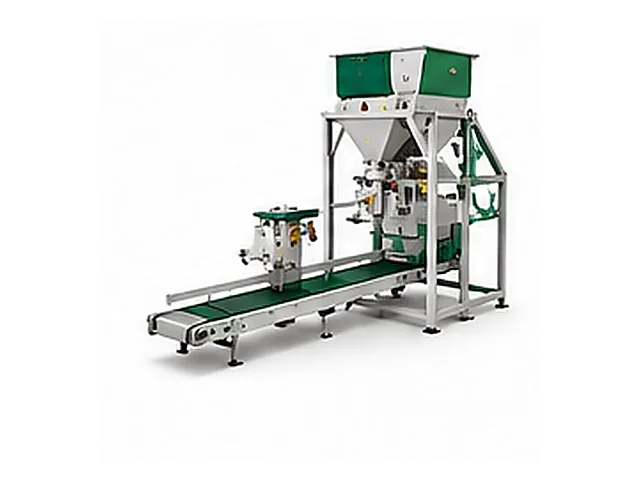 Packaging & Dispatch
Packages high-value hybrid tomato seed into counted foil-laminated pouches, vacuum-sealed tins, or breeder containers using optical seed counters and micro-scales.
Commercial F1 hybrid tomato seed is among the highest-value agricultural commodities per kilogram in the world, sold by individual seed count to automated greenhouse transplant nurseries where every non-germinating or late-emerging seedling costs the grower a productive plant space. After wet extraction and fermentation remove the mucilaginous gel sac around each seed, hot-air or fluid-bed drying leaves the seeds locked in clusters by their natural silky surface hairs (trichomes) and mixed with dried fruit skin, vascular fibers, and light, aborted seed coats.
Dry conditioning starts in a horizontal rotary brush or de-fuzzer that rubs clusters apart and buffs off protruding surface hairs while an integrated aspiration hood evacuates the liberated trichome dust. Now free-flowing and smooth, the singulated tomato seeds pass across fine air-screen cleaners, indented cylinders, and specific-gravity tables that reject flat, empty seed coats.
Because greenhouse hybrid tomato seed lots frequently weigh between 5 kilograms and 250 kilograms and carry immense genetic value, conditioning machines cannot tolerate hidden dead zones or rough welds. Equipment must feature stainless steel contact surfaces, tool-free sieve release, slide-out brush rotors, and complete compressed-air cleanout visibility between parental and hybrid lines.
Over-brushing or excessive residence time inside the de-fuzzing cylinder generates frictional heat and abrades the thin seed coat directly over the curved embryo radical, inducing abnormal seedlings. Simultaneously, abraded tomato seed hairs form a fine, allergenic organic dust that must be captured immediately at the brush mantle and cleaner hoods via HEPA-grade cartridge filtration.
Removing the fine epidermal hairs from tomato seed during rotary brushing serves two vital purposes beyond simple cluster breakup. First, a smooth, de-fuzzed seed flows evenly through air-screen perforations and across gravity separator decks without matting; second, removing surface hairs prevents air bubbles from being trapped beneath polymer film coatings and ensures uniform clay buildup during rotary pelleting.
When evaluating machinery for a solanaceous vegetable seed facility (processing tomato, pepper, and eggplant seeds on shared lines), engineers prioritize modular table-top or compact industrial sifters and gravity decks with interchangeable deck frames. Having dedicated woven-wire gravity decks and laser-cut slotted screens for each solanaceous species guarantees maximum clean-seed recovery with minimal middlings recycle.
Flat, lens-shaped tomato seeds present a unique aerodynamic profile on air-screen cleaners and specific-gravity tables. On the air-screen machine, oblong slotted sieves separate seeds by thickness—dropping thin, paper-like aborted seeds while retaining plump, fully developed embryos—and round-hole sieves calibrate exact seed width so the downstream gravity table receives a uniform particle bed.
On the specific-gravity separator, upward laminar airflow and high-frequency deck oscillation stratify the de-fuzzed tomato seeds by internal endosperm density and embryo coiling completeness. X-ray verification of samples taken across the gravity discharge lip allows operators to isolate partially filled, free-space seeds into the middlings or reject cut, elevating commercial lot vigor.
Dark-discolored seeds caused by internal fruit fermentation overheating, pre-harvest sprouting, or fungal infection often share the exact thickness and specific weight of healthy tan-yellow tomato seeds. Passing the gravity-upgraded lot through a high-resolution trichromatic optical sorter ejects dark brown, black-spotted, or pulp-stained seeds prior to fungicidal film coating and optical seed counting.
After wet fermentation, washing, and drying, natural tomato seeds remain covered in fine silky epidermal hairs (trichomes) that cause individual seeds to stick together in clumps and bridge inside hoppers. A low-speed rotary de-fuzzing brush gently breaks apart these dried clusters and buffs off the surface hairs so single, free-flowing seeds can be sized accurately on screens and coated smoothly.
Unfertilized or prematurely harvested tomato seeds have normal external width and length but lack a dense, fully coiled internal embryo and endosperm. Conditioning lines first use oblong slotted sieves on the air-screen cleaner to drop wafer-thin empty husks by thickness, and then stratify the remaining lot on a fine-mesh specific-gravity table to float low-density seeds away from heavy, high-germination kernels.
During rotary de-fuzzing, any dried pulp or skin adhering to the seed coat is loosened and aspirated directly into the dust collection hood. Remaining coarse peel flakes are removed by the top round-hole screen of the fine cleaner, while small dense placenta granules of similar size to the seed are rejected on the gravity table and trichromatic optical color sorter.
In flattened oval tomato seeds, the tip of the embryonic radicle lies close to the margin of the seed coat and can be bruised by excessive brush pressure or high-speed impact. Operators use soft adjustable nylon bristles, regulate rotor RPM via variable-frequency drives, monitor seed temperature to prevent frictional heating, and avoid pneumatic conveying pipes.
Greenhouse transplant nurseries require smooth, hair-free seeds calibrated into tight 0.25 mm width bands so vacuum seeder needles pick up exactly one seed per cell without plugging. After de-fuzzing, screen calibration, gravity upgrading, and optical sorting, tomato lots are typically treated with a thin, low-dust polymer film coating or pelleted into uniform spheres before optical counting and foil pouching.