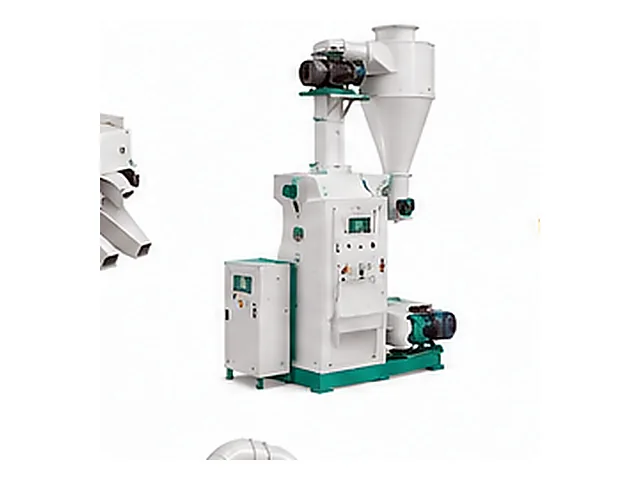
 Air Management & Dust Collection
Aspiration Channel
Counter-current airflow column engineered to lift light chaff, hollow kernels, and loose pericarp fragments out of incoming grain streams.
3–40 t/h↗

Industrial aspiration networks, cyclone collectors, and filtration units regulate process airflows while capturing airborne chaff, husk fragments, and fine particulate across grain and seed conditioning plants.
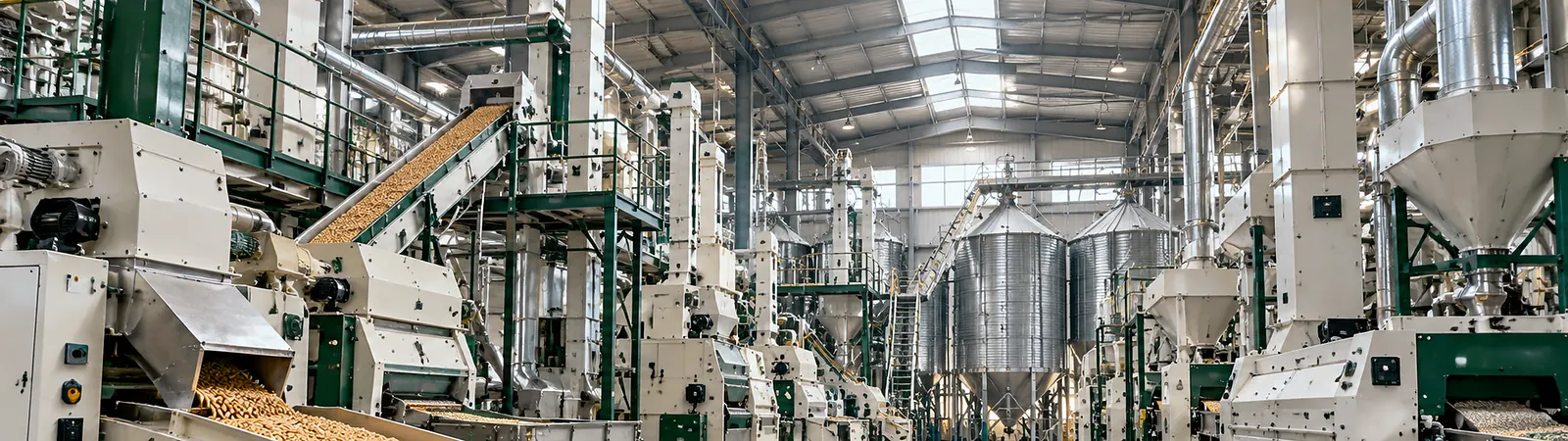
Review individual aerodynamic separators, baghouse collectors, fans, ductwork modules, and inline magnetic traps below to match airflow volume, static pressure, and dust-containment requirements for your facility.
Air Management & Dust CollectionCounter-current airflow column engineered to lift light chaff, hollow kernels, and loose pericarp fragments out of incoming grain streams.
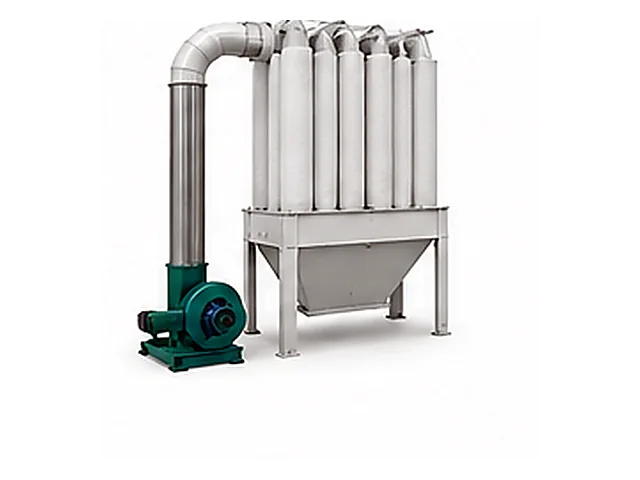 Air Management & Dust Collection
Fabric sleeve filtration housing designed to trap suspended organic dust from aspiration exhaust trunks prior to atmospheric discharge.
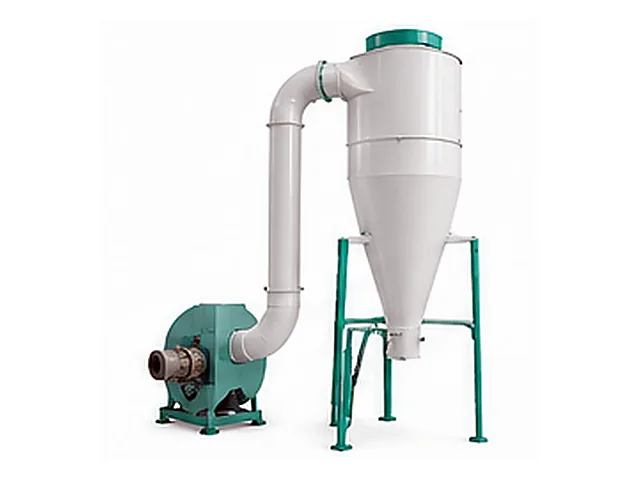 Air Management & Dust Collection
Closed-loop pneumatic separator that recirculates process air internally, reducing exhaust filtration load and thermal losses in cleaning towers.
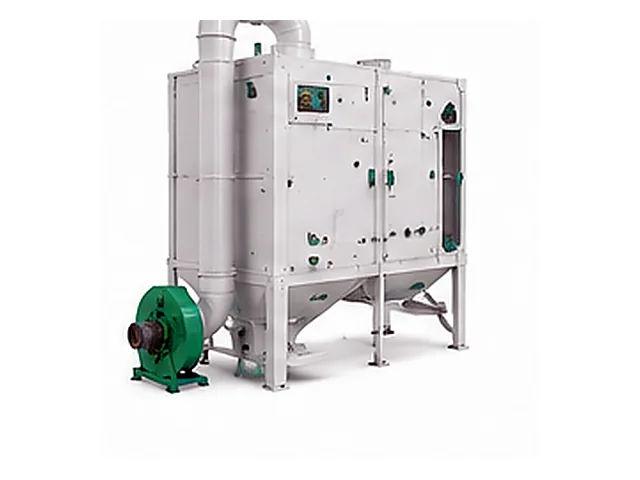 Air Management & Dust Collection
High-efficiency radial impeller fan built to generate stable static pressure and volumetric flow across multi-branch aspiration ducting.
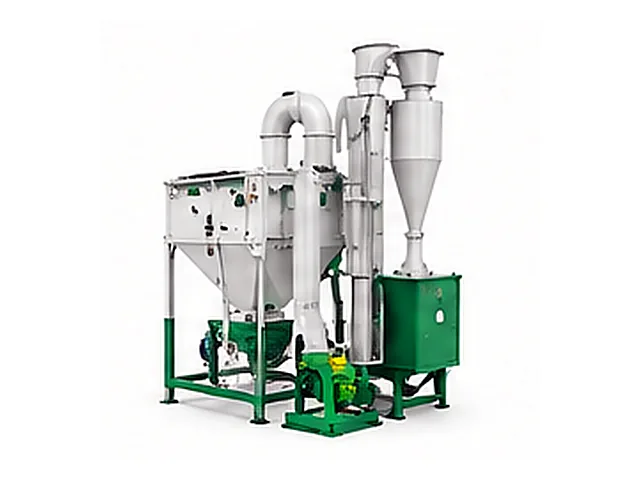 Air Management & Dust Collection
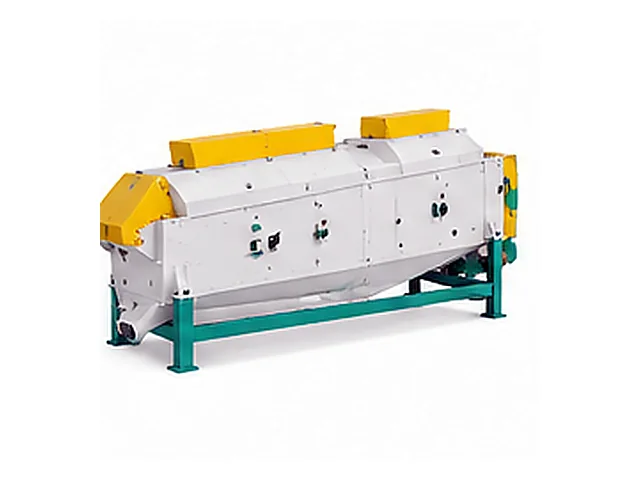 Air Management & Dust Collection
Multi-bar neodymium magnetic grid installed inside hoppers and gravity spouts to intercept ferrous wire, bolts, and scale flakes.
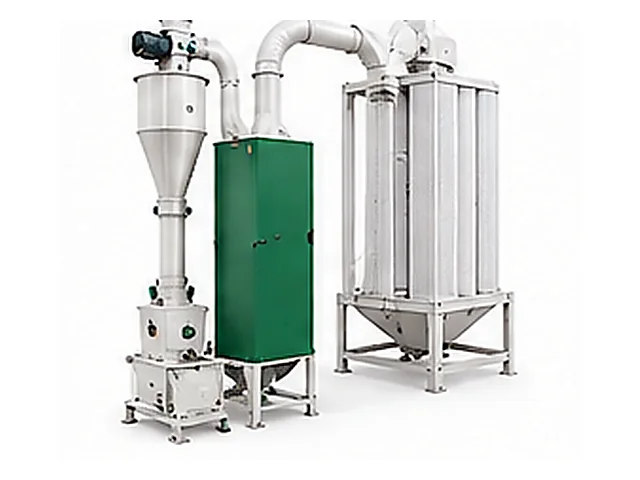 Air Management & Dust Collection
Standardized galvanized steel spouting, bends, diverters, and quick-clamp joints for routing grain and pneumatic aspiration lines.
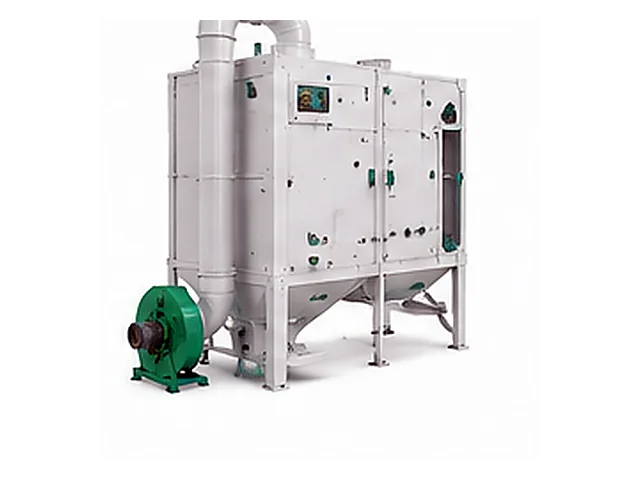 Air Management & Dust Collection
Automatic compressed-air pulse filter that periodically cleans filter media online during continuous high-dust grain receiving and milling runs.
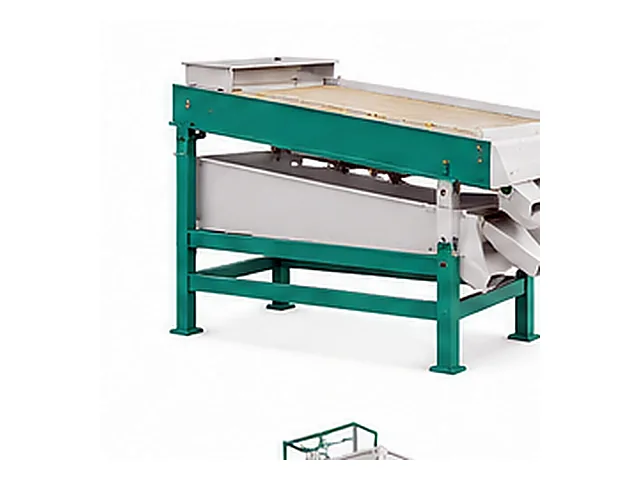 Air Management & Dust Collection
Aerodynamic density chamber calibrated to separate cracked shells and loose hulls from dehulled oilseeds, tree nuts, and pulses.
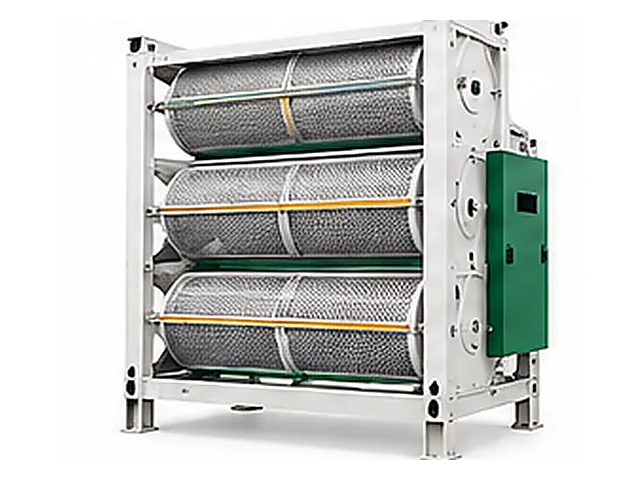 Air Management & Dust Collection
Cylindrical permanent magnet cartridge housed in a vertical stainless chute to capture tramp iron from high-velocity free-falling flows.
 Air Management & Dust Collection
Multi-stage cascaded baffle column providing repeated cross-flow air washing to strip light admixture from dense seeds and granules.
Controlled upward air currents lift low-density fractions such as loose seed coats, empty glumes, straw nodes, insect-hollowed kernels, and suspended harvest dust while allowing sound, dense kernels to discharge downward.
Effective particulate capture maintains workplace visibility, prevents fine organic dust accumulation on mechanical drives and optical sensors, mitigates combustible dust hazards, and keeps exhaust emissions within local environmental limits.
Sizing an extraction network requires summing the individual air volumes of all connected cleaners and transfer points while calculating frictional pressure drops across duct runs, elbows, cyclones, and filter media.
Existing plants can integrate supplemental aspiration hoods or closed-circuit aspirators once engineers verify available fan curve margin, duct routing clearances, airlock discharge geometry, and electrical panel capacity.
Differential pressure trends across the tube sheet, incoming crop moisture, oil or resin content in the dust, compressed-air dryness for pulse jets, and daily runtime hours dictate cleaning and media change intervals.