 Conveying, Elevation & Storage
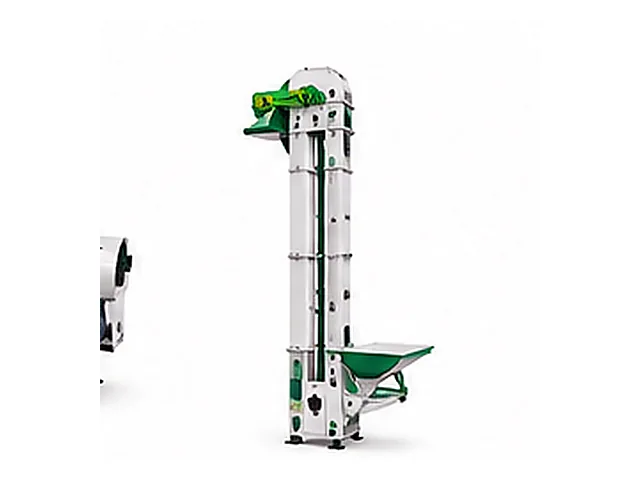
Bucket Elevator
Vertical belt-and-bucket leg engineered to lift free-flowing grain and seed between pit intake, cleaner towers, and storage bins.
5–100 t/h↗

Gentle vertical elevation, horizontal mechanical conveying, and modular buffer storage preserve seed germination and kernel integrity while maintaining balanced, contamination-free material transfers between process stages.
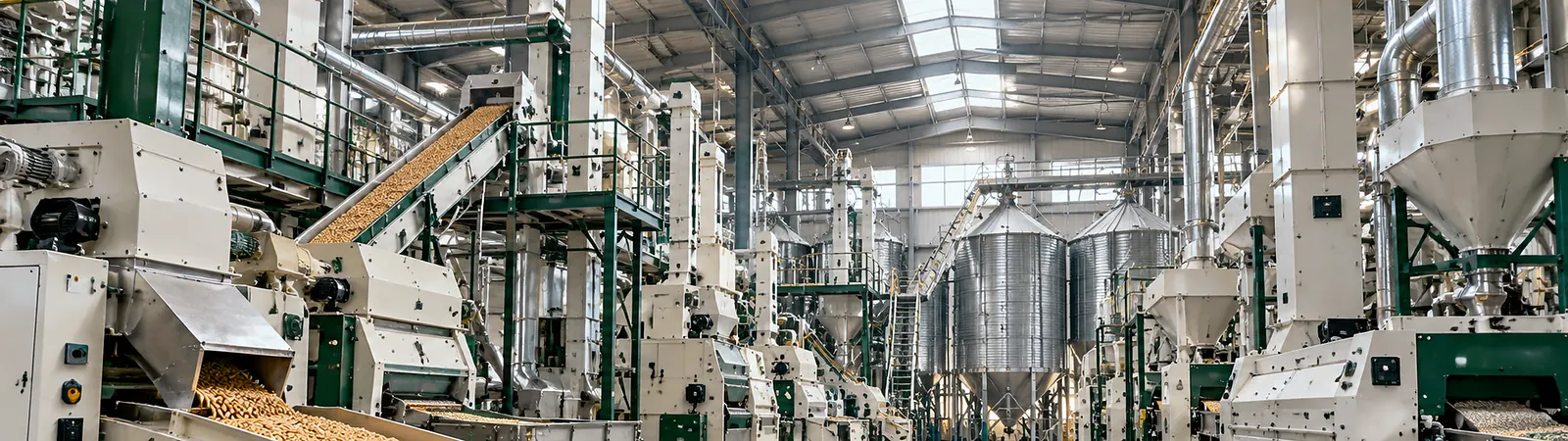
Inspect bucket elevators, troughed belt conveyors, enclosed chain drags, vibratory troughs, sorting belts, and modular silos below to design low-damage transfer paths across your facility.
Conveying, Elevation & StorageVertical belt-and-bucket leg engineered to lift free-flowing grain and seed between pit intake, cleaner towers, and storage bins.
 Conveying, Elevation & Storage
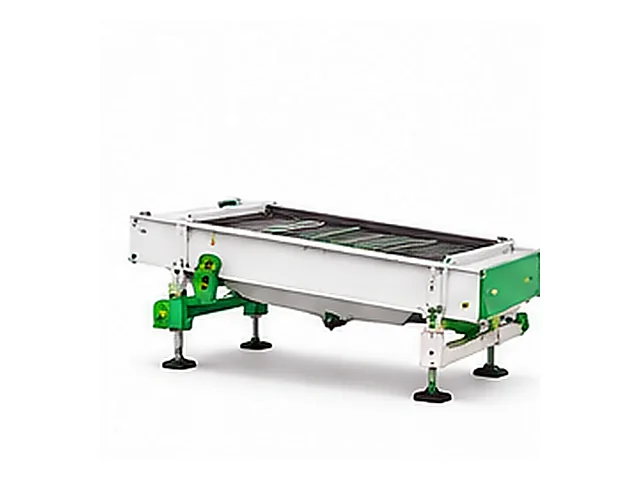
Smooth-running horizontal and slightly inclined belt transport system delivering low-friction, zero-breakage conveyance over long plant spans.
 Conveying, Elevation & Storage
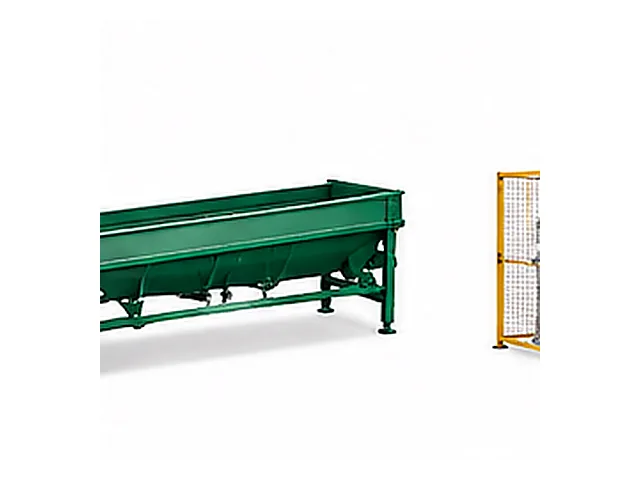
Totally enclosed drag-flight chain trough designed for dust-tight horizontal or low-angle transfer of bulk grain into and out of silos.
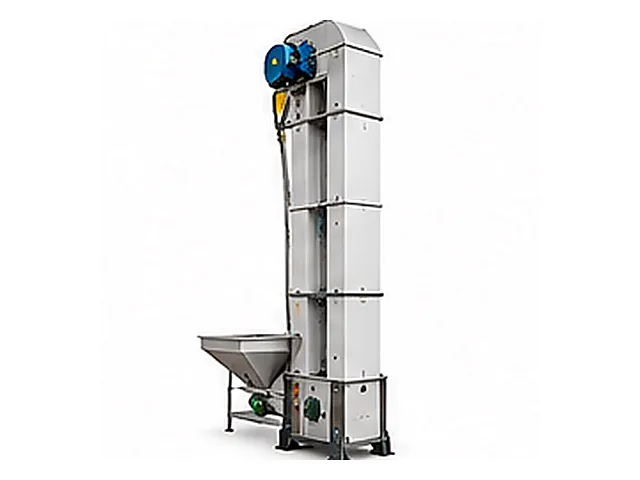 Conveying, Elevation & Storage
Overlapping-cup elevator configuration that eliminates drop gaps at the infeed boot to prevent cracking of fragile pulses and planting seeds.
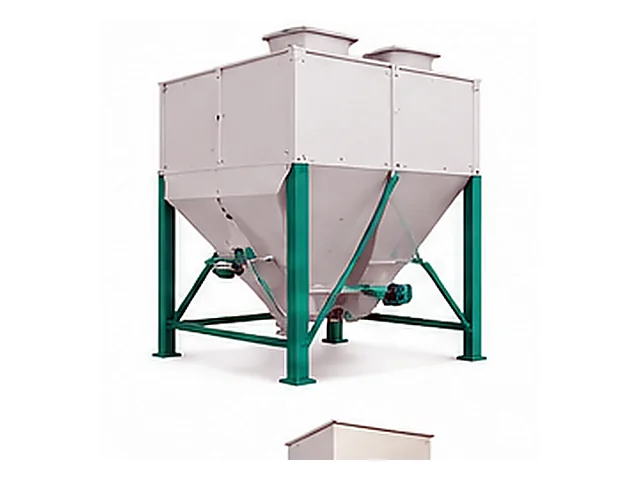 Conveying, Elevation & Storage
Self-emptying holding bin equipped with an integrated bottom discharge belt to meter fragile or poorly flowing products without bridging.
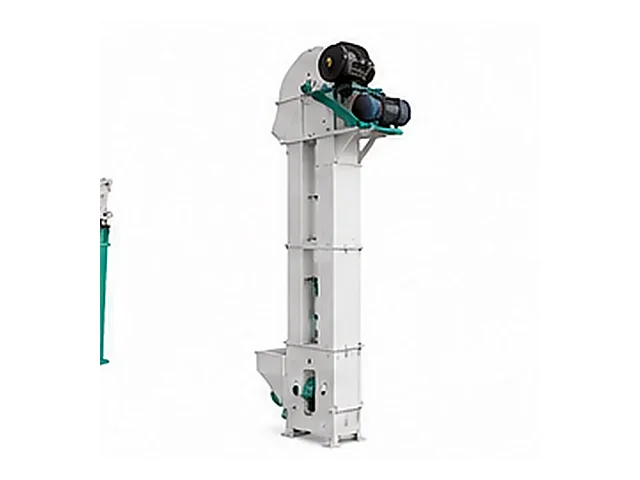 Conveying, Elevation & Storage
Low-velocity centrifugal/gravity discharge elevator utilizing guided head geometry to minimize kernel impact during vertical seed lifting.
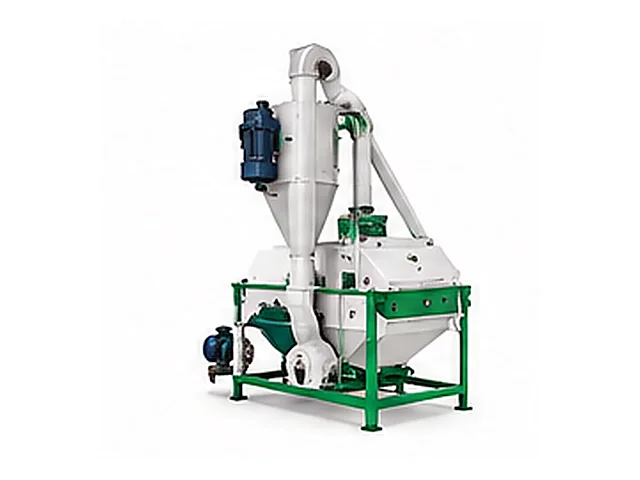 Conveying, Elevation & Storage
Heavy-duty agricultural bucket elevator sized for continuous vertical transfer of cereal grains, oilseeds, and commercial pulses.
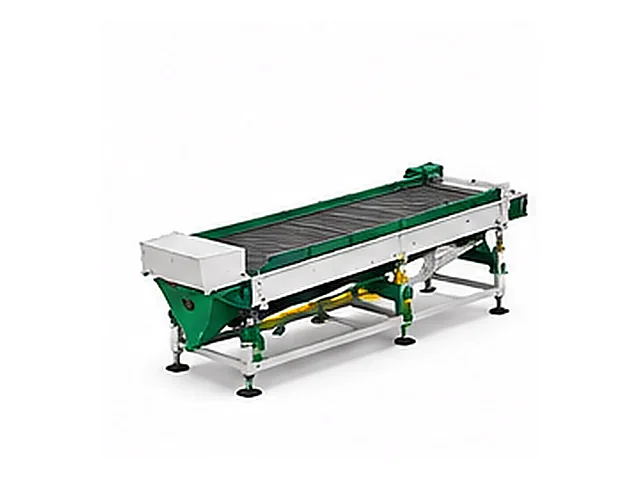 Conveying, Elevation & Storage
Slow-moving illuminated inspection belt where operators manually remove off-type cobs, sprouted kernels, or foreign objects from premium lots.
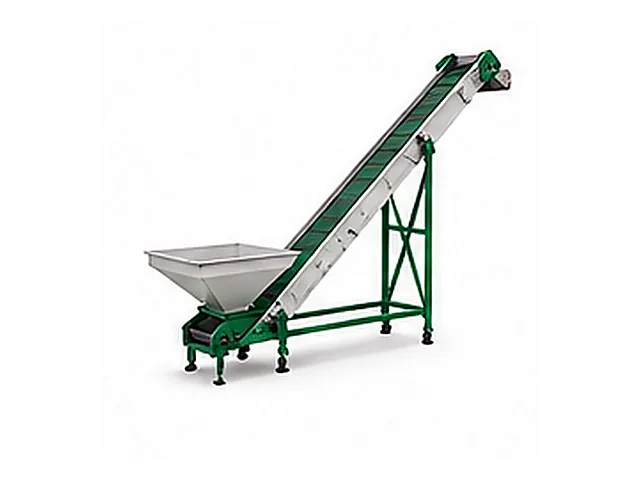 Conveying, Elevation & Storage
Oscillating horizontal pan trough that conveys seeds gently without internal flights, belts, or residual pockets for rapid variety cleanout.
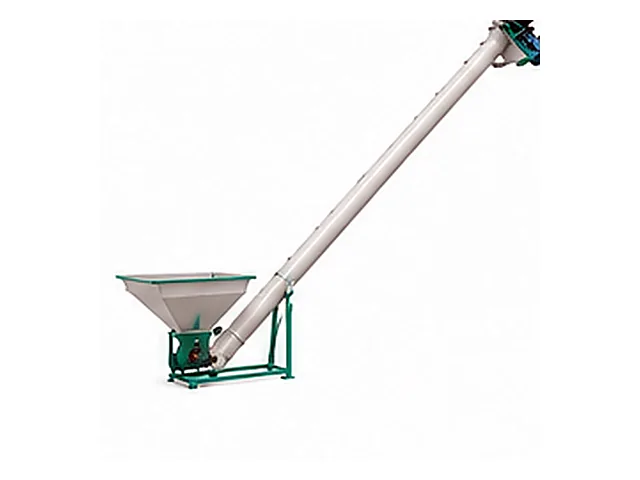 Conveying, Elevation & Storage
Air-driven pipeline transport network suitable for routing dry granular materials around complex structural obstacles inside existing buildings.
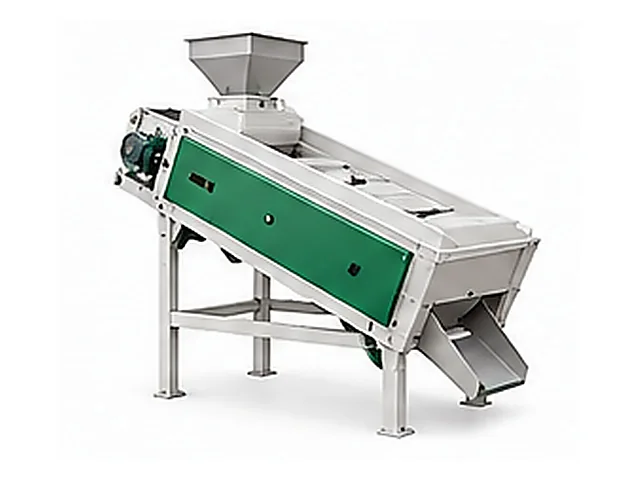 Conveying, Elevation & Storage
Enclosed helical auger trough used for compact horizontal metering, dust discharge collection, and by-product transfer over short distances.
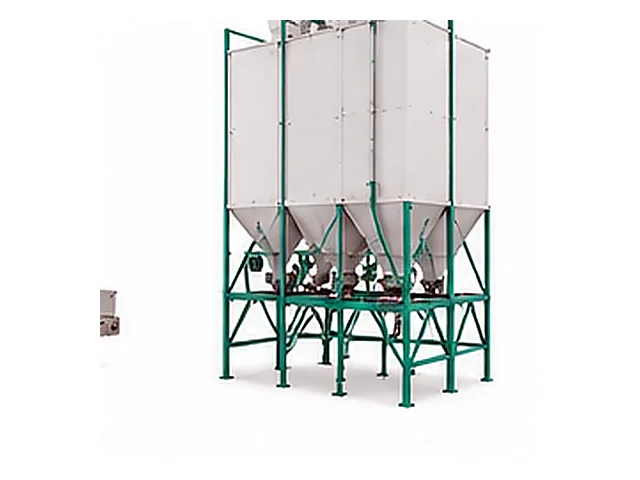 Conveying, Elevation & Storage
Modular square-profile steel storage cells that maximize holding volume within rectangular plant footprints and above bagging or cleaning lines.
Engineers weigh seed coat fragility, required self-cleaning hygiene between varieties, horizontal run length, incline angle, dust containment rules, and hourly mass flow when choosing between belts, chains, screws, or vibratory pans.
Seed-grade elevators operate at lower linear belt speeds, use smooth polymer buckets, avoid scooping in the boot via controlled feeding or continuous cups, and incorporate cushioned head transitions to protect germination.
Keeping drop heights short, installing dead-boxes or cushioned impact linings, matching spout angles to crop friction, and avoiding high-speed screw conveyors on dry pulses dramatically reduces split cotyledons and seed coat cracks.
Automated lines start equipment in reverse sequence from discharge to intake, using plugged-chute detectors, belt-alignment sensors, and variable-speed feeders to prevent choke-ups during normal stops or fault trips.
Tapped bulk density in kilograms per cubic meter, dynamic angle of repose, surface friction coefficient, moisture range, and peak surge factor determine trough cross-section, bucket volume, and drive power.